

What Are the Main Differences Between a Laser Rust Remover Machine and an Abrasive Blasting System?
2026-11-19
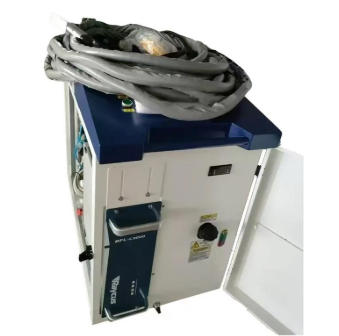
Choosing between a Laser Rust Remover Machine and an abrasive blasting system depends on the type of corrosion, required surface finish, work environment, and overall maintenance budget. Both methods remove rust and prepare metal surfaces, but they use different mechanisms. Laser cleaning applies concentrated optical energy to remove rust, oxide layers, and selected contaminants, while abrasive blasting propels media against a surface to remove unwanted material through mechanical impact. For manufacturers, steel fabricators, and industrial maintenance contractors, understanding these differences is essential to selecting a process that meets production requirements without creating unnecessary operating costs.
How Do Laser Cleaning and Abrasive Blasting Remove Rust?
The most fundamental difference lies in how each technology interacts with the workpiece. Laser cleaning uses a focused beam to transfer energy to the surface layer. Depending on the laser configuration and material properties, rust or coating residues can be detached or removed through rapid heating, ablation, and related surface interactions. The operator controls the treatment path and adjusts process settings according to the contamination and required result.
Abrasive blasting works through a mechanical process. Compressed air or another propulsion system accelerates abrasive particles toward the metal surface. The impact removes rust, mill scale, old coatings, and other deposits. Different media, such as steel grit, steel shot, aluminium oxide, or garnet, produce different cleaning characteristics and surface profiles. Media selection depends on the substrate, contamination, required finish, and blasting equipment.
These different principles affect more than the cleaning action. They influence the equipment layout, work-area preparation, waste generation, surface profile, and operator responsibilities. A laser process does not require conventional blasting media, but it still produces airborne particles or fumes that may need extraction. Abrasive blasting requires media supply and recovery, together with appropriate containment and dust collection.
What Are the Main Differences in Surface Quality and Cleaning Performance?
Surface quality should be evaluated according to the next production or maintenance operation. Removing visible rust is not necessarily the same as preparing steel for a specified coating system. Some coatings require a defined surface profile to support adhesion, while other applications place greater importance on localized contaminant removal or avoiding unnecessary mechanical contact.
| Comparison factor | Laser cleaning | Abrasive blasting |
| Cleaning principle | Uses concentrated laser energy to remove selected surface layers. | Uses propelled abrasive media to remove rust and coatings through impact. |
| Contact with substrate | Non-contact cleaning process. | Media physically impacts the workpiece. |
| Surface profile | Does not automatically create the anchor profile required by every coating system. | Can create a mechanical profile depending on abrasive type, size, pressure, and technique. |
| Consumables | Does not require conventional blasting media, although filters and other components may need maintenance or replacement. | Requires abrasive media, which must be replenished and managed. |
| Waste management | Requires control and collection of removed particles, fumes, and filtration waste. | Requires management of spent abrasive, removed coatings, rust, and dust. |
| Access requirements | Generally requires a clear line of sight to the treatment area. | Requires suitable access for the blast nozzle and control of media rebound. |
| Typical process strengths | Localized treatment and controlled removal where the application is suitable. | Large-area preparation and applications requiring a specified surface profile. |
One important consideration is surface roughness. Abrasive blasting can produce an anchor profile that helps certain protective coatings achieve mechanical adhesion. The resulting profile depends on the abrasive material, particle size, blasting pressure, nozzle distance, and operating technique. Laser cleaning, by contrast, is often selected for controlled removal of surface contamination. It should not be assumed to produce the same profile as abrasive blasting.
For this reason, contractors should check the coating manufacturer's requirements before choosing a preparation method. If a project specifies a particular cleanliness grade or surface profile, the selected process must be tested and verified against that specification. A visually bright metal surface alone is not proof that all coating preparation requirements have been met.
Corrosion thickness also affects the comparison. Light oxidation may be relatively straightforward to treat using either method. Thick rust scale, multilayer paint, and deeply pitted surfaces can require more extensive preparation. Abrasive blasting may be more productive for broad areas with heavy corrosion, while laser treatment may be more appropriate for selected areas where localized control is important. Neither method can restore metal thickness lost through corrosion.
Which Equipment Parameters Should Buyers Compare Before Purchasing?
Equipment selection should be based on the actual cleaning task rather than a single headline specification. A laser system's performance depends on its laser source, power, wavelength, scanning conditions, optical configuration, and compatibility with the workpiece. An abrasive blasting system must be assessed through its air supply, pressure, media delivery, nozzle arrangement, dust collection, and recovery capacity.
For buyers evaluating a Laser Rust Remover Machine, the following specifications should be confirmed in the model-specific datasheet. The available product information does not establish numerical values for these items, so they should be verified with PRO Industry Group Co., Ltd. before a purchase decision.
| Laser equipment parameter | Why it matters | What buyers should confirm |
| Laser type | Determines how energy is delivered to the surface. | Pulsed or continuous-wave configuration. |
| Rated laser power | Influences available energy and potential cleaning productivity. | Rated output and recommended application range. |
| Wavelength | Affects the interaction between the laser, substrate, and contamination. | Specified operating wavelength. |
| Pulse duration and frequency | Influence energy delivery in pulsed systems. | Available adjustment ranges, where applicable. |
| Scanning speed | Affects exposure time and cleaning consistency. | Supported speed range and process recommendations. |
| Cleaning width | Influences treatment coverage and working efficiency. | Available scanning width and optical configuration. |
| Cooling method | Determines thermal management requirements. | Air or water cooling and maintenance requirements. |
| Electrical requirements | Determine compatibility with the worksite. | Input voltage, frequency, and rated power consumption. |
| Safety configuration | Helps control exposure to hazardous laser radiation. | Laser classification, interlocks, emergency stop, and required protective eyewear. |
For abrasive blasting, buyers should pay particular attention to compressor capacity, working pressure, air consumption, blast pot capacity, nozzle size, abrasive compatibility, dust collector performance, and media recovery arrangements. These specifications influence the amount of material that can be processed and the resources required to operate the system. The worksite must also have enough space for media storage, hoses, containment, and waste collection.
When comparing quotations, our technical assessment should include the complete operating arrangement rather than the main machine alone. A laser system may require a suitable extraction unit and protective barriers. A blasting installation may require a compressor, air treatment, dust collection, media handling, and containment equipment. These supporting items affect the real investment and should be included in the purchasing calculation.
Why Do Operating Costs and Worksite Requirements Differ?
The purchase price is only one part of the total cost of a surface preparation process. Buyers should also consider labour, consumables, electricity, compressed air, equipment maintenance, waste handling, setup time, and production interruption. The balance between these costs varies according to the size of the treatment area and the condition of the steel.
Abrasive blasting involves recurring media costs. The abrasive must be purchased, transported, stored, and replenished. Depending on the process, spent media may need screening or disposal. Dust collection and containment are also important, especially when removing old coatings or working in an industrial facility with nearby equipment. These requirements can add preparation and clean-up time to the job.
Laser cleaning avoids conventional abrasive media consumption, which can simplify material handling in suitable applications. However, it is not a consumable-free or maintenance-free process. Optical components, filters, cooling arrangements, and other equipment parts require inspection and maintenance according to the manufacturer's instructions. Extraction and filtration may also be necessary to control airborne contaminants.
Worksite access can change the economics. A blasting project may require extensive containment to prevent abrasive rebound and dust from affecting nearby operations. A laser process may reduce the need for abrasive containment, but it still requires a controlled laser work area, suitable extraction, and protection against direct or reflected radiation. If the target surface is hidden or difficult to reach, the laser's line-of-sight requirement may make treatment impractical without repositioning or dismantling the component.
PRO Industry Group Co., Ltd. recommends comparing the full process cost for a defined treatment area. Buyers should record setup time, actual cleaning time, inspection time, extraction requirements, and any additional surface preparation needed before coating. This provides a more useful comparison than judging either technology by its equipment price or advertised cleaning speed alone.
When Is Each Cleaning Method More Suitable for Industrial Applications?
The best method depends on the production objective. Laser cleaning is worth considering for localized rust removal, selected coating removal, maintenance around installed equipment, and applications where avoiding conventional abrasive media is important. It may be useful for cleaning weld areas, brackets, machine frames, steel fixtures, and other accessible components. The process is especially relevant when the operator needs to direct treatment toward a defined area rather than prepare an entire structure.
Abrasive blasting remains a well-established choice for large-scale steel preparation, heavy corrosion removal, and projects that require a specified surface profile. It is widely used in steel fabrication, shipbuilding, bridge maintenance, tank refurbishment, and industrial coating preparation. Its suitability depends on access, containment, abrasive selection, and the ability to manage spent media and dust.
Consider a contractor maintaining a steel warehouse. If the project involves several small corrosion spots around connection plates, laser cleaning may offer a practical localized treatment option. If the same contractor needs to prepare a large steel framework for a coating system that specifies an abrasive-generated surface profile, blasting may be the more suitable process. In another case, a workshop refurbishing individual machine components may benefit from testing both methods on representative samples before choosing a standard procedure.
Our application review should therefore begin with several practical questions:
- Is the job limited to localized rust removal or does it involve a large continuous surface?
- Does the coating specification require a particular surface profile?
- How thick are the rust, scale, and existing coating layers?
- Can the operator access the entire treatment area directly?
- Are abrasive media, dust, and waste recovery difficult to manage at the site?
- What extraction, containment, and worker protection measures are required?
- How much time is available for preparation, cleaning, inspection, and recoating?
Before full-scale production, a representative test is recommended. The test should use the actual substrate and contamination where possible. The resulting surface should be checked against the required cleanliness, profile, and coating criteria. This approach helps avoid selecting equipment that performs well in a demonstration but does not meet the conditions of the real project.
How Can Buyers Make a Reliable Final Selection?
A reliable purchasing decision balances technical suitability, productivity, safety, and long-term operating costs. Laser cleaning is not automatically superior to abrasive blasting, and abrasive blasting is not the right answer for every maintenance task. The correct choice is the method that achieves the required surface condition within the project's operational and safety constraints.
When requesting a quotation, buyers should provide the steel grade, approximate treatment area, corrosion condition, coating type, required surface finish, and working environment. They should also ask for a technical datasheet, recommended operating conditions, included accessories, maintenance requirements, warranty information, and available technical support. For laser equipment, confirm the exact laser configuration and extraction requirements. For blasting equipment, verify compressor capacity, media compatibility, dust collection, and recovery arrangements.
Our equipment recommendation should be supported by the intended application and confirmed specifications. PRO Industry Group Co., Ltd. can discuss the requirements of industrial rust removal and help buyers evaluate a suitable configuration for their steel cleaning work. A clear application brief makes it easier to identify the necessary equipment features and avoid paying for specifications that do not contribute to the actual process.
Conclusion
The main difference between laser cleaning and abrasive blasting is how each method removes rust and prepares the metal surface. Laser technology uses concentrated energy for controlled, non-contact treatment, while abrasive blasting relies on the mechanical impact of propelled media and can create a surface profile required by many coating systems. Laser cleaning may be a strong option for localized treatment and applications where abrasive media handling is a concern. Blasting remains highly practical for large-scale preparation, heavy corrosion, and specified anchor-profile requirements. PRO Industry Group Co., Ltd. welcomes enquiries from industrial maintenance contractors, steel fabricators, and equipment buyers. Contact our team with your material, corrosion condition, treatment area, and surface preparation requirements to discuss the appropriate laser cleaning configuration and request detailed product specifications.
Frequently Asked Questions
Can laser cleaning achieve the same surface profile as abrasive blasting?
Not necessarily. Abrasive blasting can create an anchor profile through the impact of selected abrasive particles, while laser cleaning primarily removes surface layers and contaminants through controlled energy interaction. The resulting roughness depends on the laser process and substrate condition. If a coating specification requires a defined surface profile, the cleaned surface must be measured and compared with the project requirements. Additional mechanical preparation may be needed if laser treatment alone does not produce the required profile.
Which method is more economical for removing rust from a large steel structure?
The more economical method depends on the treatment area, corrosion thickness, required surface finish, labour, equipment setup, and waste management costs. Abrasive blasting may be more productive for extensive areas requiring a consistent anchor profile, although it involves abrasive media, containment, and recovery. Laser cleaning may reduce media handling for localized or selected applications, but treatment speed and extraction requirements must be considered. A cost comparison based on a representative test area provides a more reliable result than comparing machine prices alone.
Does laser rust removal eliminate the need for dust extraction and operator protection?
No. Laser cleaning does not use conventional blasting media, but removing rust, paint, and other contaminants can generate airborne particles and fumes. Suitable local extraction and filtration may therefore be required. Operators must also follow laser safety procedures, including controlled access, appropriate wavelength-rated eyewear, warning signs, and protection against direct or reflected radiation. The existing coating should be assessed for hazardous substances before treatment, and the work area must comply with applicable occupational safety requirements.
