

What Are the Most Efficient Brick Machine Ingredients for Reducing Production Costs?
2026-02-04
Choosing the right ingredients for our brick production is crucial to reducing costs while maintaining high-quality output. At Quangong Machinery Co., Ltd., we focus on sourcing raw materials that optimize the performance of our Auxiliary Brick Machine. Our approach prioritizes materials that provide durability, low shrinkage, and minimal wear on equipment. By selecting the correct aggregates, cement types, and additives, we can significantly cut energy consumption and maintenance expenses in our factory operations.
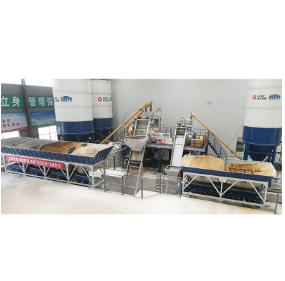
How Do Aggregate Types Influence Production Costs in Brick Machines?
Our factory has tested various aggregate types to determine which ones provide the best balance between cost and strength. Coarse aggregates such as gravel or crushed stone improve the structural integrity of bricks while reducing the amount of cement needed. Fine aggregates like sand ensure smooth molding and reduce friction in the Auxiliary Brick Machine. Using a combination of locally sourced aggregates minimizes transportation costs and supports consistent material availability, directly impacting overall production expenses.
| Aggregate Type | Particle Size | Cost Efficiency | Impact on Machine Wear |
| Gravel | 5-20 mm | High | Low |
| Crushed Stone | 3-15 mm | Moderate | Medium |
| River Sand | 0.1-2 mm | High | Low |
| Manufactured Sand | 0.1-3 mm | Moderate | Medium |
What Role Does Cement Type Play in Cost-Effective Brick Production?
Our experience at Quangong Machinery Co., Ltd. shows that choosing the correct cement type is essential for lowering production costs. Ordinary Portland Cement is widely used due to its affordability and availability. For specialized bricks, blended cements containing fly ash or slag can reduce material expenses and improve sustainability. The selection of cement influences curing time, energy usage in drying, and the lifespan of our Auxiliary Brick Machine components, ultimately affecting the total cost per brick produced.
| Cement Type | Setting Time | Cost per Ton | Energy Consumption |
| Ordinary Portland Cement | 2-4 hours | High | Moderate |
| Portland Pozzolana Cement | 3-5 hours | Moderate | Low |
| Portland Slag Cement | 4-6 hours | Low | Low |
How Do Additives Improve the Efficiency of Auxiliary Brick Machine Operations?
In our production line, we incorporate various additives that enhance brick quality while lowering operational costs. Water-reducing agents improve the workability of the brick mixture, allowing for less water usage and faster drying cycles. Stabilizers reduce shrinkage and cracking, decreasing waste and machine downtime. By integrating additives specifically designed for our Auxiliary Brick Machine, we maximize throughput and minimize maintenance needs, ensuring consistent performance at lower costs.
Why Is Moisture Control Critical for Reducing Production Costs?
Our factory emphasizes precise moisture control in brick production. Too much water increases drying time and energy consumption, while too little water can cause poor compaction and breakage. By monitoring and adjusting moisture content in real time, our Auxiliary Brick Machine maintains optimal compression and shape accuracy. This approach reduces waste, energy use, and mechanical stress, which directly translates to lower production costs for our customers.
What Are the Most Efficient Brick Machine Ingredients for Reducing Production Costs?
Combining the correct aggregates, cement, additives, and moisture levels ensures cost-effective brick production. Our testing demonstrates that locally sourced gravel, blended cement, and performance additives offer the best balance of quality, machine longevity, and cost savings. By integrating these materials into our Auxiliary Brick Machine operations at Zenith, we achieve higher productivity with minimal energy consumption, allowing our factory to maintain competitive pricing and consistent brick quality.
FAQ
Q1: Which aggregate type is most cost-effective for high-volume brick production?
Locally sourced gravel combined with river sand provides the optimal balance between cost and structural integrity. Our factory has verified that this combination reduces the cement requirement while maintaining the durability of bricks produced by our Auxiliary Brick Machine.
Q2: How can cement selection reduce operational expenses in brick manufacturing?
Using blended cements such as Portland Pozzolana or Portland Slag Cement lowers material costs and energy usage during curing. Our experience shows that these cements shorten drying times and reduce wear on Auxiliary Brick Machine components, which minimizes maintenance expenses.
Q3: Do additives significantly impact cost efficiency in brick machines?
Yes, water-reducing agents and stabilizers enhance mixture workability and reduce shrinkage. Our factory applies these additives in precise proportions for our Auxiliary Brick Machine, resulting in faster production cycles, less waste, and lower overall energy costs.
Summary
Optimizing the ingredients for brick production is essential for reducing costs without compromising quality. By carefully selecting aggregates, cement types, and additives, and controlling moisture content, our factory ensures that our Auxiliary Brick Machine operates efficiently. Quangong Machinery Co., Ltd. continues to test and refine ingredient combinations to deliver high-quality bricks at competitive prices. For businesses seeking reliable solutions, we invite you to contact us for customized recommendations and detailed specifications tailored to your production needs.
