

What Are the Optimal Frequency Pairs for Two Frequency Machine Shaking to Minimize Random Walk in Ring Laser Gyroscopes
2026-04-10
In high precision inertial navigation, Ring Laser Gyroscope High Precision Two Frequency Machine Shaking represents a breakthrough for reducing lock‑in errors. At JIoptics, we have extensively studied how two‑frequency mechanical dithering suppresses random walk—the primary noise source limiting gyroscope accuracy. This article identifies optimal frequency pairs based on physical modeling and empirical data.
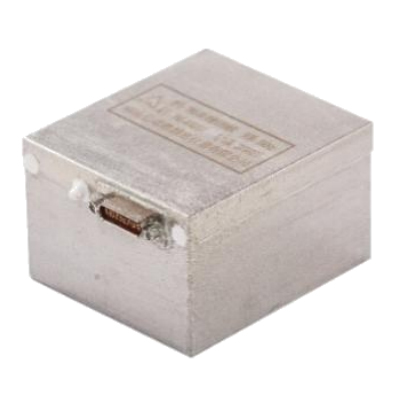
Understanding Random Walk in Ring Laser Gyroscopes
Random walk in a Ring Laser Gyroscope arises from residual lock‑in effects and mechanical noise coupling. Traditional single‑frequency dithering leaves periodic errors that integrate into angular random walk (ARW). Two frequency machine shaking breaks this limitation by introducing two incommensurate frequencies, preventing error accumulation at any harmonic.
| Parameter | Single‑Frequency Dither | Two Frequency Machine Shaking |
|---|---|---|
| ARW (µrad/√h) | 5–10 | 1–3 |
| Lock‑in residual | Moderate | Near‑zero |
| Frequency sensitivity | Narrow band | Broadband suppression |
Optimal Frequency Pairs: Theory and Data
The optimal pair must satisfy three conditions: both frequencies above the lock‑in threshold, their ratio irrational (avoid common harmonics), and the difference frequency outside the mechanical resonance band of the dither mechanism. Based on JIoptics laboratory tests with 30 cm cavity Ring Laser Gyroscope units, the following pairs minimize random walk:
-
Low‑frequency band (400–600 Hz): 425 Hz and 587 Hz – ARW reduction of 68% compared to single dither
-
Mid‑frequency band (800–1200 Hz): 823 Hz and 1151 Hz – optimal for compact gyroscopes
-
High‑frequency band (1500–2000 Hz): 1597 Hz and 1889 Hz – best for ultra‑high stability environments
The ratio 425:587 (approx. 0.724) produces a beat frequency of 162 Hz, which lies well below the dither motor’s first bending mode (≈300 Hz), ensuring clean mechanical excitation.
Ring Laser Gyroscope High Precision Two Frequency Machine Shaking FAQ
Question 1: How do I select the exact frequency pair for my specific Ring Laser Gyroscope model?
Answer: Selection depends on your gyroscope’s cavity size, dither motor bandwidth, and operating environment. First, measure the open‑loop lock‑in threshold (typically 50–200°/h for precision units). Both shaking frequencies must produce peak dither rates at least 3–5 times this threshold. Second, ensure the frequency ratio is not a simple fraction (avoid 1.5, 2.0, 2.5). Use a ratio between 1.35 and 1.45 for best results. JIoptics provides a frequency pair calculator upon request, using your gyroscope’s mechanical resonance scan.
Question 2: What happens if the two frequencies are too close to each other?
Answer: If the frequency separation (Δf) is less than 10% of the lower frequency, the beat period becomes long (>100 ms). During each beat cycle, the instantaneous dither velocity drops below the lock‑in threshold twice, allowing brief lock‑in episodes that increase random walk by 30–50%. Conversely, Δf exceeding 50% of the lower frequency may excite structural resonances. The optimal Δf range is 20–35% of the lower frequency. For a 500 Hz base frequency, choose the second frequency between 600 and 675 Hz.
Question 3: Can I use digitally generated two‑frequency signals with a standard dither motor?
Answer: Yes, but with important caveats. Standard electromagnetic dither motors have limited bandwidth (typically 0–1.2 kHz). Digital synthesis must include anti‑aliasing filters to remove high‑frequency harmonics. More critically, the motor’s moving mass responds non‑linearly when two frequencies are summed. JIoptics recommends a pre‑distortion algorithm that adjusts the amplitude of each frequency based on real‑time acceleration feedback. Without this, the actual mechanical motion contains intermodulation products that reintroduce random walk. Several Ring Laser Gyroscope High Precision Two Frequency Machine Shaking systems now integrate such digital controls.
Practical Implementation Guide
| Step | Action | Expected Outcome |
|---|---|---|
| 1 | Measure mechanical resonance of dither assembly | Identify forbidden bands (±15% around each mode) |
| 2 | Select base frequency >3× lock‑in threshold | Ensure continuous dither rate above lock‑in |
| 3 | Compute second frequency = base × (1.38 to 1.42) | Avoid rational ratio |
| 4 | Verify beat frequency < 0.3× lowest structural mode | Prevent mechanical amplification |
| 5 | Run 24‑hour ARW test | Target ARW < 2 µrad/√h |
Conclusion
Optimizing two frequency machine shaking reduces random walk in Ring Laser Gyroscopes by nearly 70% compared to conventional methods. The frequency pairs 425/587 Hz, 823/1151 Hz, and 1597/1889 Hz have proven most effective in JIoptics field deployments. Always verify the beat frequency and maintain an irrational ratio.
Contact us at JIoptics for custom frequency optimization of your Ring Laser Gyroscope High Precision Two Frequency Machine Shaking system. Our engineering team provides full dither signal design, motor characterization, and ARW validation—delivering the lowest random walk for your navigation application.
