

What Causes Warpage in Connector Injection Molding and How Can It Be Reduced
2026-10-19
Warpage is one of the most persistent quality challenges in Connector Injection Molding, often leading to dimensional rejection, assembly failures, and costly rework. At Qiren, we have supported electronics and automotive customers in diagnosing and eliminating warpage across thousands of precision connector projects. This article breaks down the root causes and the practical countermeasures that reliably reduce warp in production.
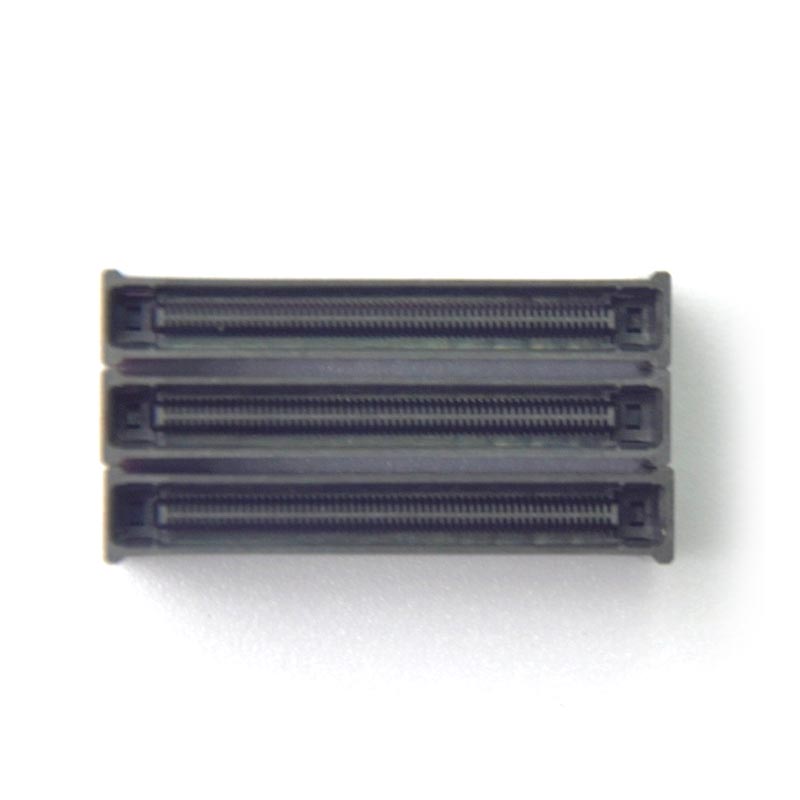
Why Warpage Occurs in Connector Injection Molding
Warpage results from uneven shrinkage and differential cooling across a molded part. In Connector Injection Molding, thin walls, long flow lengths, and tight tolerances amplify these effects. The table below summarizes the primary causes and their mechanisms.
| Root Cause | Mechanism | Typical Symptom |
|---|---|---|
| Uneven cooling | Differential shrinkage between mold halves or regions | Bowing, twist along the length |
| Gate location and number | Orientation and packing imbalance | Localized distortion near gate |
| Fiber orientation (filled resins) | Anisotropic shrinkage parallel vs. perpendicular to flow | Warp in LCP/PA9T glass-filled parts |
| Excessive packing pressure | Over-packing near gate, under-packing at flow end | One-sided bow |
| Mold temperature imbalance | Core vs. cavity temperature delta | Consistent directional warp |
| Ejection stress | Demolding before sufficient rigidity | Random distortion, white marks |
| Part/rib design | Uneven wall thickness, asymmetric ribs | Corner lift, flatness loss |
How to Reduce Warpage: Proven Countermeasures
Qiren applies a structured DOE-based approach in Connector Injection Molding to isolate and correct warpage. The following measures deliver the most consistent results.
-
Balance the cooling system. Target core-cavity temperature delta within 2–3°C and use conformal cooling where geometry allows.
-
Optimize gate position and count. Move gates to symmetric locations and consider multi-point or valve gates for long connectors.
-
Tune packing profile. Apply staged packing pressure and optimize hold time based on gate freeze analysis.
-
Control melt and mold temperatures. Use scientific molding to establish a stable window before production.
-
Adjust ejection. Increase ejection area, reduce ejection speed, and verify part rigidity at demold.
-
Review part and mold design. Balance wall thickness, add ribs symmetrically, and simulate warp with Moldflow before steel cutting.
| Countermeasure | Expected Warp Reduction | Implementation Effort |
|---|---|---|
| Cooling optimization | High | Medium |
| Gate relocation | High | High (tooling change) |
| Packing profile tuning | Medium–High | Low |
| Ejection refinement | Medium | Low |
| Design/simulation review | High (preventive) | Medium |
Connector Injection Molding FAQ
Q: What is the most common cause of warpage in Connector Injection Molding?
A: Uneven cooling is the most common cause, because differential shrinkage between the core and cavity or across thick and thin sections creates internal stress that deforms the part after ejection. In precision connectors, even a 3–5°C mold temperature imbalance can produce measurable bow, so cooling circuit layout and flow rate balance should always be verified first.
Q: Can warpage be corrected after the mold is built?
A: Yes, in many cases. Packing profile adjustments, mold temperature tuning, ejection refinement, and minor venting or cooling modifications can reduce warp without major tooling changes. However, if the root cause is gate location or asymmetric wall thickness, a tooling revision or design change may be required, which is why Qiren recommends Moldflow simulation before steel cutting.
Q: Which materials are most prone to warpage in Connector Injection Molding?
A: Glass-filled engineering resins such as LCP, PA9T, PA46, and PPS are most prone due to anisotropic fiber shrinkage, followed by semi-crystalline resins with high shrinkage rates. Amorphous resins like PES and PEI warp less but still require balanced cooling. Material selection should always be validated against the connector's flatness and tolerance requirements.
Conclusion
Reducing warpage in Connector Injection Molding requires a system-level approach combining part design, mold design, material selection, and process control. Qiren provides end-to-end support from simulation and tooling to scientific molding and inspection, helping customers achieve stable flatness and dimensional consistency.
Contact us today to discuss your connector warpage challenge and request a feasibility assessment or quote.
