

What Factors Determine the Durability of Concrete Block Moulds in Factories?
2026-03-17
Material quality is one of the most decisive elements affecting the service life of Concrete Block Moulds in high-output manufacturing environments. In modern masonry block plants, moulds are exposed to constant vibration, abrasive aggregates, and repetitive compression cycles. If the steel composition and heat treatment process are not properly controlled, premature wear or deformation can occur, leading to inconsistent block dimensions and increased maintenance downtime.
Many North American and European factories prefer moulds manufactured with high-strength alloy steels because these materials provide greater resistance to abrasion from cement, sand, and crushed stone. Through precise heat treatment and surface hardening technologies, manufacturers can improve resistance against cracking and fatigue. In our factory, strict metallurgical inspection ensures that each mould component meets demanding industrial requirements before entering production lines.
At Quangong Machinery Co., Ltd., engineering teams focus on optimizing structural stability and steel hardness balance. Excessively hard steel may crack under high vibration, while softer materials may wear rapidly. Achieving this balance allows our products to maintain stable cavity shapes throughout long production cycles, ensuring reliable block dimensions for construction projects.
How Do Precision Manufacturing and Surface Treatment Influence Mould Lifespan?
Precision machining plays an equally important role in determining how well moulds perform in automated block plants. Even minor deviations in cavity alignment can result in uneven pressure distribution, which accelerates wear along the mould edges. Advanced CNC milling and grinding technologies allow manufacturers to achieve extremely tight tolerances that support long-term operational stability.
Surface treatment technologies further improve durability. Techniques such as carburizing, nitriding, and shot peening create hardened outer layers that protect mould surfaces against abrasion from aggregates. These treatments are widely recognized in the masonry equipment industry for extending operational cycles between maintenance intervals.
Our factory integrates precision machining centers and automated heat treatment facilities to ensure consistency in each production batch. With strict dimensional inspection and durability testing, our engineering team ensures that moulds remain stable under heavy vibration conditions typical of modern concrete block machines.
| Manufacturing Factor | Impact on Durability | Industrial Benefit |
| High precision CNC machining | Ensures uniform pressure distribution | Reduces uneven wear |
| Nitriding surface treatment | Improves hardness of outer layer | Extends operational life |
| Heat treatment control | Balances strength and toughness | Prevents cracking |
| Quality inspection procedures | Maintains structural accuracy | Supports consistent block size |
What Operational Conditions Inside Block Factories Affect Mould Performance?
Durability is also strongly influenced by daily operating conditions inside block production facilities. Factors such as vibration intensity, raw material quality, and equipment maintenance schedules can significantly impact the lifespan of mould systems. High moisture levels or poorly graded aggregates often accelerate abrasion inside mould cavities.
Operators in many large factories monitor vibration frequency and compression pressure to prevent excessive mechanical stress. When machine parameters are optimized, Concrete Block Moulds experience less structural fatigue and maintain dimensional accuracy for longer production runs.
Maintenance practices are equally important. Regular cleaning removes cement residue that could otherwise harden and damage mould surfaces during the next production cycle. Lubrication of guide components and periodic inspection of cavity edges also help maintain stable output quality. Our factory provides maintenance recommendations that support stable operation even in demanding manufacturing environments.
How Do Structural Design and Compatibility Improve Production Stability?
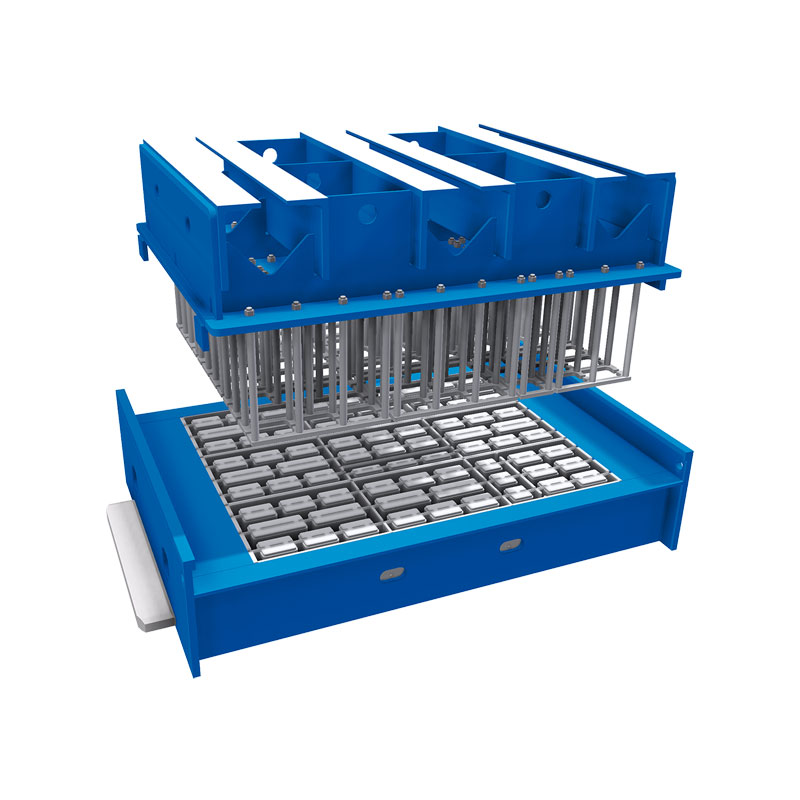
Modern block plants often run multiple mould configurations to produce hollow blocks, paving stones, and interlocking bricks. Structural design must therefore ensure compatibility with automated block machines while maintaining strength under high compression forces.
Quangong Machinery Co., Ltd. designs mould structures that distribute mechanical stress evenly across the frame. Reinforced plates and optimized cavity geometry allow Concrete Block Moulds to withstand continuous vibration cycles without distortion. Our engineering teams also analyze compatibility with different block machines to ensure seamless integration within existing production lines.
Design flexibility allows factories to change product shapes quickly while maintaining durability. Many large construction material producers prioritize modular mould systems because they support faster product switching without sacrificing structural strength. Our design philosophy focuses on maintaining consistent mould rigidity even during high-speed production shifts.
| Technical Parameter | Typical Range | Operational Advantage |
| Steel hardness | HRC 58–62 | Improves wear resistance |
| Heat treatment depth | 0.8–1.2 mm | Protects surface structure |
| Dimensional tolerance | ±0.02 mm | Ensures accurate block dimensions |
| Production cycle capacity | Over 120000 cycles | Supports long production runs |
Why Do Experienced Manufacturers Deliver Longer Lasting Mould Solutions?
Industry experience often determines how effectively mould systems perform over time. Manufacturers with deep knowledge of block production technology understand the complex interaction between vibration systems, steel materials, and machine configuration. This expertise helps them design Concrete Block Moulds that remain stable in demanding production environments.
At Zenith, extensive experience in block machinery engineering allows our specialists to analyze each factory’s production requirements before recommending a suitable mould configuration. Our factory continuously upgrades manufacturing technologies and quality inspection processes to ensure reliable long term performance in global markets.
Many industrial buyers prioritize suppliers that combine technical knowledge with consistent manufacturing standards. By integrating advanced materials, precision machining, and thorough durability testing, our factory delivers mould solutions that support stable production output while reducing long term operating costs for masonry manufacturers.
FAQ: What Factors Determine the Durability of Concrete Block Moulds in Factories?
Q1: What factors determine the durability of concrete block moulds in factories?
Durability mainly depends on material quality, heat treatment processes, structural design, and operating conditions inside the factory. High strength alloy steel combined with controlled surface hardening improves resistance to abrasion caused by aggregates and vibration. Proper machine parameter settings and maintenance routines also prevent premature wear and structural deformation.
Q2: How can factories extend the service life of concrete block moulds during production?
Factories can extend mould lifespan by controlling vibration intensity, ensuring consistent raw material grading, and performing routine maintenance inspections. Cleaning mould cavities after each production cycle and monitoring compression pressure can significantly reduce internal stress and surface abrasion. Scheduled inspections also help detect wear early before major damage occurs.
Q3: Why are precision manufacturing and heat treatment important for mould performance?
Precision machining ensures that mould cavities maintain accurate alignment with the block machine. When pressure is distributed evenly, the mould experiences less localized stress, which reduces wear along the edges. Heat treatment further strengthens the outer layer of the steel, improving resistance against abrasion and fatigue during long production runs.
Conclusion: How Can Durable Mould Systems Improve Factory Productivity?
Durable mould systems play a decisive role in maintaining stable production efficiency within modern masonry manufacturing plants. Factors such as material strength, precision machining, structural design, and operational conditions all influence how long moulds can perform without replacement. Factories that invest in high quality engineering solutions often benefit from longer production cycles, lower maintenance costs, and consistent block dimensions.
Quangong Machinery Co., Ltd. continues to focus on delivering reliable mould technologies designed for demanding industrial environments. If your production facility is planning to improve operational stability or upgrade mould performance, our technical team is ready to provide professional guidance and customized solutions. Contact our factory today to explore advanced mould systems designed to support long term manufacturing success.
