

What Factors Have the Greatest Impact on Garbage Truck Hydraulic Cylinder Service Life?
2026-11-13
A fleet workshop manager compares two refuse collection vehicles with the same body model, the same payload, and the same daily route. The first vehicle replaces its Garbage Truck Hydraulic Cylinder after 18 months. The second vehicle is still on its original cylinder after four years. The difference is not the cylinder brand. The difference is the contamination level in the hydraulic oil, the alignment of the lifting arm, and the condition of the rod wiper. This guide ranks the factors that most strongly influence cylinder service life and explains what a fleet buyer should specify and verify before a purchase.
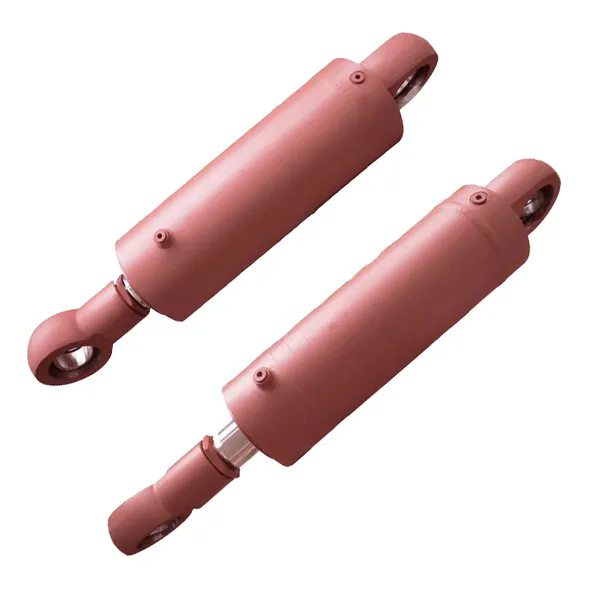
1. Why Does Contamination Rank First Among the Factors That Shorten Cylinder Life?
Contamination is the leading cause of premature failure in a Garbage Truck Hydraulic Cylinder because it attacks the sealing system from the inside and from the outside at the same time. From the outside, the rod retracts into the cylinder on every lift cycle, and the wiper must remove the dust, the grit, and the leachate that collect on the rod. If the wiper is worn or the rod is poorly protected, the contaminants are drawn past the rod seal and into the cylinder bore. From the inside, the oil carries metallic wear particles from the pump and the valves. These particles embed in the piston seal and scratch the bore and the rod surface. The damage is progressive, and it is usually invisible until the cylinder starts to drift or leak.
In our factory, we supply cylinders with a polyurethane wiper and a hard chrome rod for refuse service, because the standard nitrile wiper does not resist the abrasive grit that collects on a loading arm. Raydafon Technology Group Co.,Limited has been manufacturing hydraulic cylinders for refuse fleets for over 20 years, and we have seen that a proper wiper and a clean oil circuit can double the service interval between seal replacements.
2. How Do Side Load and Mounting Alignment Decide Whether the Rod Survives?
Side load is the second largest factor. A refuse loading arm does not always lift a balanced load, and the frame twists when the vehicle is on uneven ground. The side load bends the rod slightly with every cycle, and the bending stress concentrates at the rod-to-piston junction and at the rod seal. The chrome layer cracks under the repeated bending, and the crack becomes a path for corrosion and for seal damage. The mounting alignment amplifies the problem. If the pin bores are not parallel or the clevis is not shimmed correctly, the cylinder is forced to bend through its stroke, and the rod seal is loaded on one side only.
Our factory controls the rod straightness to 0.05 millimeters over the full stroke and the chrome thickness to 25 micrometers for refuse cylinders. We also recommend that the installer check the pin alignment with a laser or a dial indicator before the cylinder is connected. The table below shows how alignment error and side load combine to shorten the rod life.
| Alignment error (mm per 300 mm stroke) | Side load at 200 bar (kN) | Rod surface stress (MPa) | Expected rod life (cycles) |
| 0.05 | 0.8 | 85 | 350,000 |
| 0.10 | 1.6 | 130 | 220,000 |
| 0.20 | 3.2 | 210 | 110,000 |
| 0.30 | 4.8 | 290 | 60,000 |
| 0.50 | 8.0 | 420 | 25,000 |
3. Why Do Seal Selection and Rod Surface Finish Matter More Than Cylinder Bore Size?
Many buyers compare cylinders by bore size and pressure rating, but the seal system and the rod surface finish determine how long the cylinder will actually hold pressure. The rod surface roughness controls the film of oil that remains on the rod as it retracts. If the surface is too smooth, the seal runs dry and wears quickly. If the surface is too rough, the seal lip is abraded and the oil leaks past. The target roughness for a refuse cylinder rod is Ra 0.2 to 0.4 micrometers. The seal material must also match the fluid and the temperature. Leachate from municipal waste is mildly acidic, and a standard nitrile seal will swell and harden. A polyurethane or a fluorocarbon seal is more suitable. The table below shows how rod roughness and seal type combine to affect leakage and life.
| Rod roughness (Ra, µm) | Seal material | Leakage rate after 100,000 cycles | Expected seal life (cycles) |
| 0.10 | Nitrile | High (dry running) | 80,000 |
| 0.20 | Polyurethane | Low | 250,000 |
| 0.30 | Polyurethane | Very low | 300,000 |
| 0.40 | Fluorocarbon | Low | 280,000 |
| 0.60 | Polyurethane | Moderate (lip abrasion) | 150,000 |
Fleet engineer's note: The rod roughness is the parameter that most buyers never check, and it is the parameter that most strongly affects the seal life. A rod that is polished to Ra 0.10 micrometers looks like a premium part, but it will wear the seal faster than a rod at Ra 0.30 micrometers. In our factory, we measure the rod roughness on every cylinder and we record the result on the inspection certificate. Raydafon Technology Group Co.,Limited recommends that the fleet buyer request the roughness report with each shipment.
4. How Do Duty Cycle and Maintenance Interval Interact to Set the Real Service Life?
A refuse vehicle may perform 400 to 800 lift cycles per day, depending on the route and the collection method. At 600 cycles per day and 300 working days per year, the cylinder sees 180,000 cycles per year. A cylinder rated for 300,000 cycles will last less than two years if the oil is not maintained. The oil temperature rises during continuous operation, and the higher temperature accelerates the seal aging and the oil oxidation. The maintenance interval must be set to match the duty cycle, not the calendar. Our factory recommends an oil analysis every 500 operating hours and a filter change every 1,000 hours for refuse service. The rod wiper should be inspected every 2,000 cycles, and the rod surface should be cleaned with a soft cloth every shift to remove the grit before it is drawn into the seal.
The duty cycle also affects the choice of cylinder. A high cycle route with a lot of partial loads may benefit from a larger rod diameter to reduce the bending stress, and from a cylinder with an integrated cushion to reduce the shock at the end of stroke. Raydafon Technology Group Co.,Limited reviews the route profile with the fleet before recommending the rod and bore combination.
5. How Should Fleet Buyers Specify and Verify Cylinders for Long Service Life?
The specification should include the rated pressure, the bore and rod diameter, the chrome thickness and adhesion, the rod surface roughness, the seal material, the wiper type, and the test standard. The verification should include a pressure test at 1.5 times the rated pressure, a rod roughness measurement, a salt spray test on the chrome, and a bench fatigue test that simulates the lift cycle. Our factory performs all four checks on every production lot and provides the report with the shipment. Raydafon Technology Group Co.,Limited also offers a field review of the mounting alignment and the oil condition for fleet customers who are experiencing repeated failures.
We recommend that the buyer avoid comparing cylinders on price alone. A cylinder that costs 15 percent less but has a thinner chrome layer and a nitrile wiper will fail earlier and will cost more in downtime. The specification should state the chrome thickness and the wiper material explicitly, and the buyer should verify them at receipt.
Frequently Asked Questions About Garbage Truck Hydraulic Cylinder Service Life
In summary, the service life of a Garbage Truck Hydraulic Cylinder is determined first by contamination control, second by side load and mounting alignment, third by seal selection and rod surface finish, and fourth by the duty cycle and the maintenance interval. The bore size and the pressure rating are important, but they do not compensate for a poor wiper or a misaligned lifting arm. A fleet buyer who specifies the chrome thickness, the rod roughness, the seal material, and the wiper type, and who verifies these parameters at receipt, will achieve a longer service interval and lower downtime.
