

What Factors Should You Consider When Selecting an AC Servo Drive for Your Project
2026-03-20
Choosing the right motion control component is critical for the success of any automation project. When precision, speed, and reliability are non-negotiable, the AC Servo Drive becomes the centerpiece of your system. However, with various specifications and models on the market, selecting the perfect unit can be challenging. To simplify this process, we have outlined the essential factors you must evaluate. For high-performance applications, Yueli offers a range of robust AC Servo Drive solutions designed to meet diverse industrial needs.
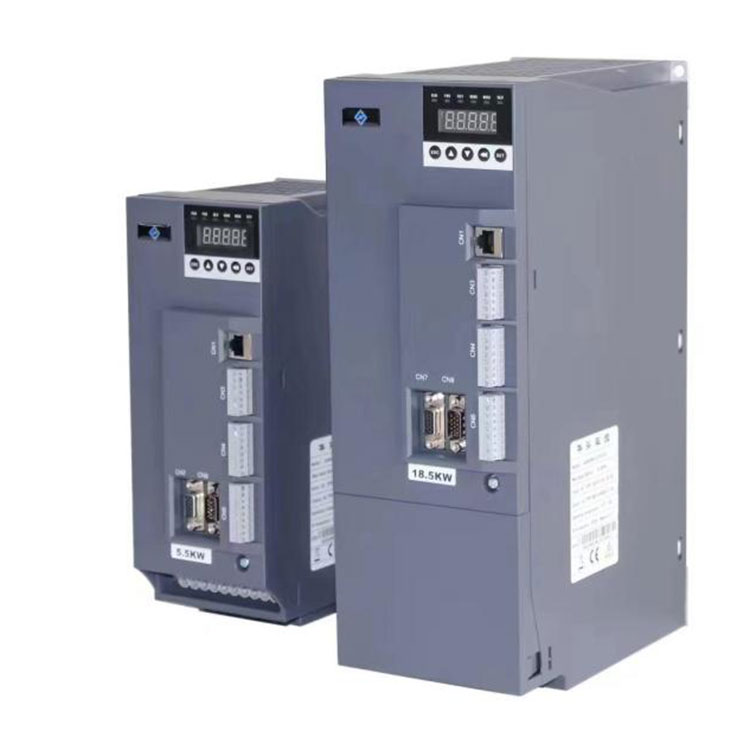
Key Selection Criteria for an AC Servo Drive
To ensure your machinery operates at peak efficiency, you must analyze your project requirements against the drive's technical capabilities. Below are the primary factors to consider before making a purchase.
1. Power Rating and Voltage Compatibility
The first technical hurdle is matching the drive to your motor and power supply. You must verify the continuous and peak power output.
-
Voltage Range: Common options include single-phase 220V or three-phase 380V. Using an incorrect voltage can damage the drive.
-
Current Capacity: The drive must supply sufficient current to the motor without overheating.
2. Control Mode and Feedback System
Different applications require different types of control. The AC Servo Drive you choose must support the specific mode your project demands.
-
Modes: Look for drives offering Position, Speed, and Torque control modes.
-
Feedback: The resolution of the encoder (e.g., incremental vs. absolute) directly impacts precision. High-resolution feedback is essential for applications requiring tight tolerance.
3. Communication Protocols
Modern factories rely on networked systems. Ensure the AC Servo Drive supports the industrial communication protocol used by your PLC or controller.
-
Common Protocols: EtherCAT, CANopen, Modbus, and Pulse Train.
-
Future-Proofing: Selecting a drive with multiple protocol options, like those from Yueli, allows for greater flexibility in system design.
4. Environmental and Physical Constraints
The operating environment significantly affects the longevity of your drive.
-
Ingress Protection (IP) Rating: For dusty or wet environments, a higher IP rating is necessary.
-
Operating Temperature: Verify the drive’s thermal management capabilities to prevent derating or failure in high-heat settings.
Comparison of AC Servo Drive Features
To help visualize the differences, here is a comparison of common specifications found in standard AC Servo Drive models, such as those manufactured by Yueli.
| Feature | Entry-Level Specification | Advanced Specification | Why It Matters |
|---|---|---|---|
| Control Mode | Position / Speed Only | Position, Speed, Torque, & Hybrid | Determines application versatility |
| Feedback | Incremental Encoder | Absolute Encoder | Ensures zero loss of position on power loss |
| Communication | Pulse Train | EtherCAT / CANopen | Affects data speed and synchronization |
| Protection | Overcurrent / Overvoltage | Full diagnostics + Environmental sealing | Reduces downtime and maintenance costs |
Common Mistakes to Avoid
When sourcing your AC Servo Drive, engineers often overlook the tuning capabilities of the unit. A drive with advanced auto-tuning features will save significant setup time. Furthermore, never underestimate the importance of after-sales support. Partnering with a brand like Yueli ensures you have access to technical documentation and support when integrating the drive into your complex machinery.
Frequently Asked Questions About AC Servo Drives
1. What is the difference between an AC Servo Drive and a standard VFD?
An AC Servo Drive is specifically designed for high-precision applications. Unlike a standard Variable Frequency Drive (VFD) which primarily controls motor speed, a AC Servo Drive controls position, velocity, and torque simultaneously with high accuracy. It relies on closed-loop feedback from an encoder to correct errors instantly, making it ideal for robotics and CNC machinery, whereas a VFD is suited for simple speed control like pumps or fans.
2. How do I know if my AC Servo Drive is properly tuned?
A properly tuned AC Servo Drive will result in smooth motion with minimal settling time. You can verify this by monitoring the motor for unusual noises, vibrations, or overshooting during deceleration. If the motor hums loudly or the system oscillates when stopping, the gain parameters are likely too high. Modern drives, including those from Yueli, feature auto-tuning functions that automatically adjust these parameters to match the mechanical load, ensuring optimal performance.
3. Can I use any AC motor with an AC Servo Drive?
No, you cannot use a standard induction motor with an AC Servo Drive. Servo drives are designed to work specifically with servo motors, which contain high-resolution feedback devices (encoders) and are built for dynamic response and high overload capacity. Attempting to connect a standard AC motor will result in poor performance, overheating, and potential damage to both the motor and the drive.
Conclusion and Call to Action
Selecting the right AC Servo Drive requires a careful balance of power, control, and communication features. By focusing on the factors outlined above, you can ensure your project achieves the precision and reliability it demands. Don't compromise on quality or support.
If you are ready to enhance your automation system with a high-performance solution, we are here to help. Contact us today to discuss your specific application requirements and discover how Yueli can provide the perfect drive for your project.
