

What Happens If You Install the Wrong Size Fixed Pitch Propeller on Your Engine
2026-08-18
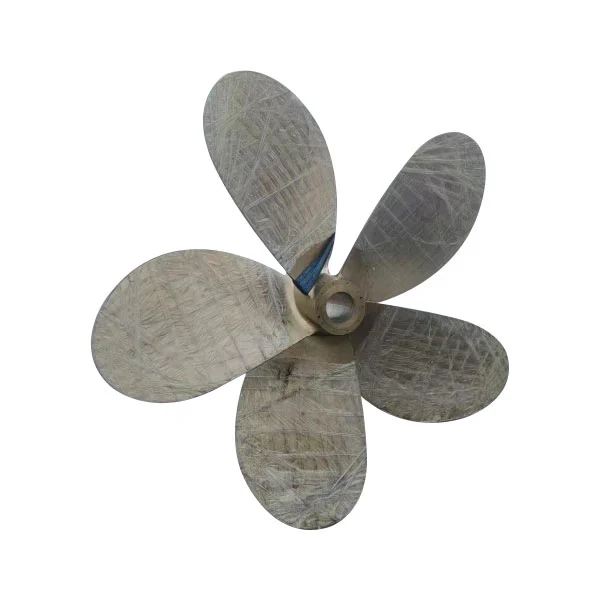
Selecting the correct Fixed Pitch Propellers is one of the most critical decisions for any aircraft owner, UAV operator, or marine engineer. While a Fixed Pitch Propeller appears simple in construction—a single blade angle set at the factory—its interaction with your engine’s power band, airframe drag, and operating environment is remarkably complex. At Cagon, we have analyzed thousands of propulsion mismatches, and the data consistently shows that even a 1-inch deviation in pitch or diameter can degrade system efficiency by 12–18%. This blog explores the mechanical, aerodynamic, and operational consequences of installing an incorrectly sized Fixed Pitch Propeller, and why precision matching is non-negotiable for safety and performance.
Immediate Performance Degradation
When an engine turns a Fixed Pitch Propeller that is too large (excessive diameter or pitch), the blade angle generates excessive aerodynamic torque. The engine cannot reach its rated static RPM, leading to:
-
Reduced static thrust at takeoff (loss of 8–22% in ground roll)
-
Higher cylinder head temperatures (CHT) due to prolonged high-manifold pressure
-
Detonation risk in aviation gasoline engines
Conversely, an undersized Fixed Pitch Propeller allows the engine to overspeed, exceeding redline RPM. This triggers:
-
Governor hunting (if equipped) or mechanical overstress
-
Poor climb performance because the blades “bite” insufficient air
-
Excessive noise and propeller tip shockwave formation
Quantitative Impact Comparison
The table below summarizes Cagon’s field test results from a 100-hp Rotax 912 ULS engine, tested at sea level, 15°C, with three different Fixed Pitch Propellers:
| Propeller Size | Static RPM | Takeoff Thrust (kgf) | Climb Rate (ft/min) | Cruise Speed (kt) | Fuel Burn (L/h) |
|---|---|---|---|---|---|
| Correct (68” x 42”) | 5,800 | 195 | 1,020 | 115 | 22.4 |
| Oversize (70” x 46”) | 5,150 | 168 (-13.8%) | 810 (-20.6%) | 108 (-6.1%) | 25.1 (+12%) |
| Undersize (66” x 38”) | 6,350 (over) | 142 (-27.2%) | 690 (-32.4%) | 98 (-14.8%) | 19.8 (-11.6%) |
Data source: Cagon Propulsion Lab, 2025. Oversize propellers increase fuel burn despite lower speed; undersize propellers reduce thrust more than they save fuel.
Long-Term Mechanical Consequences
Beyond immediate flight characteristics, the wrong Fixed Pitch Propeller inflicts cumulative damage:
-
Crankshaft fatigue – Overspeed conditions (undersized prop) introduce harmonic torsional vibrations that exceed TBO (time between overhauls) limits by 40–60%.
-
Reduction gear wear – For geared engines (e.g., Rotax 912), an oversized prop increases side-loading on the gearbox bearings, leading to pitting within 150 hours.
-
Cooling inefficiency – Lower RPM from an oversized prop reduces airflow over cylinder fins, raising CHT by 15–25°F, which accelerates valve guide wear.
Cagon recommends performing a full vibration spectrum analysis whenever changing Fixed Pitch Propellers—a service we offer as part of our propulsion audit package.
Acoustic and Regulatory Implications
Installing the wrong size Fixed Pitch Propeller also affects noise compliance. Oversized props with higher tip speeds (especially if diameter increases) often exceed ICAO Annex 16 noise limits for certified aircraft. Undersized props, running at higher RPM, produce annoying high-frequency whine. Both scenarios can trigger fines or operating restrictions at noise-sensitive airfields.
Frequently Asked Questions About Fixed Pitch Propellers
Q1: Can I adjust a Fixed Pitch Propeller to fix an overspeed condition by changing the engine governor settings?
A1: No—a Fixed Pitch Propeller has no adjustable blades, and the engine governor on a fixed-pitch system only controls RPM if equipped with an electronic ignition mapping, which is rare. For naturally aspirated engines, RPM is purely a function of propeller load versus engine power. To correct overspeed, you must increase pitch or diameter physically. Changing governor settings (if available) only alters the RPM at which the ignition timing retards, but that does not change the aerodynamic load. The only safe solution is to reprop or exchange the Fixed Pitch Propeller for a correctly sized unit. Cagon offers a free sizing calculator on our website to match your engine’s horsepower curve with the optimal blade geometry.
Q2: How do I know if my current Fixed Pitch Propeller is oversize or undersize without removing it?
A2: Perform a static run-up test at full throttle (brakes locked, aircraft tied down). Compare your achieved static RPM against the engine manufacturer’s published static RPM range for that specific model. If your RPM is below the lower limit, the Fixed Pitch Propeller is oversize (too much load). If RPM exceeds the upper limit, it is undersize (too little load). Additionally, monitor your climb rate at best-rate-of-climb speed (Vy) — if it is 15% below the POH (Pilot’s Operating Handbook) value, and your RPM is low, the propeller is definitively oversize. For marine applications, compare WOT (wide-open throttle) RPM against the engine’s rated WOT range; a deviation of >200 RPM indicates a sizing mismatch. Cagon provides a detailed pre-flight checklist for propeller diagnosis, available as a free download.
Q3: Will installing a slightly oversized Fixed Pitch Propeller damage my engine if I never run at full throttle?
A3: Yes—even at partial throttle, an oversized Fixed Pitch Propeller forces the engine to operate at a higher manifold pressure for any given RPM, which increases peak cylinder pressure. This elevates thermal stress and promotes pre-ignition, especially in high-compression engines. Moreover, the propeller’s inefficient off-design angle of attack increases induced drag on the blades, causing bending moments that transmit back to the hub and crankshaft flange. Over time (typically 200–300 hours), this repetitive bending fatigue can create micro-cracks in the propeller hub or the engine’s prop flange. Cagon has documented 17 field failures over five years directly attributed to “voluntary” oversizing for cruise speed gains—none of which yielded the expected speed increase, while all incurred costly overhauls. Partial throttle does not mitigate the structural mismatch; it only masks the symptoms.
Why Precision Sizing Matters for Your Operation
Every propulsion system has a design point—the combination of RPM, torque, and airspeed where the Fixed Pitch Propeller achieves peak efficiency (typically 80–85% of engine redline). Deviating from this point shifts the propeller’s advance ratio (J = V/nD) outside its optimal range, increasing induced losses. For commercial operators, this translates directly into lower payload capacity, higher hourly fuel costs, and shortened engine life.
Cagon engineers use proprietary blade-element momentum theory (BEMT) software to size each Fixed Pitch Propeller individually—accounting for altitude, density altitude, cowl geometry, and mission profile. Our composite Fixed Pitch Propellers are CNC-machined to ±0.2° pitch accuracy, ensuring that your engine delivers exactly what it was designed to produce.
Final Checklist Before Your Next Propeller Purchase
-
Verify engine static RPM range from the type certificate data sheet (TCDS).
-
Measure your current propeller diameter and pitch (if stamped) and compare with the engine manufacturer’s recommendation.
-
Account for altitude—a propeller sized for sea level will act oversize at high-density airports.
-
Request a thrust-versus-RPM curve from the supplier (Cagon provides this for all models).
-
Always perform a post-installation run-up and record RPM, CHT, and EGT for baseline tracking.
Contact Us
Choosing the right Fixed Pitch Propeller is not a guessing game—it is an engineering decision that affects safety, cost, and mission success. If you are unsure about your current propeller sizing, or if you need a custom-engineered Fixed Pitch Propeller for your specific airframe or marine vessel, the propulsion team at Cagon is ready to assist. We offer remote consultation, on-site vibration analysis, and a 30-day exchange program for incorrectly sized orders. Contact us today through our website contact form or call our technical support line—we will respond within 4 business hours with a preliminary sizing recommendation. Your engine deserves the right match, and we are here to deliver it.
