

What Heating Options Are Available in Industrial Air Conditioner for Cold Climate Deployment?
2026-10-30
A facility engineer at a mining camp in northern Canada reviews the winter performance of the Industrial Air Conditioner that serves the equipment room. The room must be cooled in summer because the electrical equipment generates heat. In winter, the same room must be heated to prevent condensation and frost. The cooling-only unit that was installed last year cannot heat, and the room temperature dropped to 2 degrees Celsius during a cold snap. The engineer is now specifying a unit with an integrated heating option. The choice is not simply a heater. It is a heating method that must work with the refrigeration circuit and with the low ambient temperature. This guide explains the heating options available for cold climate deployment.
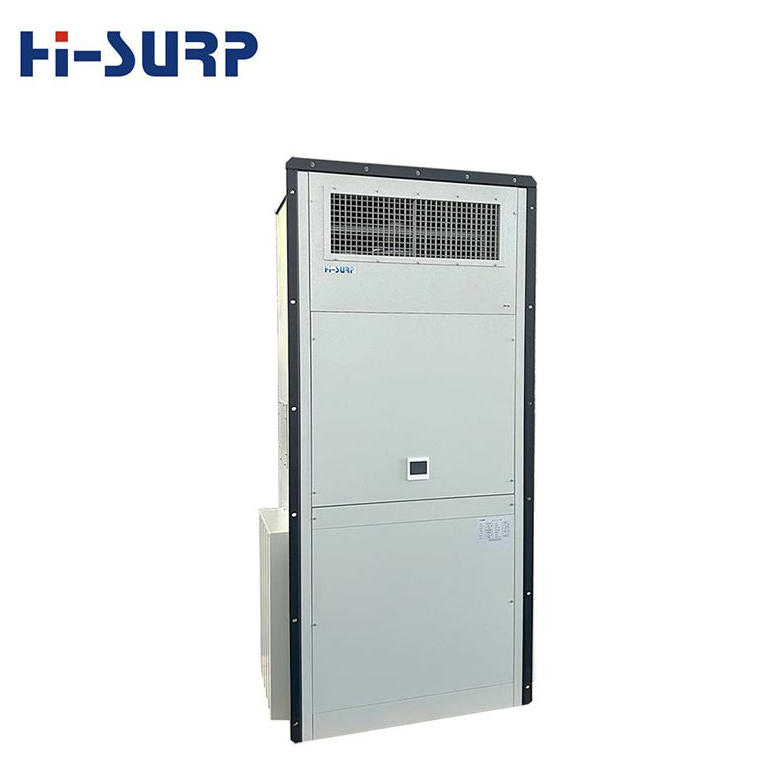
1. Why Does a Standard Cooling-Only Industrial Air Conditioner Fail in Cold Climate Deployment?
A cooling-only unit has three problems in cold weather. The first is the low evaporation pressure. When the outdoor temperature drops, the condensing pressure drops, and the expansion valve cannot maintain the evaporating pressure. The compressor may short-cycle or the coil may freeze. The second is oil migration. The lubricating oil in the compressor becomes viscous at low temperature, and it may not return from the evaporator. The third is liquid slugging. Refrigerant can migrate to the compressor during the off cycle and slug the compressor at startup. These problems are not solved by adding a heater. They must be solved by a unit that is designed for low ambient operation. In our factory, we manufacture Industrial Air Conditioner units with integrated heating and low ambient control. Ningbo Hicon Industry Co., Ltd. has been manufacturing industrial air conditioners for over 12 years.
The heating option is therefore part of a system. The unit must have a low ambient kit, a crankcase heater, and a control sequence that coordinates the heating and cooling modes. A heater that is added to a cooling-only unit without these provisions will not deliver reliable performance.
2. What Are the Main Heating Options Available and How Do They Differ?
There are four heating options for an Industrial Air Conditioner. The first is the electric resistance heater. It uses a wire element or a finned tubular element to convert electricity into heat. It is simple and reliable, but it consumes one unit of electricity for each unit of heat. The second is the PTC heater. It uses a positive temperature coefficient ceramic element that self-regulates its temperature. It is safer than a resistance heater because it cannot overheat, and it is more compact. The third is the heat pump reverse cycle. It reverses the refrigerant flow so that the outdoor coil becomes the evaporator and the indoor coil becomes the condenser. It delivers two to three units of heat per unit of electricity, but its capacity drops as the outdoor temperature falls. The fourth is the hot gas bypass. It routes hot compressor discharge gas directly to the indoor coil. It provides heat without additional electricity, but it requires the compressor to run and it provides limited capacity. The table below compares the four options.
| Heating option | Efficiency (COP) | Minimum outdoor temperature | Response time | Maintenance |
| Electric resistance | 1.0 | -40°C | Fast | Low |
| PTC heater | 1.0 | -40°C | Fast | Low |
| Heat pump reverse cycle | 2.0 – 3.0 | -15°C (standard) / -25°C (cold climate) | Moderate | Moderate |
| Hot gas bypass | 1.5 – 2.0 (no extra power) | Compressor must run | Slow | Moderate |
In our factory, we offer all four options and we combine them when the climate requires it. For a site that experiences temperatures below -15°C, we recommend a combination of heat pump reverse cycle for mild cold and electric or PTC heaters for deep cold. Ningbo Hicon Industry Co., Ltd. provides the heating capacity curve for each option at different outdoor temperatures.
3. How Does the Heating Option Interact With the Refrigeration Circuit?
The heating option does not operate in isolation. It must be coordinated with the refrigeration circuit. In the heat pump reverse cycle, a four-way reversing valve changes the direction of the refrigerant flow. The indoor coil becomes the condenser, and the outdoor coil becomes the evaporator. The unit must have a defrost control to remove frost from the outdoor coil. In the hot gas bypass, a solenoid valve opens to route the discharge gas to the indoor coil. The compressor must be running, and the condensing pressure must be maintained. In the electric and PTC heaters, the heater is independent of the refrigeration circuit, but the control must prevent the heater and the compressor from running simultaneously in a way that fights each other. The table below shows the recommended heating mode at different outdoor temperatures.
| Outdoor temperature | Recommended heating mode | Cooling mode | Control action |
| +10°C to +15°C | Heat pump reverse cycle | Off | Reversing valve energized |
| 0°C to +10°C | Heat pump reverse cycle | Off | Defrost cycle every 60 minutes |
| -10°C to 0°C | Heat pump + electric backup | Off | Backup heater stages in |
| -25°C to -10°C | Electric or PTC only | Off | Heat pump locked out |
| Below -25°C | Electric or PTC only | Off | Crankcase heater on; low ambient kit active |
Facility engineer's note: The control sequence is as important as the heater itself. A unit that switches to electric heat too early wastes energy. A unit that stays on the heat pump too long in deep cold may not maintain the room temperature. In our factory, we program the changeover point based on the heat pump capacity curve and the building heat loss. Ningbo Hicon Industry Co., Ltd. provides the control sequence and the setpoints with each unit.
4. Why Do Insulation, Airflow, and Defrost Control Decide Whether the Heating Option Works in Practice?
The heating option can only maintain the room temperature if the heat loss is controlled. The equipment room must be insulated, and the ductwork must be insulated. The infiltration through doors and cable penetrations must be sealed. The airflow must be balanced so that the warm air reaches the equipment and does not stratify at the ceiling. In the heat pump reverse cycle, the defrost control must be set correctly. If the defrost cycle is too short, the outdoor coil remains frosted and the capacity drops. If the defrost cycle is too long, the room temperature drops. In our factory, we test the defrost control in a climate chamber at -20°C and verify that the room temperature remains within 2 degrees Celsius of the setpoint. We also recommend that the installer seal all cable penetrations and install a door sweep.
The low ambient kit is also important. It includes a fan speed controller, a crankcase heater, and a receiver. The fan speed controller maintains the condensing pressure when the outdoor temperature is low. The crankcase heater prevents refrigerant migration during the off cycle. The receiver provides a liquid seal for the expansion valve.
5. How Should Engineers Specify and Verify Heating Options for Cold Climate Industrial Air Conditioner Projects?
The specification should include five items. The first is the minimum outdoor temperature. The second is the required room temperature and the heat loss. The third is the heating option and the backup option. The fourth is the low ambient kit. The fifth is the defrost control. The verification should include four tests. The first is the low temperature startup test. The second is the heating capacity test at the minimum outdoor temperature. The third is the defrost cycle test. The fourth is the energy consumption measurement. In our factory, we perform these tests on a sample basis for each production lot and provide the test report with the shipment. Ningbo Hicon Industry Co., Ltd. also offers a site acceptance test with the customer's load.
We recommend that the engineer specify the heating capacity at the design outdoor temperature, not at the catalog condition. The catalog heating capacity is usually given at 7°C outdoor temperature, and it drops by 30 to 50 percent at -15°C. A unit that appears adequate on the catalog sheet may be insufficient at the actual site condition.
Frequently Asked Questions About Heating Options in Industrial Air Conditioner for Cold Climate Deployment
Summary for Facility Engineers and Project Designers
An Industrial Air Conditioner deployed in a cold climate needs a heating option that works with the refrigeration circuit and with the low ambient conditions. The four options are electric resistance, PTC, heat pump reverse cycle, and hot gas bypass. Each has a different efficiency, minimum temperature, and response time. The best solution is usually a combination: heat pump reverse cycle for mild cold and electric or PTC heat for deep cold. The control sequence, the low ambient kit, the insulation, and the defrost control determine whether the heating option works in practice. The specification should include the minimum outdoor temperature, the heating capacity at that temperature, the low ambient kit, and the defrost control. Ningbo Hicon Industry Co., Ltd. has been manufacturing Industrial Air Conditioner units for over 12 years and provides full cold climate selection and verification support for our customers.
