

What Is a Metal Stamping Die Cutting Blade and Why Does It Matter for Precision Manufacturing?
2026-02-09
In modern manufacturing, precision and efficiency are essential for staying competitive. From automotive components to consumer electronics, manufacturers depend on reliable tooling solutions to maintain product consistency and cost control. Among these tools, the Metal Stamping Die Cutting Blade plays a critical role in shaping and cutting sheet materials with high repeatability and minimal waste. By integrating advanced metallurgy, precision grinding, and optimized geometry, companies such as Shenzhen Xincheng Precision Technology Co., Ltd. provide cutting blades that help factories improve throughput, extend tool life, and ensure consistent part quality. Understanding how these blades function and why they matter can guide engineers and procurement teams toward better production decisions.
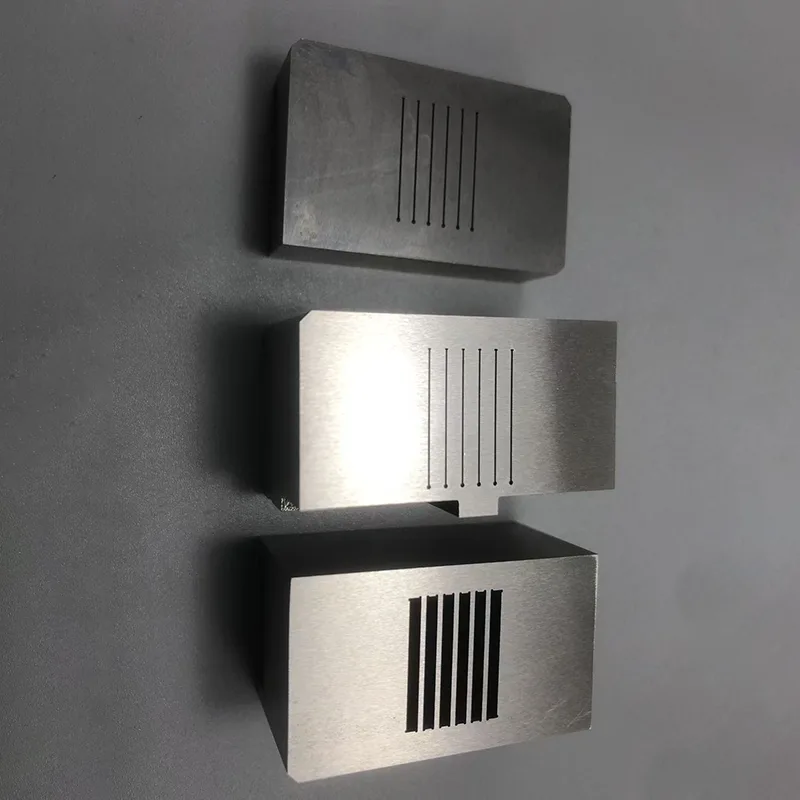
The Role and Function of Metal Stamping Die Cutting Blade
A Metal Stamping Die Cutting Blade is a specialized cutting component installed in stamping dies or tooling systems to slice, trim, or form sheet metal or composite materials. Its performance directly impacts dimensional accuracy, surface finish, and operational stability.
Core Functions
-
Precision Cutting: Achieves tight tolerances in high-speed production lines
-
Material Shaping: Enables complex geometries and custom forms
-
Waste Reduction: Improves material utilization through accurate cuts
-
Tooling Integration: Compatible with progressive dies and automated presses
These functions make the blade indispensable in industries such as automotive manufacturing, aerospace fabrication, appliance production, and electronics assembly.
Key Features Offered by Shenzhen Xincheng Precision Technology Co., Ltd.
Shenzhen Xincheng Precision Technology Co., Ltd. focuses on advanced tooling solutions engineered for durability and performance. Their Metal Stamping Die Cutting Blade products emphasize:
-
High-grade alloy or tool steel construction
-
Precision CNC grinding for edge uniformity
-
Heat treatment for enhanced hardness and wear resistance
-
Customization for application-specific requirements
-
Stable performance under high-speed stamping conditions
These design considerations translate into extended blade life cycles and reduced maintenance costs for manufacturers.
Typical Specifications Overview
Below is a simplified reference table showing common parameters associated with a Metal Stamping Die Cutting Blade:
| Parameter | Description | Typical Range |
|---|---|---|
| Material | Tool steel / Alloy steel | D2, SKD11, etc. |
| Hardness | Post heat-treatment hardness | 58–62 HRC |
| Edge Accuracy | Grinding precision tolerance | ±0.005 mm |
| Application Thickness | Sheet metal compatibility | 0.2–6 mm |
| Surface Finish | Edge smoothness | Mirror / Fine grind |
Note: Specifications vary depending on customization and application.
Why the Metal Stamping Die Cutting Blade Is Important
1️⃣ Production Efficiency
A high-quality Metal Stamping Die Cutting Blade minimizes downtime and supports consistent cutting speeds, allowing manufacturers to maintain production schedules.
2️⃣ Product Quality
Sharp, stable cutting edges ensure clean part geometry, reducing secondary finishing requirements.
3️⃣ Cost Control
Durable blades reduce replacement frequency and maintenance costs, optimizing long-term operational budgets.
4️⃣ Safety and Stability
Reliable tooling decreases the risk of unexpected breakage, contributing to safer production environments.
Application Scenarios
The versatility of the Metal Stamping Die Cutting Blade makes it suitable for various industrial applications:
-
Automotive body panel production
-
Electrical component fabrication
-
Packaging material shaping
-
Industrial hardware manufacturing
-
Appliance casing processing
By adapting blade geometry and material composition, manufacturers can address specific industry challenges effectively.
Benefits of Choosing a Professional Manufacturer
Working with a trusted supplier like Shenzhen Xincheng Precision Technology Co., Ltd. ensures access to technical expertise and customization support. Advantages include:
-
Engineering consultation for optimal blade design
-
Consistent production quality control
-
Flexible manufacturing capacity
-
Competitive global supply chain support
These factors contribute to reliable tooling performance and smoother integration into existing workflows.
Practical Selection Checklist
When evaluating a Metal Stamping Die Cutting Blade, consider the following:
-
Material compatibility with your sheet stock
-
Required hardness and wear resistance
-
Precision tolerance requirements
-
Expected production volume
-
Supplier technical support availability
Making informed choices based on these factors helps avoid performance bottlenecks.
Conclusion
The Metal Stamping Die Cutting Blade is more than a simple cutting tool — it is a cornerstone of precision manufacturing that influences productivity, product quality, and operational costs. With advanced material engineering and tailored solutions, Shenzhen Xincheng Precision Technology Co., Ltd. delivers blades designed to meet demanding industrial environments. Whether optimizing an existing production line or planning new tooling integration, investing in high-performance blades can yield measurable improvements across manufacturing metrics.
If you are looking to enhance your production efficiency and product accuracy with reliable tooling solutions, contact us today to explore how our precision-engineered products can support your business goals.
