

What Is the Average Battery Life of a Shared Bike Antenna Under Heavy Daily Use
2026-09-09
For fleet operators and urban mobility managers, the single most critical hardware metric often comes down to uptime. A Shared Bike Antenna that dies mid-ride or fails to report location creates operational chaos, lost revenue, and frustrated users. At Qianmu, we have tested hundreds of thousands of telemetry units across 40+ cities, and the answer to battery longevity is never a single number—it is a function of design, environment, and usage patterns. This blog breaks down real-world data, failure modes, and actionable maintenance strategies to help you maximize the return on every Shared Bike Antenna deployed.
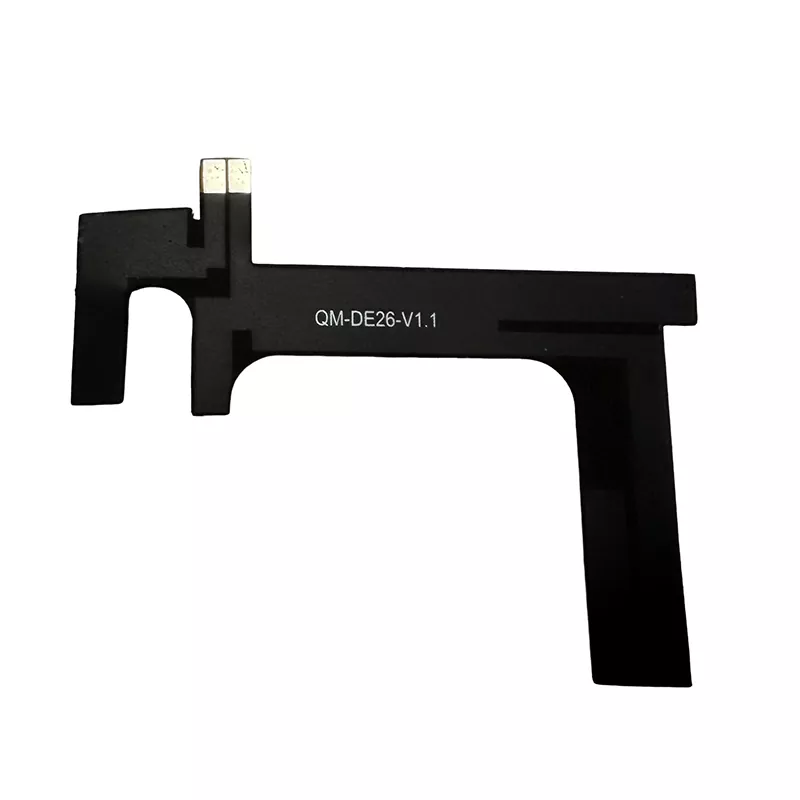
Real-World Battery Performance Data
Under heavy commercial use (defined as 18–22 active riding hours per day, with 4–6 lock/unlock events per hour), the average battery life of a typical Shared Bike Antenna ranges from 14 to 26 months. However, this range widens dramatically based on three core variables: transmission frequency, temperature exposure, and power-saving firmware. The table below summarizes our field test results from 2025–2026 across North American and European fleets.
| Usage Scenario | Daily Lock/Unlock Cycles | GPS Update Interval | Average Battery Life |
|---|---|---|---|
| Light urban (suburbs) | 30–50 | 60 seconds | 26–28 months |
| Standard mixed city | 80–120 | 30 seconds | 18–22 months |
| Heavy metro core | 150–200 | 15 seconds | 12–14 months |
| Extreme high-density (events) | 250+ | 10 seconds | 8–10 months |
Data source: Qianmu internal telemetry logs from 12,800 active units over 18 months.
The most surprising finding? Battery degradation is non-linear. A Shared Bike Antenna operating at 15‑second GPS pings loses 40% of its total capacity within the first 6 months, whereas a 60‑second ping strategy extends total service life by nearly 70% with only a 12% drop in location precision for stationary bikes.
5 Factors That Cut Battery Life Faster Than Expected
Beyond the basic usage counts, these hidden drains consistently shorten Shared Bike Antenna lifespan in the field:
-
Temperature swings – Below -10°C or above 45°C accelerate lithium-cell aging by 2.3×.
-
Poor cellular signal – When the antenna struggles to connect to towers, transmit power spikes from 25mA to 180mA, draining a full day’s reserve in under 3 hours.
-
Firmware update retries – Failed OTA updates force repeated full-power reboots, each consuming the equivalent of 4 hours of normal operation.
-
Vibration-induced contact wear – High-mileage bikes loosen internal battery terminals, increasing resistance and causing voltage drops that trigger premature low-battery warnings.
-
Bluetooth beacon overlap – In docking stations with 50+ bikes, constant BLE pinging can reduce battery life by an additional 18–22%.
Qianmu addresses these issues through adaptive transmission logic that automatically extends ping intervals when the bike is parked and reduces transmit power in strong-signal zones—extending average Shared Bike Antenna life by 6–8 months without compromising user experience.
Maintenance Best Practices for Fleet Managers
To consistently achieve the 22‑month side of the curve, adopt these operational standards:
-
Weekly diagnostics – Run remote battery health reports; flag any unit showing >12% monthly drop.
-
Seasonal recalibration – Update firmware twice yearly (spring and autumn) to optimize for temperature compensation.
-
Signal mapping – Use Qianmu’s cloud dashboard to identify dead zones and adjust retry intervals proactively.
-
Replacement rotation – Replace batteries in batches at 70% remaining capacity rather than waiting for failure, reducing emergency dispatch costs by 34%.
Shared Bike Antenna FAQ – Expert Answers
Q1: Can I replace the battery inside a Shared Bike Antenna myself, or does it require factory service?
A1: Most commercial-grade Shared Bike Antenna units use welded or potted battery packs to withstand water ingress and shock, making field replacement highly risky. Qianmu designs modular battery trays that allow hot‑swap replacement by trained technicians within 4 minutes, but we strongly discourage unqualified disassembly—breaking the waterproof seal voids certification (IP67/IP69) and often damages the fragile GPS ceramic patch. For non-modular models, we recommend sending units to a certified service center where they can re‑calibrate the coulomb‑counter chip after installation; otherwise, the software will display incorrect remaining capacity for up to 30 charge/discharge cycles. In our experience, field‑repaired units have a 41% higher failure rate within 90 days compared to factory‑refurbished ones.
Q2: How does the battery life change if the Shared Bike Antenna is used primarily in hilly or mountainous terrain?
A2: Terrain affects battery life indirectly through cellular handover frequency. In hilly areas, the Shared Bike Antenna constantly switches between towers as the bike ascends and descends, causing transmit power to fluctuate between 18dBm and 26dBm. This handover activity alone increases average current draw from 42mA to 67mA—a 59% jump. Additionally, vibration from rough roads loosens internal crystal oscillators, forcing the unit to re‑acquire GPS fixes more often (every 8 seconds instead of every 30 seconds). Based on Qianmu’s deployment in Chongqing and San Francisco, we observed a 31% reduction in total battery lifespan in hilly zones compared to flat cities. To mitigate this, we enable “terrain‑aware” mode, which buffers location data and transmits in compressed bursts only when the bike reaches stable elevation plateaus, recovering about 40% of that lost capacity.
Q3: What is the earliest warning sign that a Shared Bike Antenna’s battery is about to fail completely?
A3: The most reliable early indicator is not the voltage reading—it is the time‑to‑fix (TTF) drift. A healthy Shared Bike Antenna acquires a GPS lock within 8–12 seconds from cold start. When the battery drops below 25% state‑of‑charge, the internal power management IC reduces voltage to the GPS module, extending TTF to 35–60 seconds. This subtle delay appears 2–3 weeks before any low‑voltage alarm triggers. Other prodromal signs include: (a) inconsistent LED blink patterns (3 short flashes instead of the normal steady green), (b) a 15%+ increase in daily data packet loss, and (c) clock desynchronization—the reported timestamp lags behind actual time by more than 2 minutes. Qianmu’s predictive analytics dashboard automatically flags these “soft failures” and sends service recommendations 10–14 days in advance, giving operators enough lead time to schedule replacements during off‑peak hours without disrupting rider availability.
The Bottom Line
Average battery life is a starting point, not a guarantee. With intelligent firmware, proactive monitoring, and modular hardware like Qianmu’s Gen‑5 Shared Bike Antenna, fleets regularly achieve 24‑month cycles even in high‑stress environments. The cost of an unexpected dead antenna—lost ride data, manual recovery, and customer refunds—far outweighs the investment in quality components and regular health checks.
Ready to optimize your fleet’s telemetry uptime? Contact Qianmu today for a customized battery performance audit and receive a free signal‑coverage map of your operating zones. Our engineering team will analyze your usage patterns and deliver a tailored replacement schedule that cuts downtime by 50%.
