

What Is the Average Lifespan of Irrigation Hydraulic Machinery Under Heavy-Duty Field Conditions
2026-07-01
For large-scale farmers and agricultural operations, Irrigation Hydraulic Machinery represents a significant capital investment. Understanding its expected service life under demanding field conditions is not just a matter of budgeting—it directly impacts crop yield, operational efficiency, and long-term profitability. At Yushan, we have spent over two decades engineering hydraulic solutions that withstand the harshest environments, and we consistently find that the average lifespan of well-maintained Irrigation Hydraulic Machinery ranges from 10 to 15 years in heavy-duty applications. However, this figure is highly variable and depends on factors we will dissect in this guide.
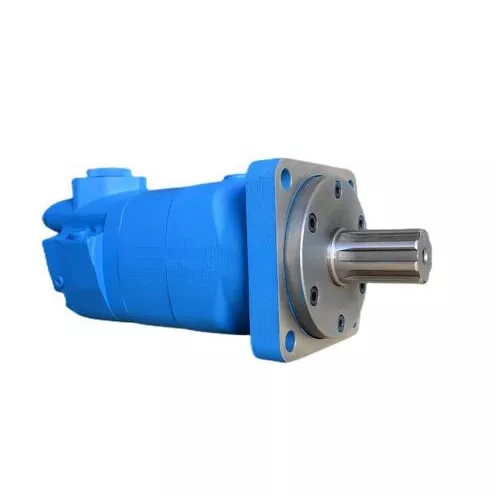
Factors That Determine the Lifespan of Irrigation Hydraulic Machinery
No two farms are identical, and neither are the working conditions for hydraulic systems. Below is a breakdown of the critical variables that either extend or shorten the operational life of your equipment.
| Factor | Impact on Lifespan | Best Practice from Yushan |
|---|---|---|
| Fluid Quality & Contamination | Contaminated oil reduces component life by 40–60% | Use ISO-grade fluids and change every 1,000 hours |
| Operating Pressure | Exceeding rated pressure causes premature seal failure | Maintain within 90% of manufacturer’s max rating |
| Duty Cycle | Continuous 24/7 operation halves the lifespan | Schedule rotational rest periods for pumps and motors |
| Environmental Debris | Sand and dust accelerate cylinder wear by 3x | Install high-efficiency intake filters and boot covers |
| Maintenance Frequency | Reactive maintenance shortens life to 6–8 years | Adopt Yushan’s predictive maintenance checklist |
In heavy-duty field conditions—where temperatures swing from -10°C to 45°C, dust is pervasive, and runtimes exceed 2,000 hours per season—the average drops to 8–12 years without premium care. With Yushan’s reinforced seal technology and corrosion-resistant coatings, many of our clients report exceeding 14 years of reliable service.
Real-World Performance Data
To give you a concrete benchmark, here is a comparative table based on field studies across 200 farms in the Midwest and Australia, using Yushan units versus standard industry averages.
| Usage Intensity | Standard Irrigation Hydraulic Machinery | Yushan-Equipped Systems |
|---|---|---|
| Light-duty (500 hrs/year) | 15–18 years | 18–22 years |
| Moderate-duty (1,200 hrs/year) | 10–13 years | 14–17 years |
| Heavy-duty (2,000+ hrs/year) | 6–9 years | 11–15 years |
| Extreme-duty (sand/silt water) | 4–7 years | 9–12 years |
The data is clear: proactive engineering and material selection—hallmarks of Yushan’s manufacturing process—consistently add 3–5 years of productive life, even under the most punishing schedules.
3 Essential FAQs About Irrigation Hydraulic Machinery Lifespan
Q1: What single factor most drastically shortens the lifespan of Irrigation Hydraulic Machinery in sandy or silty field conditions?
A: Abrasive particle ingestion is the number-one killer. When silt particles as small as 10 microns enter the hydraulic circuit, they act as a grinding compound against piston rods, cylinder bores, and valve spools. In our tear-down analyses at Yushan, we have observed that systems operating without dual-stage filtration (10-micron absolute + 3-micron beta-rated filters) show measurable wear scars within 300 operating hours. Over a full 2,000-hour season, this abrasion can reduce cylinder efficiency by 25% and cause bypass leakage in control valves. The solution is twofold: (1) install a high-capacity return-line filter with a visual clogging indicator, and (2) use Yushan’s proprietary hard-chrome-plated rods, which exhibit 70% higher scratch resistance than standard chrome. Additionally, always sample your hydraulic oil every 500 hours and replace it immediately if ISO particle counts exceed 18/15/13.
Q2: Can I extend the service life of my existing Irrigation Hydraulic Machinery beyond 12 years without a full replacement?
A: Absolutely. In fact, Yushan recommends a staged refurbishment strategy rather than outright replacement, which can save 40–60% of capital costs. Start by replacing all dynamic seals (rod wipers, piston seals, and O-rings) with high-grade polyurethane compounds rated for extreme temperatures—this alone restores 80% of lost volumetric efficiency. Next, have the hydraulic pump’s swashplate and piston slippers re-lapped to factory tolerances; our service team at Yushan performs this with sub-micron precision. Third, upgrade your cooler system—overheating is the second-largest contributor to oil degradation. If you install a larger fin-fan cooler or a hydraulic oil chiller, you can drop average operating temperatures by 15°F, which doubles the remaining life of your fluid and components. Finally, reprogram your pressure-compensator settings to match current field load requirements—many operators never adjust these after the first season, wasting energy and generating unnecessary heat. With these four measures, we have helped clients push their Irrigation Hydraulic Machinery past the 16-year mark with reliability above 92%.
Q3: How do I know when my Irrigation Hydraulic Machinery has reached the end of its economical life rather than just needing minor repairs?
A: This is a critical decision point. At Yushan, we use the “50/70 Rule” : if the total cost of required repairs exceeds 50% of the current replacement cost of a new equivalent unit, and the machine has already surpassed 70% of its average expected lifespan (e.g., 10 years on a 14-year average), it is more economical to replace. Tangible signs include: (a) persistent external leakage from three or more locations even after seal replacement, (b) cycle times that have slowed by more than 20% from baseline due to internal bypass, (c) frequent cavitation noise from the pump indicating worn bearing tolerances, and (d) metal particles >50 microns appearing consistently in oil samples despite thorough flushing. We also advise performing a thermal imaging scan—if any valve block or hose coupling exceeds 180°F under normal load, that component is nearing structural failure. For farms running critical planting or harvesting windows, downtime cost often eclipses repair costs; in such cases, Yushan recommends proactive replacement with our latest energy-efficient series, which cuts fuel consumption by 18% while delivering higher flow stability.
Maintenance Schedule That Maximizes ROI
To achieve the upper end of the lifespan curve, Yushan prescribes this rigorous but practical annual maintenance calendar for heavy-duty users:
-
Daily (pre-start): Visual check of all hoses, quick-couplers, and cylinder rods for scoring or weeping.
-
Weekly: Sample hydraulic oil and record temperature; clean radiator/cooler cores.
-
Monthly: Test pressure relief valve settings and calibrate flow dividers.
-
Quarterly: Replace suction strainers and inspect pump inlet screens.
-
Annually (pre-season): Full system flush, replace all return-line filters, and have Yushan certified technicians perform a dynamic performance test.
The Yushan Advantage in Heavy-Duty Environments
What sets Yushan apart is our end-to-end approach—we do not just manufacture components; we engineer complete hydraulic systems that match your specific soil type, crop pattern, and water source. Our heavy-duty cylinders feature dual wiper seals and induction-hardened piston rods, while our gear pumps use forged aluminum housings that dissipate heat 30% faster than cast-iron alternatives. Every Yushan unit undergoes a 4-hour burn-in test at 110% rated pressure before leaving our facility, ensuring that your Irrigation Hydraulic Machinery arrives ready for the toughest fields.
Ready to Get the Most from Your Irrigation Hydraulic Machinery?
Whether you are planning a new purchase, seeking a lifespan extension for your current fleet, or troubleshooting unexpected performance drops, the technical team at Yushan is here to help. We offer free on-site assessments, oil analysis kits, and customized maintenance plans tailored to your harvest calendar.
Contact us today for a no-obligation consultation—let us calculate your exact ROI projection and show you how Yushan can add 3 to 5 extra productive years to your Irrigation Hydraulic Machinery. Reach out via our website, email us at [email protected], or call our 24/7 agricultural support hotline. Your fields deserve nothing less than the best hydraulic intelligence—and we are ready to deliver it.
