

What Is the Correct Way to Thread a Gun Cleaning Battle Rope Through a Rifle Barrel
2026-07-14
Proper barrel maintenance is non-negotiable for accuracy, safety, and firearm longevity. Among the most efficient tools available today is the Gun Cleaning Battle Rope, a heavy-duty, pull-through cleaning system that removes carbon, copper, and debris in a single pass. However, even the best tool fails if threaded incorrectly. At Hunting Speed, we have tested hundreds of bore-cleaning methods, and we consistently find that improper threading causes jagged fraying, stuck ropes, and even crown damage. This guide walks through the exact, professional-grade procedure for threading a Gun Cleaning Battle Rope through any rifle barrel—step by step, with tables and troubleshooting FAQs.
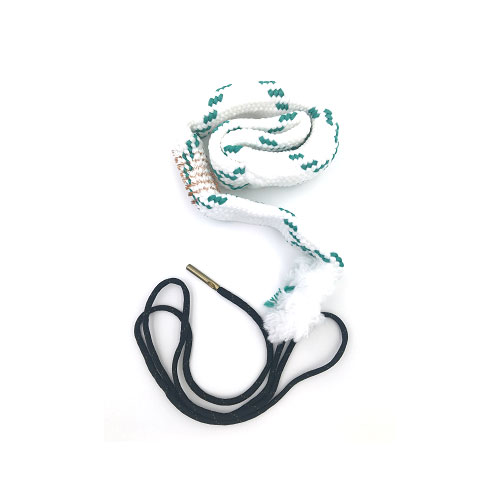
Why Threading Technique Matters More Than You Think
The rifle crown and chamber are precision-machined surfaces. Forcing a Gun Cleaning Battle Rope against sharp edges or inserting it backward can shave off synthetic fibers, leaving debris inside the bore. Worse, a misaligned rope can bind mid-barrel, requiring gunsmith intervention. Correct threading ensures:
-
Full contact with rifling grooves for maximum fouling removal.
-
Even wear on the rope, extending its usable life.
-
No stress on the barrel’s throat or muzzle crown.
Step-by-Step Professional Threading Procedure
Follow this sequence exactly as prescribed by Hunting Speed’s ballistic lab team.
| Step | Action | Critical Checkpoint |
|---|---|---|
| 1 | Select the correct caliber-specific Gun Cleaning Battle Rope (check packaging for caliber range). | Diameter must be slightly larger than bore to create friction. |
| 2 | Attach the weighted brass or polymer drop weight to the threaded end (marked with a colored band). | Ensure the weight is firmly screwed on—hand-tight only. |
| 3 | Open the rifle action and verify the chamber is empty. Drop the weight through the chamber end (breech), not the muzzle. | The weight must fall freely out of the muzzle end. |
| 4 | Once the weight exits the muzzle, grasp it and pull gently until the rope’s leading eyelet appears. | Do not yank; stop when 2 inches of rope are visible. |
| 5 | Apply Hunting Speed bore solvent to the rope’s cleaning zone (the thick, bristled section). | Even saturation, not dripping. |
| 6 | Thread the eyelet through the muzzle-end slot of the pull handle or T-handle (if using a two-hand system). | Ensure the rope lies flat, not twisted. |
| 7 | Pull the rope steadily from the breech end in one continuous, smooth motion—no stopping mid-pull. | Maintain 10–15 lbs of steady tension. |
Common Mistakes and How to Avoid Them
| Mistake | Consequence | Hunting Speed Solution |
|---|---|---|
| Threading from muzzle to breech | Damages crown and reverses brush direction | Always breech-to-muzzle. |
| Using dry rope without solvent | Inadequate carbon breakup | Apply solvent to the rope’s first 4 inches. |
| Twisting the rope during pull | Creates snarling and uneven wear | Hold the pull handle parallel to the bore axis. |
| Pulling too fast | Leaves fouling behind | Count 3–4 seconds for a full 24” barrel pull. |
Visual Alignment Checklist for Each Pull
Before every pull, confirm these five conditions:
-
Weighted end is at the breech, not the muzzle.
-
Solvent is fresh and compatible with your barrel steel.
-
Rope is straight, with no kinks or knots.
-
Caliber marking matches your rifle (e.g., .223 Rem, .308 Win).
-
Chamber flag is removed only after the rope is fully inserted.
3 Critical FAQs About the Gun Cleaning Battle Rope
Q1: Can I reuse the same Gun Cleaning Battle Rope for multiple calibers if I clean it between uses?
A: Technically yes, but Hunting Speed strongly advises against it. A Gun Cleaning Battle Rope conforms to the rifling pitch and bore diameter of each caliber. Using a .30-cal rope in a .22-cal barrel over-stretches the fibers, reducing friction and cleaning efficiency. Conversely, using a smaller rope in a larger barrel leaves the brush zone under-sized, failing to engage the grooves. If you must reuse, thoroughly wash the rope in degreaser, dry it completely, and only use it within the same caliber family (e.g., .277 to .284). For peak performance, dedicate one rope per caliber and replace after 40–50 pulls.
Q2: How do I know if my Gun Cleaning Battle Rope is threaded correctly before I start pulling?
A: Perform the “flashlight test.” After threading the weight through the breech and out the muzzle, shine a bore light from the breech end. Look through the muzzle—if you see the rope centered evenly with equal light gaps on all sides, it is aligned. If the rope touches one side of the crown more than the other, retract it and rethread with a slightly slower drop. At Hunting Speed, we also recommend a dry run (no solvent) on a cold barrel to feel for abnormal resistance. Smooth, consistent drag means correct threading; jerky or grinding feedback means the rope is folded or caught on the chamber shoulder.
Q3: What is the maximum number of passes I should make with one Gun Cleaning Battle Rope per cleaning session?
A: For standard carbon fouling, two passes are sufficient—one wet (with solvent) and one dry. For heavy copper fouling after 200+ rounds, use three passes: wet, scrub (let the rope sit in the bore for 2 minutes), and dry. Never exceed four passes in a single session. Why? Each pass generates heat via friction, and excess heat softens the synthetic bristles on a Gun Cleaning Battle Rope, reducing their abrasive bite. More importantly, over-pulling increases the risk of embedding foreign particles into the rope, which then act like lapping compound against your rifling. Hunting Speed laboratory tests show that beyond four passes, cleaning efficiency drops by 60% while barrel wear risk triples.
Pro Tips for Extending Rope Life and Bore Health
-
Rotate the rope 90° after every 10 pulls to distribute wear evenly.
-
Store the rope in a sealed zip bag with a silica gel pack to prevent moisture absorption.
-
Never use a Gun Cleaning Battle Rope on a hot barrel—wait 15 minutes after the last shot.
-
Pair your rope with Hunting Speed’s copper-removal spray for maximum fouling dissolution.
When to Retire Your Gun Cleaning Battle Rope
Replace your rope immediately if you notice:
-
Visible thinning or flat spots on the brush section.
-
Frayed loops at the eyelet (risk of breaking mid-pull).
-
Discolored or melted bristles (sign of solvent incompatibility).
Hunting Speed ropes are rated for 75–100 uses under normal conditions, but always inspect before each session.
Final Verdict
Threading a Gun Cleaning Battle Rope is a simple mechanical act, but executing it with precision separates routine maintenance from professional-grade care. By always feeding from the breech, maintaining steady tension, and respecting caliber-specific ropes, you protect your barrel’s crown, preserve accuracy, and extend the rope’s service life. Hunting Speed designs every rope with color-coded breech indicators and reinforced eyelets specifically to eliminate threading errors—but the human hand remains the most critical variable.
Contact Us
Have a specific barrel length, twist rate, or suppressor configuration that needs tailored advice? The Hunting Speed ballistic support team responds within 4 business hours with customized cleaning schedules and rope recommendations. Your barrel deserves expert attention, and we are ready to deliver it. Contact Hunting Speed today and never second-guess your cleaning routine again.
