

What Is the Difference Between a Rectangular Air Volume Control Damper and a Round Damper
2026-09-16
Selecting the right air control device is critical for efficient HVAC performance, and DeFa engineers are frequently asked how a Rectangular Air Volume Control Damper differs from a round damper. Both regulate airflow, yet they serve distinct duct geometries, applications, and performance requirements. Understanding these differences helps contractors, engineers, and facility managers specify the correct solution for balancing, zoning, and energy efficiency.
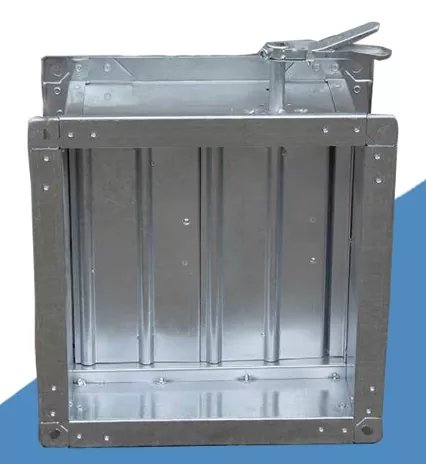
Key Differences at a Glance
| Feature | Rectangular Air Volume Control Damper | Round Damper |
|---|---|---|
| Duct Shape | Rectangular / square ductwork | Circular / spiral ductwork |
| Typical Applications | Large commercial AHUs, main trunk lines, plenum systems | Branch ducts, residential systems, small zones |
| Blade Configuration | Single or multi-blade (opposed or parallel) | Single blade, butterfly-style |
| Airflow Capacity | High volume, low velocity | Lower volume, higher velocity |
| Actuator Options | Electric, pneumatic, manual | Electric, manual, sometimes pneumatic |
| Installation | Flanged or slip-in frame | Slip-in, clamped, or flanged |
| Cost | Higher due to size and frame complexity | Generally lower |
| Sealing | Better for large openings with gaskets | Adequate for smaller diameters |
Why Duct Geometry Matters
A Rectangular Air Volume Control Damper is engineered for rectangular duct sections, which are common in commercial buildings where space above ceilings is limited. The multi-blade design distributes pressure evenly across a wide opening, making it ideal for air handling unit discharge, return air plenums, and main supply trunks. Round dampers, by contrast, fit circular ducts and are typically used on branch lines where airflow is lower and space is less constrained.
Performance and Control Accuracy
According to DeFa's testing data, rectangular dampers provide superior linear control across a broad airflow range because multiple blades can be staged. Round dampers respond quickly but can create higher pressure drops at partial openings. For precise air balancing in large systems, the Rectangular Air Volume Control Damper is usually the better choice.
Installation and Maintenance Considerations
-
Rectangular Air Volume Control Damper: Requires careful frame sealing and actuator linkage alignment; maintenance involves checking blade seals and pivot bearings.
-
Round Damper: Simpler to install with clamps or slip joints; maintenance is minimal but blade wear can affect sealing over time.
-
DeFa recommends inspecting both types quarterly in high-use commercial systems.
Cost and Energy Efficiency
Rectangular dampers carry a higher upfront cost due to materials and custom sizing, but they reduce fan energy when paired with VAV controls. Round dampers are economical for small zones but may increase static pressure losses if oversized or poorly matched. DeFa offers both options with low-leakage certification for energy-code compliance.
Rectangular Air Volume Control Damper FAQ
Q: What is a Rectangular Air Volume Control Damper used for?
A: It regulates and balances airflow in rectangular ductwork, commonly in commercial HVAC systems, air handling units, and large supply or return branches, allowing precise volume control for zoning and energy management.
Q: How do you size a Rectangular Air Volume Control Damper?
A: Size it by matching the damper face area to the duct dimensions, then verify the required airflow (CFM) and maximum velocity. DeFa recommends selecting a model with a pressure drop within the fan's available static pressure and confirming actuator torque for the blade area.
Q: Can a Rectangular Air Volume Control Damper be motorized?
A: Yes. It can be fitted with electric, pneumatic, or modulating actuators for automatic control. DeFa supplies factory-mounted actuators with feedback signals for BMS integration, enabling precise VAV or pressure-independent operation.
Q: What is the difference between a Rectangular Air Volume Control Damper and a round damper in terms of leakage?
A: Rectangular models with opposed blades and gaskets typically achieve lower leakage class ratings, while round dampers may have higher leakage at the blade perimeter. DeFa tests both to AMCA standards for verified performance.
Q: When should I choose a round damper instead?
A: Choose a round damper for circular branch ducts, small residential zones, or where space and budget are limited. For large rectangular trunks and critical air balancing, a Rectangular Air Volume Control Damper is more effective.
Conclusion
Choosing between a Rectangular Air Volume Control Damper and a round damper depends on duct geometry, airflow volume, control precision, and budget. DeFa provides both solutions with verified performance and expert support to match your project requirements.
Contact us today to discuss your HVAC airflow control needs and request a quotation from DeFa.
