

What Is the Difference Between Automobile Precision Stamping Parts and Standard Stamped Components
2026-09-22
When sourcing metal components for automotive applications, engineers and procurement teams often face a critical decision: should they specify Automobile Precision Stamping Parts or settle for standard stamped components? At Qiren, we have spent years helping OEMs and Tier 1 suppliers answer this question with confidence. The distinction is not merely semantic—it directly affects vehicle safety, assembly efficiency, warranty costs, and long-term brand reputation. Understanding where standard stamping ends and Automobile Precision Stamping Parts begin is essential for anyone involved in automotive manufacturing.
Defining the Two Categories
Standard stamped components are produced using conventional stamping processes with moderate tolerances, typically ±0.1 mm to ±0.5 mm. They serve general-purpose applications where slight dimensional variation is acceptable.
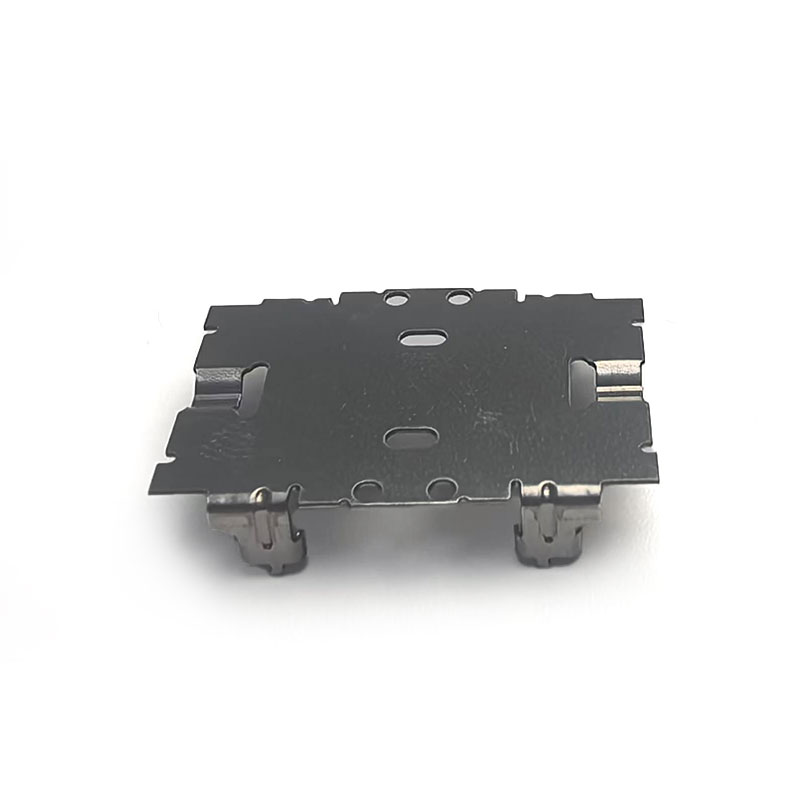
Automobile Precision Stamping Parts, by contrast, are engineered for the demanding environment of modern vehicles. They are manufactured to tolerances as tight as ±0.01 mm, with strict control over material properties, surface finish, and dimensional consistency. Qiren specializes in this higher tier of production, serving customers who cannot compromise on performance.
Key Differences at a Glance
| Dimension | Standard Stamped Components | Automobile Precision Stamping Parts |
|---|---|---|
| Tolerance Range | ±0.1 mm to ±0.5 mm | ±0.01 mm to ±0.05 mm |
| Material Control | General-grade coils | Certified automotive-grade alloys with traceability |
| Tooling Precision | Standard dies | Progressive dies with carbide inserts and fine clearances |
| Inspection Frequency | Sampling-based | 100% in-line or near-line inspection |
| Surface Finish | Functional | Controlled Ra values, deburred, often coated |
| Traceability | Limited | Full lot-to-lot documentation |
| Typical Applications | Brackets, covers, non-critical clips | Airbag housings, ABS components, transmission plates, EV battery contacts |
Why the Difference Matters
The gap between these two categories has real consequences. Automobile Precision Stamping Parts must withstand vibration, thermal cycling, corrosion, and fatigue over a vehicle's lifetime. A deviation of a few hundredths of a millimeter in an airbag sensor housing or a fuel injection component can mean the difference between reliable operation and a safety recall.
Qiren addresses this through:
-
In-house tooling design that accounts for springback, material thinning, and grain direction
-
Real-time process monitoring using force and position sensors on every stroke
-
Metallurgical verification of incoming coil stock before it touches the press
-
Cleanroom-capable finishing for sensitive electronic and fuel-system components
FAQ: Common Questions About Automobile Precision Stamping Parts
Q: What industries beyond automotive rely on Automobile Precision Stamping Parts?
A: While the primary demand comes from automotive OEMs and Tier 1 suppliers, Automobile Precision Stamping Parts are also used in electric vehicle battery systems, advanced driver-assistance systems (ADAS), medical device enclosures, and aerospace actuators. Any application requiring repeated, high-accuracy metal forming benefits from this level of precision. Qiren serves customers across these adjacent sectors where the same tooling and quality infrastructure applies.
Q: How does tooling cost for Automobile Precision Stamping Parts compare to standard stamping?
A: Precision tooling typically costs 30% to 80% more upfront than standard dies because of tighter clearances, higher-grade tool steels, and more extensive tryout cycles. However, this premium is recovered through lower scrap rates, reduced secondary operations, and fewer field failures. For production volumes above 50,000 units annually, Automobile Precision Stamping Parts usually deliver a lower total cost of ownership. Qiren provides full cost-breakdown transparency during quoting so customers can evaluate this trade-off with real data.
Q: Can standard stamped components be upgraded to meet Automobile Precision Stamping Parts specifications?
A: In some cases, yes—but the upgrade is rarely limited to tightening tolerances. It often requires new tooling, revised material specifications, added inspection steps, and updated process documentation. Attempting to stretch a standard process into precision territory without these changes introduces risk. Qiren routinely assesses existing standard components and recommends whether a targeted upgrade or a clean-sheet precision design is more appropriate.
Choosing the Right Partner
The difference between Automobile Precision Stamping Parts and standard stamped components ultimately comes down to discipline: in tooling, in material control, in inspection, and in documentation. Qiren was built around that discipline, combining advanced progressive stamping capability with automotive-grade quality systems.
If your project demands components that perform reliably in the most demanding environments, contact us today to discuss your specifications, request a quote, or schedule a plant visit. Our engineering team will help you determine the right level of precision for your application—and deliver it on time, every time.
