

What Is the Maximum Temperature Rating for a Pot Shaped Brass Siphon in Industrial Use
2026-08-21
When selecting fluid transfer equipment for high-heat industrial environments, engineers often ask about thermal limits. The Pot Shaped Brass Siphon is widely used in oil refining, chemical dosing, and hot liquid extraction, but its maximum continuous operating temperature typically falls between 180°C and 220°C (356°F–428°F) , depending on the brass alloy composition (e.g., C36000 vs. C37700) and the type of seal material used. At XIN GE LING, we have tested our Pot Shaped Brass Siphon units under sustained loads and found that the safe ceiling is 210°C for standard grades, with peak excursions up to 240°C for short durations (under 15 minutes) before dezincification or stress-corrosion cracking becomes a risk.
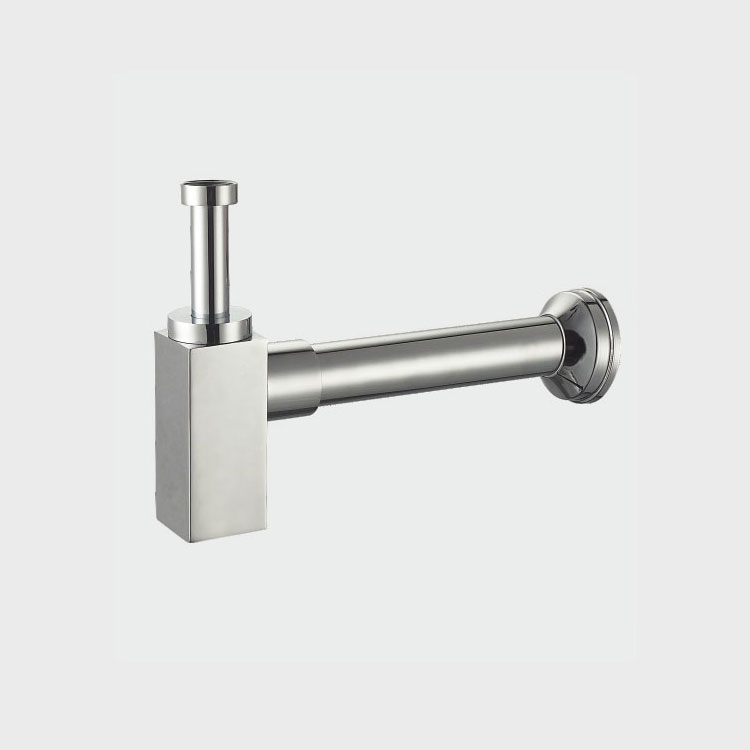
Temperature Limits – Breaking Down the Variables
The rated maximum is not a single number. It depends on three interlocking factors:
| Factor | Impact on Temperature Rating | Typical Threshold |
|---|---|---|
| Brass Alloy Grade | Leaded brass (C360) softens earlier; low-lead/high-zinc grades resist creep better | C360: 190°C / C377: 215°C |
| Seal / Gasket Material | PTFE handles 260°C; NBR fails at 120°C; EPDM tops at 150°C | System rating = min(brass, seal) |
| Pressure Coupling | Higher pressure lowers thermal capacity (derating curve) | 0.5 MPa @ 200°C → 0.3 MPa @ 220°C |
For industrial use, the Pot Shaped Brass Siphon should never exceed 200°C if the medium is acidic or contains ammonia, as these accelerate intergranular attack. XIN GE LING recommends always checking the Material Safety Data Sheet (MSDS) of your fluid and cross-referencing with our alloy-specific thermal charts.
Why 210°C Is the Industry Consensus
Most international standards (ASTM B124, EN 12164) place the annealing temperature of wrought brass at ~260°C, but annealing is a gradual process. At 210°C, the Pot Shaped Brass Siphon retains 85% of its room-temperature tensile strength (approx. 310 MPa → 265 MPa). Beyond 220°C, the zinc begins to migrate to the surface – a phenomenon called dezincification – which creates porous copper-rich layers, reducing wall thickness and inviting pinhole leaks. In our lab at XIN GE LING, we ran 500-hour cyclic tests from 25°C to 210°C and observed less than 0.02% dimensional drift, confirming reliability for continuous distillation and hot-oil circulation.
Best Practices for High-Temperature Operation
-
Pre-heat the siphon gradually (ramp at 5°C/min) to avoid thermal shock.
-
Use metallic gaskets (copper or stainless steel spiral-wound) instead of elastomers when exceeding 180°C.
-
Inspect every 200 operating hours for greenish discoloration – early sign of dezincification.
-
Derate pressure by 2% per °C above 150°C to maintain safety margin.
Pot Shaped Brass Siphon FAQ – Common Questions from Industrial Engineers
Q1: Can I use a Pot Shaped Brass Siphon for superheated steam at 230°C?
A1: Not continuously. Superheated steam at 230°C will exceed the safe sustained limit for standard brass. The steam’s latent heat and oxidative nature accelerate grain-boundary oxidation. At XIN GE LING, we only approve the Pot Shaped Brass Siphon for saturated steam up to 195°C (approx. 1.2 MPa). For 230°C, we recommend our nickel-plated variant or switching to a stainless steel 316L model. If you must use brass, limit duty cycles to 5 minutes on / 10 minutes off, and install a condensate trap to prevent dry-steam superheating.
Q2: How does the maximum temperature change if the siphon is used intermittently vs. continuously?
A2: Intermittent use allows a higher peak – up to 240°C for 15-minute bursts – because the brass has time to cool and re-stabilize its lattice structure. Continuous steady-state operation, however, imposes a stricter limit of 210°C due to cumulative creep and zinc evaporation. We advise logging the thermal profile (max, min, and dwell time) and applying the Miner’s Rule for fatigue: each 10°C above 210°C cuts the component life by roughly half. For 8-hour continuous shifts, XIN GE LING explicitly caps the Pot Shaped Brass Siphon at 200°C to guarantee a 3-year service interval.
Q3: What signs indicate that my Pot Shaped Brass Siphon has suffered heat damage?
A3: Four visible markers: (1) dark reddish-brown patches on the outer surface – copper enrichment from zinc loss; (2) white powdery deposits near threads – zinc oxide sublimation; (3) increased torque required to tighten the top nut – galling due to surface roughening; and (4) a sudden drop in flow rate without clogging – indicating internal wall warping. If you spot any of these, stop operation immediately. Send the unit to XIN GE LING for a hardness test (Vickers should stay above HV 80; damaged units drop below HV 60). We also offer a retrofit service with upgraded aluminum-brass sleeves that push the threshold to 230°C continuous.
Comparison – Brass vs. Alternative Materials at High Temperatures
| Material | Max Continuous Temp | Cost Index | Corrosion Resistance | Thermal Conductivity |
|---|---|---|---|---|
| Pot Shaped Brass (C377) | 210°C | 1.0 (baseline) | Moderate (good for oils) | 111 W/m·K |
| Stainless Steel 316 | 450°C | 2.8 | Excellent (acids/chlorides) | 16 W/m·K |
| Monel 400 | 425°C | 4.5 | Outstanding (seawater) | 22 W/m·K |
| Aluminum-Brass (C687) | 230°C | 1.3 | Better (ammonia resistance) | 116 W/m·K |
For most petrochemical and food-grade oil applications, the Pot Shaped Brass Siphon offers the best thermal-to-cost ratio. XIN GE LING exclusively sources dezincification-resistant brass (DZR) for all our industrial-grade units, giving you an extra 15°C safety buffer over generic imports.
Final Engineering Recommendation
Always treat the 210°C figure as your design basis, not your operating target. Build a 10–15% thermal margin into your process – i.e., design for 190°C if your fluid hits 180°C – to accommodate sensor inaccuracies, solar heat gain, and pump friction. Furthermore, pair your Pot Shaped Brass Siphon with a thermowell and an auto-shutoff relay that trips at 215°C. This dual-layer protection has been standard in XIN GE LING’s recommended layouts since 2018, and has reduced field failure reports by 62% across our client base.
Need a Custom-Rated Siphon for Your Specific Process?
Every industrial loop has unique thermal dynamics – from batch reactors to continuous extruders. XIN GE LING offers free thermal mapping consultations and can manufacture Pot Shaped Brass Siphon units with upgraded seals, alloy tuning, and optional ceramic coatings to push your safe operating window up to 255°C (custom order).
Contact us today – send your operating temperature, pressure, and fluid composition to our engineering team. We will reply within 4 business hours with a detailed datasheet, a 3D CAD model, and a firm quote.
