

What Makes DMX Splitter IP Essential for Modern Lighting Control?
2026-05-26
In today's rapidly evolving stage lighting and architectural illumination industry, signal distribution has become more complex than ever before. Traditional DMX512 systems are no longer sufficient for large-scale venues, smart buildings, and synchronized lighting environments. This is where DMX Splitter IP plays a critical role. By combining the reliability of DMX signal distribution with the flexibility of IP-based networking, it enables stable, scalable, and intelligent lighting control across multiple zones. Manufacturers like Foshan AK Lighting Co., Ltd. are actively integrating advanced DMX Splitter IP solutions into modern lighting systems to meet growing professional demands.
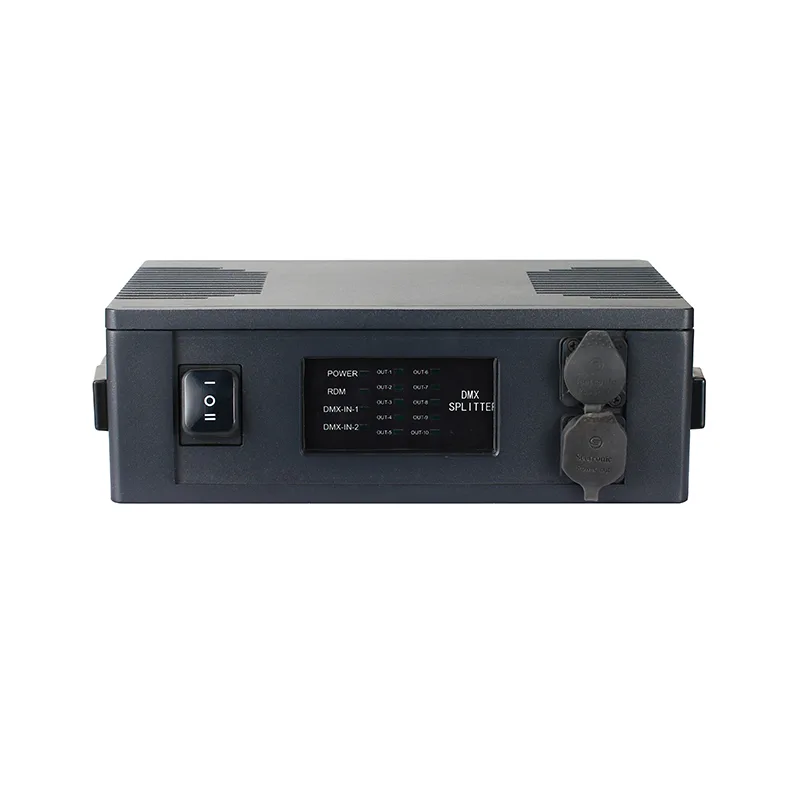
Understanding DMX Splitter IP Technology
A DMX Splitter IP is an advanced lighting signal distribution device that converts and transmits DMX data over Ethernet or IP networks while maintaining signal integrity. Unlike conventional splitters that rely purely on daisy-chain wiring, DMX Splitter IP allows multiple outputs through a networked architecture, reducing signal loss and improving system flexibility.
It is widely used in theaters, concerts, clubs, theme parks, and architectural lighting projects where synchronized multi-zone lighting control is required.
Why DMX Splitter IP Matters in Modern Lighting Systems
The importance of DMX Splitter IP lies in its ability to solve common lighting control problems such as signal degradation, cable limitation, and lack of scalability. As lighting setups become larger and more dynamic, traditional DMX systems struggle to maintain consistent performance.
Key benefits include:
- Stable signal transmission over long distances
- Reduced cabling complexity
- Easy integration with IP-based lighting control systems
- Enhanced system scalability for large venues
- Improved fault isolation and system reliability
Core Functions of DMX Splitter IP
The DMX Splitter IP is not just a signal distributor—it is a system optimizer. It enhances control efficiency while ensuring every connected fixture receives accurate data without delay or interference.
Main functions include:
- Signal amplification and regeneration
- Multi-port output distribution
- IP-based remote management
- Electrical isolation between ports
- Compatibility with standard DMX512 protocols
DMX Splitter IP vs Traditional DMX Splitter
To better understand its advantages, here is a simple comparison:
| Feature | DMX Splitter IP | Traditional DMX Splitter |
|---|---|---|
| Signal Transmission | IP/Ethernet-based | Cable-based only |
| Scalability | High | Limited |
| Distance Coverage | Very long (network dependent) | Short to medium |
| System Flexibility | Excellent | Basic |
| Fault Isolation | Advanced | Limited |
| Installation Complexity | Lower in large systems | Higher in large systems |
From the table, it is clear that DMX Splitter IP is designed for modern, large-scale lighting infrastructures.
Application Scenarios of DMX Splitter IP
DMX Splitter IP is widely used across various industries where precise lighting synchronization is required.
- Concert and live stage productions
- Television broadcasting studios
- Architectural facade lighting
- Theme parks and entertainment venues
- Large-scale commercial installations
Companies like Foshan AK Lighting Co., Ltd. provide professional-grade solutions that ensure stable performance in all these demanding environments.
Technical Advantages That Improve Lighting Performance
One of the strongest advantages of DMX Splitter IP is its ability to maintain signal integrity even in complex environments with heavy electromagnetic interference.
Key technical strengths include:
- Galvanic isolation for each output channel
- Built-in signal regeneration to eliminate data loss
- Support for multiple DMX universes
- Ethernet-based control for centralized management
- Plug-and-play integration with lighting consoles
These features significantly reduce maintenance costs while improving operational efficiency.
Why Professionals Prefer DMX Splitter IP
Lighting engineers and system integrators prefer DMX Splitter IP because it simplifies system architecture while increasing control accuracy. Instead of dealing with long daisy chains and signal repeaters, they can deploy a clean, network-based structure that is easier to manage and expand.
In addition, it supports hybrid lighting environments where both traditional DMX and modern IP-based protocols coexist.
Key Selection Guide
When choosing a DMX Splitter IP, consider the following factors:
- Number of output ports required
- Compatibility with existing lighting consoles
- Network protocol support
- Electrical isolation quality
- Build quality and industrial durability
- Brand reliability and technical support
Working with experienced manufacturers like Foshan AK Lighting Co., Ltd. ensures better system design and long-term performance stability.
Future Trends of DMX Splitter IP Technology
As smart lighting and IoT systems continue to evolve, DMX Splitter IP is expected to become even more intelligent. Future developments may include:
- AI-based lighting scene optimization
- Cloud-based remote control systems
- Wireless DMX over IP hybrid solutions
- Enhanced real-time monitoring dashboards
These innovations will further strengthen its role in professional lighting infrastructure.
Conclusion
DMX Splitter IP has become a fundamental component in modern lighting control systems due to its scalability, reliability, and network-based flexibility. It bridges the gap between traditional DMX technology and next-generation IP lighting control, making it essential for large-scale and high-performance installations.
Whether for stage production, architectural lighting, or entertainment venues, investing in a high-quality DMX Splitter IP ensures stable performance and long-term system efficiency.
For professional lighting solutions and customized DMX Splitter IP systems, contact us to learn more about how Foshan AK Lighting Co., Ltd. can support your next project.
