

What Makes Metal Stamping Motor Cases the Core of Modern Motor Manufacturing?
2025-11-07
A Metal Stamping Motor Case is a precision-engineered component designed to house and protect the internal parts of electric motors, including the stator, rotor, and wiring assemblies. Manufactured through metal stamping technology, these cases are created using high-speed presses and precision dies that shape metal sheets into consistent, durable motor housings. This process ensures uniform thickness, structural integrity, and high dimensional accuracy — essential features for maintaining motor performance and longevity.
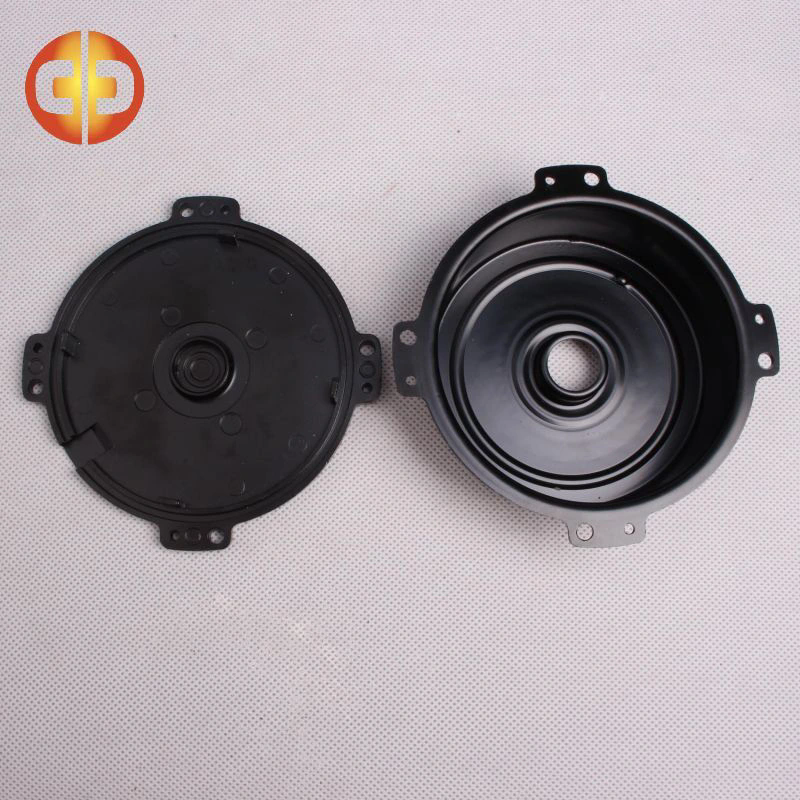
In modern electric motors, the metal case is not merely a protective shell; it also plays a crucial role in heat dissipation, vibration reduction, and mechanical alignment. As industries transition toward more compact and energy-efficient motor designs, the demand for high-precision stamped motor cases has surged, particularly in the automotive, home appliance, industrial automation, and renewable energy sectors.
The following table presents key product parameters of high-quality Metal Stamping Motor Cases:
| Parameter | Specification Range | Description |
|---|---|---|
| Material | Cold Rolled Steel, Stainless Steel, Aluminum | Selected for strength, corrosion resistance, and conductivity |
| Thickness | 0.3 mm – 2.5 mm | Customizable for different motor sizes |
| Diameter | 20 mm – 200 mm | Adaptable for small to medium-sized motors |
| Surface Treatment | Zinc Plating, Powder Coating, Electrophoresis | Improves corrosion resistance and appearance |
| Tolerance | ±0.01 mm | Ensures dimensional precision and balance |
| Production Method | Deep Drawing, Punching, and Welding | Guarantees strength and accuracy |
| Applications | Electric Motors, Fan Motors, Automotive Motors | Versatile use across industries |
With advancements in metal stamping technology, manufacturers are able to achieve thinner walls, higher precision, and greater cost efficiency — a perfect alignment with the global shift toward lightweight, high-performance motor systems.
Why Are Metal Stamping Motor Cases the Preferred Choice for Modern Engineering Applications?
Metal stamping motor cases are preferred due to their structural durability, production efficiency, and design flexibility. Unlike cast or machined housings, stamped cases provide consistent quality at large volumes, making them ideal for industries requiring both precision and scalability.
Key Advantages of Metal Stamping Motor Cases:
-
High Dimensional Accuracy:
Advanced stamping tools ensure tight tolerances, which is essential for maintaining rotor-stator alignment and overall motor efficiency. -
Lightweight but Strong:
Stamped metal allows for optimized material distribution — reducing overall weight without compromising strength or rigidity. -
Excellent Heat Dissipation:
Metals like aluminum and steel efficiently dissipate heat, preventing motor overheating during extended operation. -
Superior Surface Finishing:
Post-treatment coatings such as zinc plating or powder coating enhance corrosion resistance, extending service life in harsh environments. -
Eco-friendly and Cost-effective:
The stamping process minimizes material waste and reduces energy consumption, supporting sustainability goals while lowering production costs. -
Scalability for Mass Production:
Once dies are set, production can be rapidly scaled up to meet large-volume demands without compromising precision. -
Compatibility with Automation:
Modern stamping lines integrate seamlessly with automated feeding and inspection systems, ensuring consistent quality control.
In sectors like electric vehicles, HVAC systems, and industrial robotics, the combination of efficiency and precision makes metal stamping the gold standard for motor case production. As these industries continue to evolve, stamped motor cases will remain integral to meeting the performance and sustainability demands of next-generation technologies.
How Does the Metal Stamping Process Improve Motor Case Performance and Production Efficiency?
The metal stamping process transforms flat metal sheets into complex motor case geometries through a series of high-pressure forming stages. This manufacturing method not only enhances the physical performance of the case but also streamlines production efficiency.
How Metal Stamping Works for Motor Cases:
-
Material Selection:
High-quality metal sheets such as cold-rolled steel or aluminum are chosen for their strength, thermal conductivity, and formability. -
Tool and Die Preparation:
Precision dies are engineered to exact specifications, allowing repeated high-speed stamping without deformation or defects. -
Progressive Stamping:
The metal sheet passes through multiple dies in a continuous process that includes blanking, drawing, trimming, and piercing — producing consistent shapes with minimal waste. -
Surface Treatment and Finishing:
After stamping, the parts undergo finishing treatments like coating or plating to enhance corrosion resistance and aesthetic appeal. -
Quality Control:
Each batch is tested for dimensional accuracy, hardness, and surface integrity to meet stringent industry standards.
Benefits for Production and Performance:
-
Precision Fit: Ensures seamless assembly with motor components.
-
Reduced Manufacturing Cost: High-speed production lowers labor and tooling costs per unit.
-
Enhanced Thermal Management: Uniform thickness allows even heat distribution.
-
Noise and Vibration Control: Improved rigidity helps reduce motor noise and mechanical vibration.
-
Energy Efficiency: Lightweight design contributes to overall motor efficiency, particularly in automotive and industrial applications.
In addition, modern CNC-integrated stamping and automated inspection systems guarantee repeatable precision, ensuring every motor case meets exacting engineering standards. This process not only improves functional reliability but also supports long-term cost optimization for manufacturers across various sectors.
What Are the Future Trends and Common Questions About Metal Stamping Motor Cases?
The future of metal stamping motor cases is closely tied to trends in electrification, automation, and lightweight design. As industries pursue higher energy efficiency and environmental sustainability, innovation in metal stamping continues to evolve in several key directions:
1. Material Innovation:
Future motor cases will increasingly use advanced alloys, composite metal laminates, and recycled materials to balance strength and sustainability.
2. Precision Automation:
AI-driven stamping systems (in the industrial sense of process control, not generative tools) and real-time inspection will continue to improve consistency and reduce material waste.
3. Lightweight Construction:
The automotive and robotics sectors demand lighter motors for higher efficiency. Stamped aluminum and ultra-thin steel cases will become more prevalent.
4. Integration with Smart Manufacturing:
Factories are integrating Industry 4.0 technologies, linking stamping lines to digital monitoring systems for predictive maintenance and optimized workflow.
5. Customization and Modular Design:
Manufacturers increasingly request customizable shapes and sizes for various motor types — from compact home appliances to large industrial drives.
6. Sustainability and Recycling:
With global environmental regulations tightening, the recyclability of stamped metal components provides a major competitive advantage.
Common FAQs About Metal Stamping Motor Cases
Q1: What materials are most commonly used in manufacturing metal stamping motor cases?
A1: The most common materials include cold rolled steel, stainless steel, and aluminum alloys. These materials are selected for their combination of strength, corrosion resistance, and thermal conductivity. Cold rolled steel offers excellent dimensional control and surface finish, while aluminum provides superior heat dissipation and weight reduction, making it ideal for high-speed motors and electric vehicles.
Q2: How does metal stamping compare to casting or machining for motor case production?
A2: Metal stamping provides several advantages over casting and machining. It allows for mass production with consistent dimensional accuracy, faster cycle times, and lower production costs. Unlike casting, which may involve porosity or uneven cooling, stamping delivers a uniform, defect-free surface. Moreover, the reduced material waste and shorter production lead times make stamping the preferred choice for high-volume manufacturing.
Conclusion: The Role of ZhongChuan in Advancing Metal Stamping Motor Case Manufacturing
As industries demand greater precision and efficiency from their electric motors, ZhongChuan continues to lead in the design and production of Metal Stamping Motor Cases. Through advanced tooling technology, high-speed production systems, and rigorous quality control, ZhongChuan ensures every motor case meets international standards for durability, precision, and performance.
The company’s focus on innovation, sustainability, and customer customization has positioned it as a trusted partner for clients across automotive, industrial, and consumer electronics sectors. With an emphasis on continuous improvement and advanced manufacturing capabilities, ZhongChuan is not only meeting today’s market needs but also shaping the future of motor housing technology.
For more information about product specifications, custom solutions, or partnership opportunities, please Contact Us to discuss how ZhongChuan can support your motor production goals.
