

What material specifications should you check before buying a 6 inch red blind cap
2026-04-23
When selecting a 6 Inch Red Blind Cap for industrial pipeline systems, material specifications determine safety, durability, and performance. At Sanlo, we understand that choosing the wrong material can lead to corrosion, pressure failure, or chemical contamination. This guide outlines the essential material checks before purchasing a 6 Inch Red Blind Cap, supported by technical data and frequently asked questions.
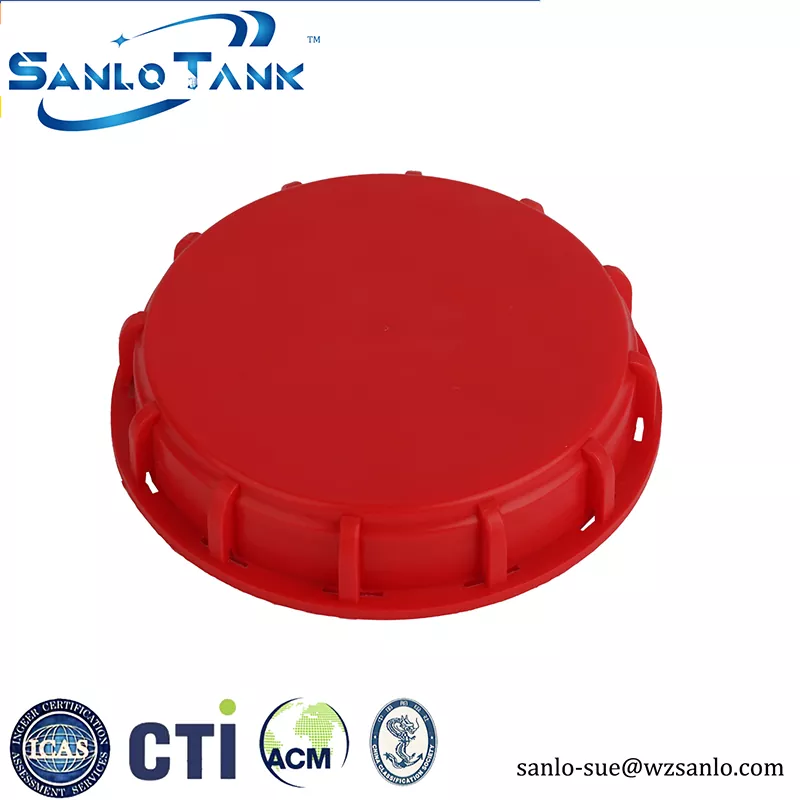
Key Material Specifications to Verify
Before purchasing a 6 Inch Red Blind Cap, inspect the following specifications:
| Specification | What to Check | Why It Matters |
|---|---|---|
| Material Grade | ASTM A105 (carbon steel), ASTM A182 (stainless steel 304/316), or ductile iron | Determines tensile strength and corrosion resistance |
| Pressure Rating | Class 150, 300, or 600 (ANSI/ASME) | Ensures safe operation under system pressure |
| Temperature Range | -20°F to 1000°F depending on alloy | Prevents material degradation or failure |
| Coating Type | Red epoxy, polyester, or fusion-bonded | Provides color-coding for line identification and corrosion protection |
| Compliance Standards | ASME B16.9, MSS SP-75, or API 6A | Guarantees dimensional accuracy and safety certification |
| Chemical Compatibility | Resistance to oil, gas, acid, or alkali media | Avoids chemical attack or leaching |
Three Critical Tests Before Purchase
-
Hardness Test – Brinell or Rockwell scale values must match the material certificate.
-
Impact Test – Required for low-temperature services (Charpy V-notch).
-
Hydrostatic Test – Verifies no leakage under 1.5x rated pressure.
Sanlo provides full mill test reports (MTRs) for every 6 Inch Red Blind Cap we supply.
Frequently Asked Questions About 6 Inch Red Blind Cap
Question 1: Can a 6 Inch Red Blind Cap be used for both temporary and permanent pipeline isolation?
Answer: Yes, but the material specification determines suitability. For temporary isolation (e.g., maintenance shutdowns), a 6 Inch Red Blind Cap in carbon steel with a red epoxy coating is common. For permanent applications, such as blanking off a decommissioned line, Sanlo recommends stainless steel 316 or duplex steel to prevent long-term corrosion. Always verify the pressure rating matches the system’s maximum operating pressure. Permanent installations also require bolting to a companion flange with proper gaskets.
Question 2: How does the red color affect material performance or compliance?
Answer: The red color itself is not a material property but a coating or anodized layer. However, for industrial safety, a 6 Inch Red Blind Cap indicates specific line contents – often fire-fighting water, hazardous chemicals, or emergency systems. Sanlo applies high-temperature resistant red epoxy (up to 400°F) that does not crack or fade. The coating also adds a sacrificial barrier against moisture. If the application involves potable water or food processing, verify that the red coating meets FDA or NSF 61 standards.
Question 3: What is the difference between a 6 Inch Red Blind Cap and a blind flange?
Answer: A 6 Inch Red Blind Cap is a one-piece fitting welded or threaded directly onto a pipe end. A blind flange is a solid plate bolted between two flanges. The 6 Inch Red Blind Cap is more compact and economical for end-of-line sealing. However, a blind flange allows easier future reconnection. Sanlo recommends the cap for permanent or semi-permanent closures where space is limited. For systems requiring regular inspection, a blind flange with a bleed valve is superior. Material grades differ too – blind caps are often forged, while blind flanges are cast or forged.
Final Checklist Before Ordering
-
Confirmed material grade with MTR certificate
-
Verified pressure class matches system design
-
Checked red coating type and temperature limit
-
Ensured dimensional compliance with ASME B16.9
-
Requested hydrostatic test report from Sanlo
Contact Us
Choosing the correct 6 Inch Red Blind Cap protects your pipeline investment and operational safety. Sanlo supplies certified blind caps in carbon steel, stainless steel, and alloy materials, all with red epoxy coating and full traceability. Contact our engineering team today for a quote or material consultation – we respond within 24 hours with technical datasheets and competitive pricing.
