

What Materials and Surface Finishes Should You Specify for DIN 11851 Sanitary Stainless Steel Unions
2026-11-05
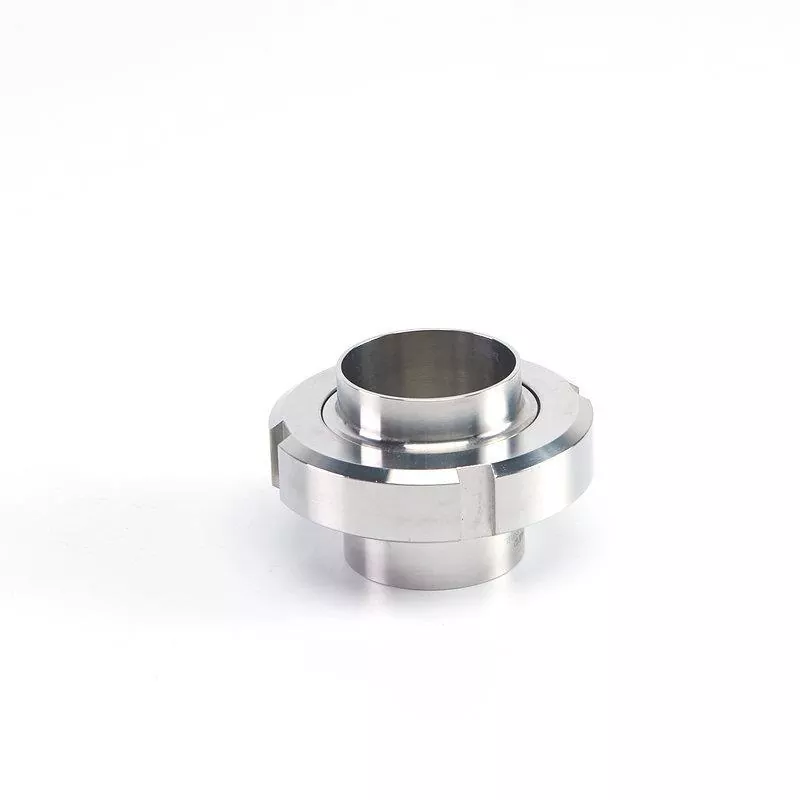
Selecting the right material and surface finish is the foundation of every hygienic piping system. When engineers specify DIN 11851 Sanitary Stainless Steel Unions, they are not simply choosing a connection—they are defining cleanability, corrosion resistance, and long-term reliability across food, dairy, beverage, and pharmaceutical processes. At DINGYUE, we help customers match the correct stainless grade and finish to each application so that every DIN 11851 Sanitary Stainless Steel Unions assembly performs safely and consistently over years of service.
Why Material Selection Matters
The wrong stainless grade leads to pitting, crevice corrosion, and product contamination. The right grade, combined with a properly controlled surface finish, ensures that residues are removed during CIP and that the joint remains hygienic throughout its life.
Recommended Stainless Steel Grades
| Grade | Typical Application | Key Characteristics |
|---|---|---|
| 304 / 1.4301 | General food and beverage lines | Good corrosion resistance, economical |
| 316L / 1.4404 | Dairy, brewing, CIP-heavy systems | Molybdenum addition, superior chloride resistance |
| 316L with low carbon | Pharmaceutical and biotech | Minimized carbide precipitation after welding |
DINGYUE stocks DIN 11851 Sanitary Stainless Steel Unions in 304 and 316L, with mill certificates available for full traceability.
Surface Finish Specification Guide
| Finish | Ra Value | Typical Use |
|---|---|---|
| Mechanical polish | 0.8 µm | Standard hygienic product contact |
| Fine mechanical polish | 0.6 µm | Dairy and beverage |
| Electro-polished | 0.4 µm | Pharmaceutical, high-purity |
| External dull/mirror | As specified | Non-contact surfaces, aesthetics |
For most hygienic duties, a product-contact finish of Ra ≤ 0.8 µm is appropriate, while aseptic and pharmaceutical applications often call for electro-polishing to Ra ≤ 0.4 µm. DINGYUE can supply DIN 11851 Sanitary Stainless Steel Unions with verified Ra readings and inspection reports.
Practical Specification Checklist
-
Confirm the wetted grade (304 vs. 316L) against the fluid and cleaning chemicals.
-
Specify Ra values for product-contact and non-contact surfaces separately.
-
Request weld and heat-treatment documentation for fabricated assemblies.
-
Verify conformity with 3-A, FDA, and EHEDG guidance where required.
-
Ensure gasket material (EPDM, silicone, PTFE) suits temperature and CIP regime.
Frequently Asked Questions
Q: What is the difference between 304 and 316L for DIN 11851 Sanitary Stainless Steel Unions?
A: 304 offers good general corrosion resistance and is cost-effective for mild food and beverage duties. 316L contains molybdenum, which significantly improves resistance to chlorides and aggressive cleaning chemicals, making it the preferred choice for dairy, brewing, and pharmaceutical systems. For most CIP-intensive or chloride-exposed lines, 316L is the safer specification.
Q: What surface finish should I specify for product-contact surfaces in DIN 11851 Sanitary Stainless Steel Unions?
A: A mechanical polish to Ra ≤ 0.8 µm is the standard baseline for hygienic product contact. Dairy and beverage lines often specify Ra ≤ 0.6 µm, while pharmaceutical and aseptic applications typically require electro-polishing to Ra ≤ 0.4 µm. Always state the Ra value and measurement method in your purchase specification.
Q: How do I verify that DIN 11851 Sanitary Stainless Steel Unions meet hygiene standards?
A: Request mill certificates for the stainless grade, surface finish inspection reports with Ra readings, and gasket material certifications. Confirm that the supplier references 3-A, FDA, and EHEDG compliance where applicable, and check dimensional conformity to DIN 11851. DINGYUE provides full documentation packages with every order.
Q: Can DINGYUE supply custom finishes on DIN 11851 Sanitary Stainless Steel Unions?
A: Yes. DINGYUE offers mechanical polishing, fine polishing, and electro-polishing to specified Ra values, along with custom gasket options and full traceability documentation.
Choosing the correct material and finish protects product quality and extends service life. Contact us at DINGYUE today to discuss your specification requirements, request samples, or receive a quotation for DIN 11851 Sanitary Stainless Steel Unions tailored to your process.
