

What Particle Size Retention Rating Is Available for a Cellulosic Depth Media Capsule Filter
2026-07-01
When selecting a Cellulosic Depth Media Capsule Filter for biopharmaceutical or industrial liquid processing, the most critical technical parameter is often the particle size retention rating. This rating determines not only clarification efficiency but also upstream protection for downstream membranes, chromatography resins, or final sterilization filters. At Kleanteque, we engineer Cellulosic Depth Media Capsule Filter solutions with clearly defined retention profiles, enabling process engineers to match filtration performance with specific product quality requirements. Understanding the available ratings—and how they are measured—is the first step toward optimizing yield, throughput, and operational cost.
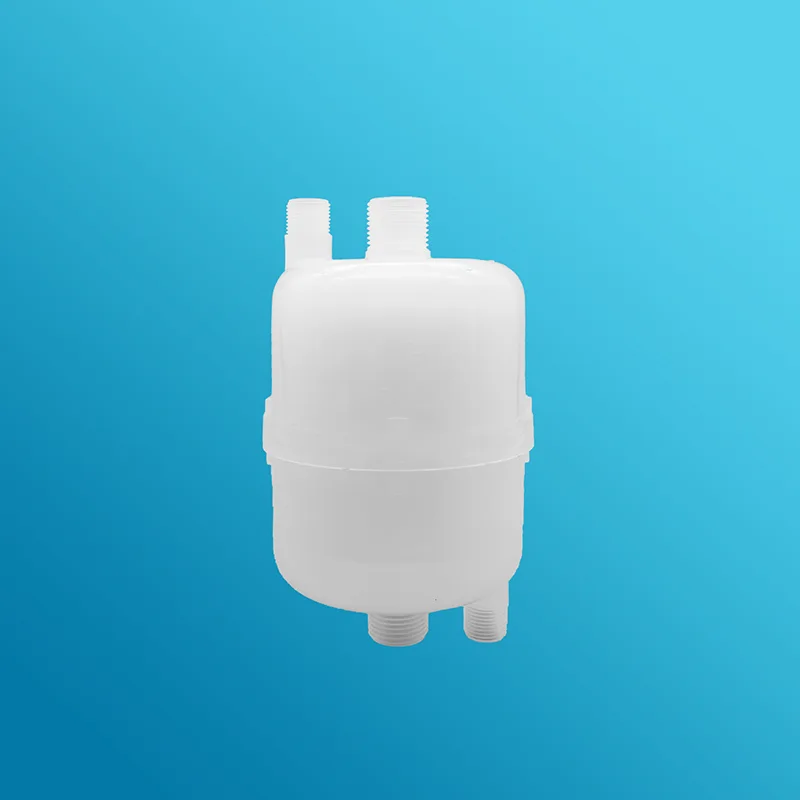
Available Retention Ratings – A Technical Overview
Retention ratings for Cellulosic Depth Media Capsule Filter products are typically expressed in two ways: nominal (nom.) and absolute (abs.) ratings. Nominal ratings indicate the particle size at which the filter achieves 50–90% removal efficiency under standard test conditions, while absolute ratings refer to the size at which ≥99.9% of particles are retained. Unlike surface-type membranes, depth media retain particles throughout the thickness of the matrix, which provides higher dirt-holding capacity but requires careful interpretation of rating data.
| Retention Type | Typical Rating Range (µm) | Efficiency (%) | Primary Application |
|---|---|---|---|
| Nominal (Coarse) | 10.0 – 50.0 | 50 – 85 | Gross particle removal, raw material prefiltration |
| Nominal (Fine) | 1.0 – 10.0 | 85 – 92 | Intermediate clarification, cell debris removal |
| Absolute (Standard) | 0.45 – 1.0 | ≥99.9 | Bioburden reduction, mycoplasma removal |
| Absolute (Submicron) | 0.2 – 0.45 | ≥99.97 | Virus clearance support, final polishing |
| Special-Grade (High Loading) | 0.65 – 5.0 | 90 – 98 | High-solids feed streams, fermentation harvest |
For a standard Kleanteque Cellulosic Depth Media Capsule Filter, the most commonly requested ratings are 0.45 µm absolute (for sterility-assist applications) and 0.2 µm absolute (for mycoplasma reduction in cell culture media). However, custom layering of cellulose fibers and resin binders allows us to produce gradients from 50 µm down to 0.1 µm within a single capsule, offering multi-stage capture without cascading multiple housings.
How Ratings Are Determined and Validated
The retention rating of a Cellulosic Depth Media Capsule Filter is not a fixed intrinsic property—it depends on test particle morphology, fluid viscosity, flow rate, and differential pressure. Industry-standard methods include:
-
Latex sphere challenge (for absolute ratings) using monodisperse polystyrene beads.
-
Silt density index (SDI) for nominal ratings in water-based systems.
-
Bubble point and diffusive flow for integrity correlation in production batches.
At Kleanteque, every production lot of our Cellulosic Depth Media Capsule Filter undergoes in-house particle retention verification via laser-based particle counting, ensuring that the labeled rating is reproducible across batches. We also provide validation guides that allow customers to correlate our published ratings with their actual process fluid—whether it is a monoclonal antibody harvest, a vaccine intermediate, or a small-molecule formulation.
Key Selection Criteria Beyond the Rating Number
While the micron rating is essential, engineers must also evaluate:
-
Dirt-holding capacity – higher for nominal grades (up to 500 g/m²) vs. lower for absolute grades.
-
Flow decay – finer ratings increase pressure drop exponentially; a Kleanteque Cellulosic Depth Media Capsule Filter with a graded-density design mitigates this by using larger fibers upstream and finer fibers downstream.
-
Extractables profile – finer cellulose binders may release more organic carbon; our low-extractable grade is validated for parenteral applications.
FAQ – Common Questions About the Cellulosic Depth Media Capsule Filter
Q1: What retention rating should I choose for mammalian cell culture harvest clarification?
A1: For mammalian cell cultures (CHO or HEK-293), the typical train starts with a 50 µm nominal Cellulosic Depth Media Capsule Filter to remove large cell clumps and aggregates, followed by a 1.0 µm nominal grade to reduce turbidity from 200–500 NTU down to <50 NTU, and finally a 0.45 µm absolute Cellulosic Depth Media Capsule Filter as a protective guard for a 0.2 µm sterilizing membrane. This three-stage cascade increases total throughput by 40–60% compared to using only a 0.45 µm filter alone. Kleanteque offers a pre-configured triplet capsule that combines all three layers internally, simplifying assembly and reducing connector contamination risks.
Q2: Can I use a 0.2 µm absolute Cellulosic Depth Media Capsule Filter for sterile filtration?
A2: No—a 0.2 µm absolute Cellulosic Depth Media Capsule Filter is not a sterilizing-grade membrane filter according to regulatory standards (FDA, EMA, or ISO 13408). Depth media are inherently non-membrane and cannot be validated for complete bacterial retention (Brevanbacterium diminuta challenge at 10⁷ CFU/cm²). However, a 0.2 µm absolute Cellulosic Depth Media Capsule Filter serves as an excellent bioburden-reduction step, typically achieving 3–4 log reduction of adventitious bacteria and mycoplasma. For terminal sterilization, you must follow it with a validated 0.2 µm (or 0.22 µm) hydrophilic PVDF or PES membrane filter. At Kleanteque, we provide compatibility data to ensure our depth capsule does not shed fibers that could foul your downstream membrane.
Q3: How does fluid viscosity affect the effective retention rating of a Cellulosic Depth Media Capsule Filter?
A3: Viscosity has a direct impact on the effective cut-off. For a given nominal rating (e.g., 5 µm), increasing viscosity from 1 cP (water-like) to 20 cP (typical for 20% protein solutions) reduces the effective retention size by approximately 20–30%, meaning the filter will capture smaller particles than rated. This occurs because higher viscosity increases drag force and enhances particle–fiber collision efficiency. Conversely, very low viscosity (0.5 cP, e.g., organic solvents) may shift the effective rating coarser by 10–15%. Therefore, Kleanteque recommends performing a scaled-down retention challenge using your actual process fluid before finalizing the grade. Our technical service team provides free feasibility testing with customer-supplied samples to establish the true in-process rating.
Conclusion and Next Steps
Selecting the correct particle size retention rating for a Cellulosic Depth Media Capsule Filter is a balance between theoretical cut-offs and real-world process variables—fluid properties, loading conditions, and downstream sensitivity. Kleanteque offers a comprehensive portfolio ranging from 50 µm nominal to 0.1 µm absolute, all manufactured under ISO 13485 with full extractable and particulate certification. We also provide custom gradient designs that integrate two or three ratings within one capsule, reducing housing footprint and validation burden.
Contact Us – Our filtration engineers are ready to review your process data, recommend the optimal Cellulosic Depth Media Capsule Filter grade, and supply test coupons for side-by-side trials. Reach out to Kleanteque today via our website contact form or email our technical support team to schedule a 30-minute consultation. Let us help you achieve the clarity, yield, and regulatory confidence your product deserves.
