

What Role Does Thermal Management Play in On-Board Charger Performance and Longevity
2026-02-05
At the heart of every efficient electric vehicle lies its On-Board Charger (OBC), the critical component that converts AC grid power into DC power for the battery. Its reliability directly impacts your EV’s charging experience. One of the most pivotal, yet often overlooked, factors determining its efficiency and lifespan is thermal management. At Zhaofeng, we engineer our power electronics with the understanding that effective heat dissipation is not an add-on but a fundamental design pillar for superior On-Board Charger performance.
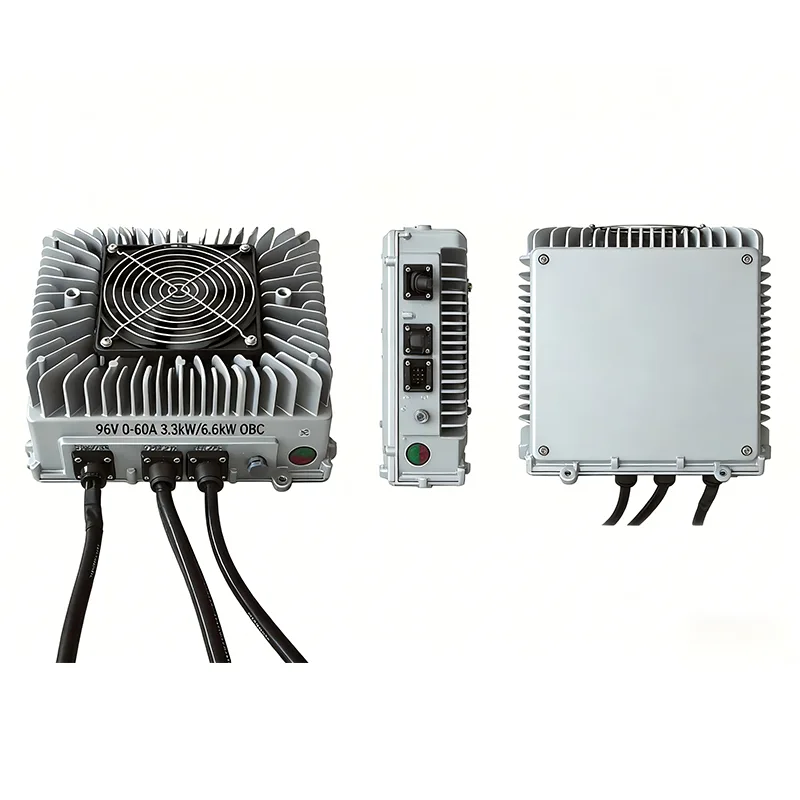
Excessive heat is the primary adversary of electronic components. Within an OBC, power conversion inherently generates losses manifesting as heat. Without robust thermal management, this leads to:
-
Reduced Efficiency: Components operating at high temperatures suffer increased electrical resistance, leading to more energy loss as waste heat—a vicious cycle.
-
Throttled Performance: To prevent damage, the system may derate (reduce) its charging power, significantly prolonging charge times.
-
Catastrophic Failure: Persistent overheating accelerates component degradation, causing premature aging and ultimately, sudden On-Board Charger failure.
Zhaofeng’s design philosophy integrates thermal management from the ground up. We utilize advanced materials and cooling strategies, such as liquid-cooled plates or optimized heatsinks with high-thermal-conductivity compounds, to maintain an ideal operating temperature. This commitment is reflected in the enhanced metrics of our solutions:
| Thermal Management Aspect | Impact on OBC Performance & Longevity |
|---|---|
| Component Junction Temperature | Directly correlates with operational lifespan; a 10°C reduction can double component life. |
| Peak Efficiency Sustenance | Enables the OBC to maintain >94% efficiency across a wider load range, saving energy. |
| Power Density | Allows for a more compact, lighter design without sacrificing reliability or output power. |
| Mean Time Between Failures (MTBF) | Significantly increases the predicted reliability and service life of the unit. |
On-Board Charger FAQ
Why does my OBC sometimes charge slower than its maximum rated power?
This is often due to thermal protection. If the On-Board Charger or battery temperature is too high, the system will intelligently reduce power to cool down and prevent damage, ensuring long-term safety and longevity.
Can I install an aftermarket OBC with a higher power rating for faster charging?
It is strongly discouraged. The vehicle's On-Board Charger is integrated with the battery management system, cooling loops, and software. An incompatible unit can cause thermal runaway, system faults, and void warranties. Always consult specialists like Zhaofeng for integrated solutions.
How can I ensure my EV's OBC lasts as long as the vehicle?
Prioritize regular system check-ups, ensure the cooling system vents are unobstructed, and use recommended charging practices. Choosing an EV model equipped with a robust, thermally-optimized OBC from the start is crucial for durability.
Mastering thermal dynamics is what separates a standard On-Board Charger from a durable, high-performance one. It is the invisible shield that guarantees consistent power delivery and decade-long reliability for your electric vehicle.
Contact Us at Zhaofeng today to learn more about our thermally-optimized power electronics and how our expertise can power your next-generation EV project with unmatched efficiency and durability.
