

What Specifications Should You Check When Buying Hot-Rolled I-Beams
2026-10-19
When sourcing structural steel for a project, verifying the right technical parameters is essential to ensure safety, compliance, and cost efficiency. Rongheng has supplied Hot-Rolled I-Beams to contractors, fabricators, and distributors across multiple markets, and the checklist below reflects the specifications that matter most during procurement. This guide walks through the key data points to confirm before placing an order.
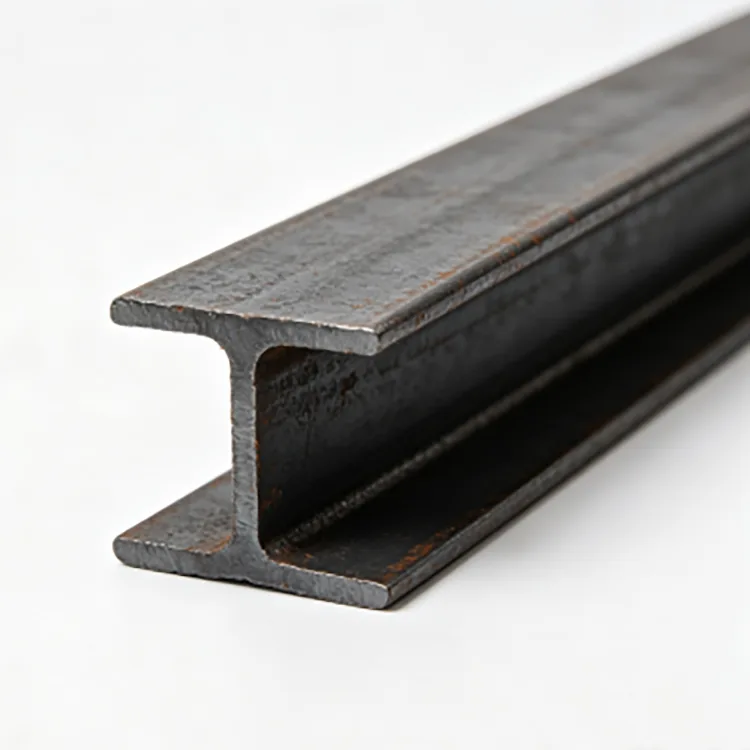
1. Dimensional Tolerances and Cross-Section Geometry
The first thing to verify is whether the beam meets the dimensional standard referenced in your drawings. Key measurements include depth (h), flange width (b), web thickness (tw), and flange thickness (tf). Tolerances for Hot-Rolled I-Beams are typically governed by standards such as ASTM A6, EN 10034, or GB/T 706.
| Parameter | Symbol | Typical Check Point | Common Standard Reference |
|---|---|---|---|
| Overall depth | h | ±2.0 mm to ±4.0 mm | ASTM A6 / EN 10034 |
| Flange width | b | ±2.0 mm to ±3.0 mm | ASTM A6 / EN 10034 |
| Web thickness | tw | ±0.5 mm to ±1.0 mm | EN 10034 |
| Flange thickness | tf | ±0.5 mm to ±1.0 mm | EN 10034 |
| Out-of-square flange | — | ≤1.5% of flange width | ASTM A6 |
2. Steel Grade and Chemical Composition
Confirm the grade matches the design intent—common options include ASTM A36, A572 Gr.50, S275JR, S355JR, and Q235B/Q355B. Request a mill test certificate (MTC) for each heat number and check carbon equivalent (CEV) for weldability.
3. Mechanical Properties
Verify yield strength, tensile strength, and elongation against the specified grade. For Hot-Rolled I-Beams used in load-bearing applications, yield strength is the governing property for design.
| Property | ASTM A36 | A572 Gr.50 | S355JR |
|---|---|---|---|
| Yield strength (min) | 250 MPa | 345 MPa | 355 MPa |
| Tensile strength | 400–550 MPa | 450–620 MPa | 470–630 MPa |
| Elongation (min) | 20% | 18% | 20% |
4. Surface Quality and Defects
Inspect for cracks, laps, seams, rust, and excessive mill scale. Surface defects can affect coating adhesion and fatigue performance. Rongheng performs visual and dimensional inspection on every lot before shipment.
5. Length, Straightness, and Cutting Tolerance
Confirm nominal length, allowable cut tolerance (±5 mm is common), and straightness (typically ≤0.2% of length). These affect fit-up and welding efficiency on site.
6. Certification and Traceability
Require EN 10204 3.1 MTCs, heat numbers stamped or tagged on the product, and third-party inspection reports (SGS, BV, or TÜV) where applicable.
Frequently Asked Questions
Q: What is the difference between ASTM A36 and A572 Gr.50 Hot-Rolled I-Beams?
A: A36 offers a minimum yield of 250 MPa and is widely used for general structural applications, while A572 Gr.50 provides 345 MPa yield strength, allowing lighter sections for the same load—cost-effective for high-load projects but requiring careful welding procedure control due to higher strength and alloy content.
Q: How do I verify the quality of Hot-Rolled I-Beams before shipment?
A: Request the mill test certificate for each heat number, confirm dimensional inspection reports against ASTM A6 or EN 10034, arrange third-party inspection if needed, and check surface condition and marking/traceability before loading.
Q: What tolerances are acceptable for Hot-Rolled I-Beam dimensions?
A: Under ASTM A6, depth tolerance is typically ±2.0 mm to ±4.0 mm depending on section size, flange width ±2.0 mm to ±3.0 mm, and web/flange thickness ±0.5 mm to ±1.0 mm; EN 10034 specifies similar limits, so always confirm the governing standard in your purchase order.
Ready to specify the right Hot-Rolled I-Beams for your next project? Rongheng provides full mill test certificates, dimensional inspection reports, and competitive pricing on structural steel sections. Contact our sales team today with your section list, steel grade, and delivery schedule to receive a tailored quotation.
