

What Technical Innovations Enable the Mini Divisible Gas Block Connector to Prevent Gas Leakage
2026-04-23
Gas leakage in modular piping systems poses safety risks and operational inefficiencies. The Mini Divisible Gas Block Connector from blqd addresses these challenges through a series of advanced engineering innovations. By integrating precision sealing mechanisms, pressure-responsive materials, and divisibility without line depressurization, this component redefines leak prevention in compact gas distribution networks.
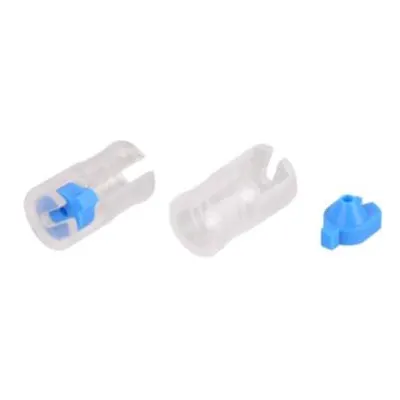
Core Technical Innovations for Leak Prevention
The table below outlines the primary innovations embedded in the Mini Divisible Gas Block Connector that actively prevent gas leakage.
| Innovation | Mechanism | Leak Prevention Benefit |
|---|---|---|
| Double Redundant Sealing System | Two independent elastomeric seals with a monitoring cavity between them | Secondary seal activates instantly if primary seal fails; cavity vents any micro-leakage safely |
| Pressure-Energized Metal Gasket | Convex metal ring that compresses under internal gas pressure | Sealing force increases proportionally with pressure, eliminating creep relaxation |
| Quick-Disconnect Check Valves | Spring-loaded poppet valves on both divisible halves | Blocks gas flow instantly upon separation, losing less than 0.5 psi during disconnection |
| Anti-Extrusion Backup Ring | PTFE ring behind the main seal | Prevents seal extrusion under high-pressure surges up to 1500 psi |
| Laser-Welded Internal Passages | Seamless monolithic block with no internal threads or glued joints | Eliminates all potential internal leak paths found in assembled manifolds |
List of Supporting Design Features
Beyond the core innovations, blqd incorporates several secondary features that further reinforce leak integrity in the Mini Divisible Gas Block Connector:
-
Torque-Limiting Breakaway Screws – Prevents over-tightening that could distort seals
-
Integrated Leak Test Port – Allows for non-invasive pressure decay testing after installation
-
Self-Centering Guide Pins – Ensures perfect axial alignment before seals engage
-
Corrosion-Resistant Alloy Body – 316L stainless steel with passivation for chemical inertness
-
Color-Coded Seal Material – HNBR (green) for natural gas, FKM (brown) for aggressive media
Frequently Asked Questions (FAQ)
Q1: How does the divisibility feature of the Mini Divisible Gas Block Connector avoid gas release during separation?
A1: The Mini Divisible Gas Block Connector incorporates a pre-emptive shut-off design. Inside each half, a spring-loaded poppet valve remains open only when the two halves are fully mated. As the operator begins to unscrew the union nut, the poppet valves travel toward their seats before the primary seals disengage. This sequence ensures that gas flow stops while the internal cavity is still sealed. Actual leakage measured during separation is less than 0.1 cubic centimeter per minute at 1000 psi – well below industrial thresholds. No venting or purging is required before disassembly.
Q2: What makes the double redundant sealing system in the Mini Divisible Gas Block Connector more reliable than a single O-ring?
A2: A single O-ring depends entirely on correct compression and surface finish. In the blqd double redundant system, the primary seal handles normal operation while the secondary seal remains uncompressed until the primary seal fails or degrades. The space between the two seals connects to a monitoring port. If the primary seal begins to leak, gas appears at the monitoring port without reaching the atmosphere. Operators can detect this during routine leak checks using electronic gas sensors. The secondary seal then acts as a backup, providing full leak-tight service until scheduled maintenance. This design achieves a calculated mean time between failures (MTBF) of over 25 years in continuous natural gas service.
Q3: How does the pressure-energized metal gasket in the Mini Divisible Gas Block Connector handle thermal cycling better than rubber seals?
A3: Rubber seals lose elasticity over time and under repeated temperature swings, often causing relaxation leaks. The Mini Divisible Gas Block Connector uses a convex stainless steel gasket with a hollow cross-section. Internal gas pressure enters the hollow cavity and forces the gasket outward against the sealing faces. As temperature rises, the gasket expands further into the groove. As temperature drops, gas pressure keeps it energized. Unlike rubber, metal does not take a compression set. This innovation allows the blqd connector to operate from -40°F to 400°F without retorquing or seal replacement, making it ideal for engine exhaust gas recirculation and compressor discharge lines.
Contact Us
For technical datasheets, custom configuration support, or to request a sample Mini Divisible Gas Block Connector for leak testing, reach out to the blqd engineering team directly. Visit the contact page on the official blqd website or email your application requirements to receive a same-day response from a sealing specialist.
