

What temperature range can PVC leaflet hose withstand without losing structural integrity
2026-05-11
When selecting fluid transfer equipment for industrial, agricultural, or construction applications, understanding the thermal limits of your materials is essential. The PVC leaflet hose is widely valued for its flexibility, lightweight design, and cost efficiency. However, like all polymer-based products, its structural integrity depends heavily on operating temperature. For businesses relying on JS branded solutions, knowing the precise temperature window ensures safety, longevity, and optimal performance.
PVC Leaflet Hose typically maintains its shape, pressure rating, and burst strength between -5°C (23°F) and 60°C (140°F). Below freezing, the material begins to harden and lose flexibility, becoming prone to cracking under bending or impact. Above 60°C, the plasticizers within the PVC compound migrate, causing the hose to soften, swell, or deform under pressure. Short-term exposure near the upper limit may be tolerated, but continuous operation beyond this range accelerates aging and risks sudden failure.
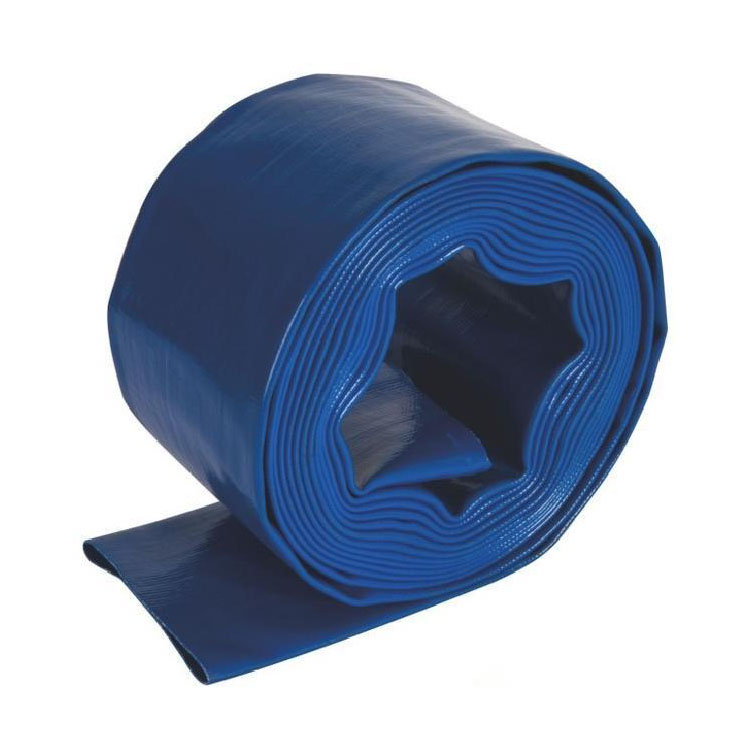
Thermal performance indicators for JS PVC Leaflet Hose
| Temperature Range | Material Behavior | Recommended Action |
|---|---|---|
| Below -10°C (14°F) | Rigid, brittle, high crack risk | Do not bend or pressurize |
| -5°C to 10°C (23–50°F) | Reduced flexibility | Handle carefully; avoid impact |
| 10°C to 50°C (50–122°F) | Optimal flexibility and pressure rating | Ideal for continuous use |
| 50°C to 60°C (122–140°F) | Softening; working pressure decreases | Intermittent use only |
| Above 65°C (149°F) | Visible deformation, pressure loss | Not permitted |
Key structural integrity factors
-
Pressure rating drop: At 60°C, PVC leaflet hose loses approximately 30–40% of its rated working pressure compared to 20°C.
-
Bend radius increases: Cold environments require larger bend radii to avoid kinking.
-
Long-term thermal aging: Continuous exposure above 50°C halves the expected service life of JS hoses.
PVC Leaflet Hose FAQ
Q: Can I use a PVC leaflet hose for hot water discharge above 60°C?
A: No. Once the fluid temperature exceeds 60°C (140°F), the hose wall softens significantly, causing the inner tube to collapse or bulge under pump pressure. For hot water applications above this threshold, JS recommends switching to rubber or cross-linked polyethylene (PEX) hoses. Brief surges up to 65°C may not rupture the hose immediately, but repeated cycles will permanently deform the PVC leaflet hose, leading to leaks at the fittings.
Q: How does sub-zero temperature affect the burst pressure of my JS PVC leaflet hose?
A: At -5°C and below, the PVC leaflet hose becomes glass-like. While the burst pressure might initially read higher due to material stiffening, the hose loses its ability to absorb shocks or vibrations. Any sudden pressure spike, impact, or sharp bend can cause brittle fracture along the outer layer. JS tests show that at -10°C, impact resistance drops by over 70% compared to room temperature. Never pressurize a frozen hose; allow it to warm gradually above 0°C before operation.
Q: What happens if I operate a PVC leaflet hose at 70°C for one hour daily?
A: Even one hour per day at 70°C dramatically accelerates plasticizer migration and oxidation. Within two weeks, you will notice the hose becoming stiff, discolored, and prone to surface cracks. The inner diameter may shrink due to swelling and subsequent cooling, reducing flow rate permanently. JS does not warranty standard PVC leaflet hose for any regular duty above 60°C. For such cyclic high-temperature exposure, consider JS high-temperature reinforced PVC series or thermoplastic elastomer alternatives.
Summary table for daily operational limits
| Condition | Maximum Continuous Temp | Maximum Short-Term Temp (<30 min) |
|---|---|---|
| Water-based fluids | 55°C (131°F) | 60°C (140°F) |
| Mild chemicals | 50°C (122°F) | 55°C (131°F) |
| Outdoor sunlight exposure | 50°C (122°F) | 60°C (140°F) |
Maintaining the PVC leaflet hose within the -5°C to 60°C window preserves its tensile strength, pressure rating, and kink resistance. For extreme environments or custom thermal requirements, JS engineers can recommend reinforced or specialty compound hoses.
Contact us today for technical datasheets and temperature-specific guidance on PVC leaflet hose solutions. Reach the JS support team via the website contact form or call your regional distributor to discuss your operating conditions and receive tailored recommendations.
