

When Should You Replace the Commutator End Bracket on a DC Motor
2026-06-26
The Commutator End Bracket is far more than a simple cover plate—it is a precision structural component that maintains rotor alignment, houses the brush gear, and absorbs vibrational loads in DC motors. For maintenance engineers and plant operators, knowing exactly when to replace this part can mean the difference between a scheduled $200 repair and an unplanned $20,000 motor failure. At United, we have spent over two decades analyzing failure patterns in industrial DC motors, and this guide distills that expertise into actionable replacement criteria.
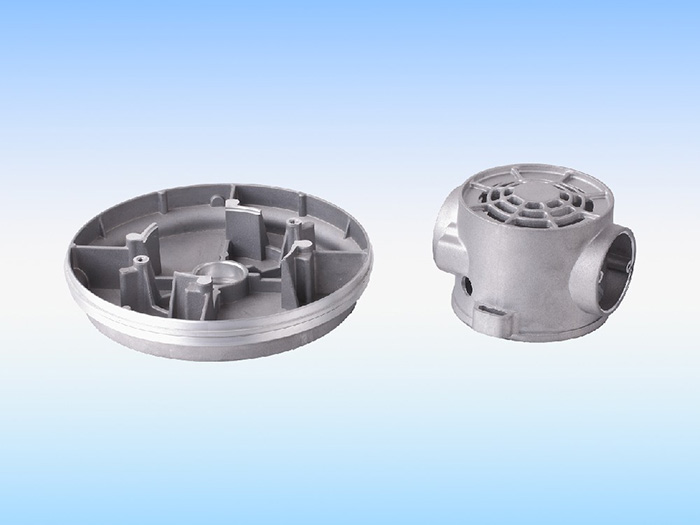
The Functional Role of the Commutator End Bracket
Before discussing replacement triggers, it is essential to understand what this bracket does. The Commutator End Bracket supports the outboard bearing, holds the brush holder assembly in precise radial alignment with the commutator, and provides a return path for magnetic flux in some motor designs. Any degradation in its dimensional integrity directly affects brush tracking, air gap consistency, and thermal dissipation.
Six Definitive Signs That Replacement Is Due
| Observation Method | What to Look For | Replacement Urgency |
|---|---|---|
| Visual inspection | Cracks radiating from bolt holes or the bearing housing | Immediate – risk of catastrophic separation |
| Micrometer measurement | Bearing bore out-of-round > 0.05 mm (0.002") | High – will cause repetitive bearing failure |
| Dye penetrant test | Surface porosity or hairline fractures near mounting feet | Moderate to high – fatigue progression is inevitable |
| Thermal imaging | Hot spots > 15°C above motor frame temperature | Moderate – indicates poor heat conduction or loosening |
| Vibration analysis | 1× RPM harmonic with sidebands at brush-pass frequency | High – points to bracket resonance or loosening |
| Brush wear pattern | Uneven wear across brush width (tapered or stepped profile) | Moderate – misalignment originating from bracket distortion |
Quantitative Replacement Thresholds
| Parameter | Acceptable Range | Replace If |
|---|---|---|
| Bearing bore roundness | ≤ 0.03 mm TIR | > 0.05 mm TIR |
| Mounting face flatness | ≤ 0.04 mm over 100 mm | > 0.08 mm over 100 mm |
| Brush track runout (assembled) | ≤ 0.10 mm | > 0.20 mm |
| Housing wall thickness (minimum) | 95% of original | < 90% due to corrosion or fretting |
| Thread integrity in bolt holes | Full thread engagement | > 20% stripped or corroded threads |
When to Replace Proactively (Even Without Visible Damage)
United recommends proactive replacement of the Commutator End Bracket under three non-observable conditions:
-
After a rotor lock-up or seizure event – the impact load often yields the bracket's bearing housing even if cracks are not yet visible.
-
Following three consecutive brush changes – by this point, brush track wear on the bracket-mounted holder can shift commutator contact geometry beyond tolerance.
-
When the motor undergoes a full rewind – the thermal stress of the bake-out cycle can alter the metallurgical stability of cast-iron or aluminum brackets.
Repair vs. Replacement: A Professional Decision Matrix
| Condition | Repair (Machining) | Replace with United OEM Bracket |
|---|---|---|
| Minor scoring on mounting face | Yes – skim cut up to 0.2 mm | Not necessary |
| Bearing bore worn by < 0.03 mm | Yes – bore bush or sleeve | Consider cost comparison |
| Bearing bore worn > 0.05 mm | No – insufficient material for sleeving | Replace |
| Cracked foot or rib | No – welding induces distortion | Replace |
| Corroded bolt holes (3 or more) | No – thread repair unreliable | Replace |
| Motor ≥ 200 HP with high duty cycle | Risk mitigation – replace proactively | Strongly recommended |
Frequently Asked Questions About the Commutator End Bracket
Q1: Can I machine the bearing housing of a worn Commutator End Bracket to oversize and fit a larger bearing instead of replacing the bracket?
A1: This is technically feasible but rarely advisable in industrial practice. While oversizing the bearing bore by 0.5–1.0 mm allows you to fit a bearing with a larger outer diameter, the modification introduces three serious risks: (1) reduced wall thickness lowers the housing's stiffness, increasing resonant amplification at critical speeds; (2) the new bearing may not match the motor's internal clearance specifications, altering thermal expansion behavior; and (3) you lose interchangeability with standard spare bearings, locking you into custom parts. United typically advises against this route for motors above 50 HP, as the cost of the custom bearing and machining often exceeds the price of a new precision-machined bracket. Unless the motor is obsolete and no replacement bracket is available, replacement remains the safer, more cost-predictable solution.
Q2: How do I distinguish between normal brush wear and a misalignment problem caused by the Commutator End Bracket?
A2: Normal brush wear produces a uniform, slightly convex face that matches the commutator curvature, with all brushes in a given holder showing similar remaining lengths. Bracket-induced misalignment, however, creates distinct asymmetry: brushes on one side of the holder will wear 30–50% faster than those on the opposite side, and the worn face will appear angled or tapered rather than evenly curved. Additionally, if you remove the bracket and place it on a precision surface plate, a misalignment issue will manifest as rocking motion (indicating a twisted casting) or a detectable gap under one mounting foot. At United, we recommend performing a dial-indicator runout check on the assembled commutator end assembly; a total indicated runout (TIR) exceeding 0.15 mm at the brush track, after excluding bearing contribution, almost always points to bracket distortion that replacement will fully correct.
Q3: Is it acceptable to reuse a Commutator End Bracket after welding a cracked mounting foot?
A3: In our professional assessment, welding cast-iron or aluminum Commutator End Brackets is a high-risk practice that should only be considered for temporary emergency operation—never for permanent service. The welding process introduces localized heat that alters the grain structure, reduces ductility, and creates a heat-affected zone (HAZ) with residual tensile stresses. Even with pre-heating and post-weld annealing, dimensional stability cannot be guaranteed; the bracket will often warp by 0.1–0.3 mm across the mounting face, which is sufficient to misalign the brush gear and accelerate commutator wear. Furthermore, weld porosity or micro-fractures beneath the surface are undetectable by visual inspection and can propagate under cyclic thermal loads. United explicitly advises against welded repairs on any bracket that supports bearings or brush holders. Replacement with a new OEM-spec bracket restores both geometric accuracy and material integrity without the hidden liability of a repaired casting.
The United Advantage in Commutator End Bracket Replacement
Choosing the right replacement is not just about dimensions—it is about metallurgy, thermal matching, and dynamic balancing. United manufactures each Commutator End Bracket using either high-strength ductile iron (ASTM A536) or aircraft-grade aluminum alloy (6061-T6), depending on the motor's speed and temperature profile. Every unit is CNC-machined to hold bearing bore tolerances of H6 and mounting face flatness within 0.025 mm. More importantly, our brackets are dynamically balanced as an assembly with the rotor, ensuring that your replacement does not introduce new vibration issues. We also stock over 200 standard profiles for NEMA and IEC frame sizes, with custom patterns available in 5–7 working days.
Final Professional Recommendation
Do not wait for visible failure to make your decision. The Commutator End Bracket operates in a high-stress zone where gradual degradation is invisible until performance suddenly collapses. If your inspection data shows any parameter exceeding the thresholds in our tables above, or if your motor has experienced a shock event, schedule replacement immediately. The cost of a new bracket is consistently less than 10% of a complete motor overhaul, and the uptime gained is immediate.
Contact United today for a complimentary replacement assessment. Our engineering team will review your motor's nameplate data, operating history, and inspection photos to recommend the exact Commutator End Bracket solution for your application. Reach us at [email protected] or call +1-800-555-0199—we respond to all technical inquiries within 4 business hours. Your motor's reliability is our priority, and we are ready to ship the right bracket to your facility within 48 hours.
