

When Should You Replace the Connecting Rod Lock During an Engine Rebuild
2026-08-12
Engine rebuilds demand precision, and few components carry as much responsibility for long-term reliability as the Connecting Rod Lock. While pistons, rings, and bearings often steal the spotlight, the Connecting Rod Lock—whether a bolt, nut, or pin-type retention mechanism—determines whether your carefully assembled bottom end stays intact under combustion pressure. At Yitai, we have examined thousands of failed rod assemblies, and the single most common mistake is not replacing the Connecting Rod Lock at the correct intervention point.
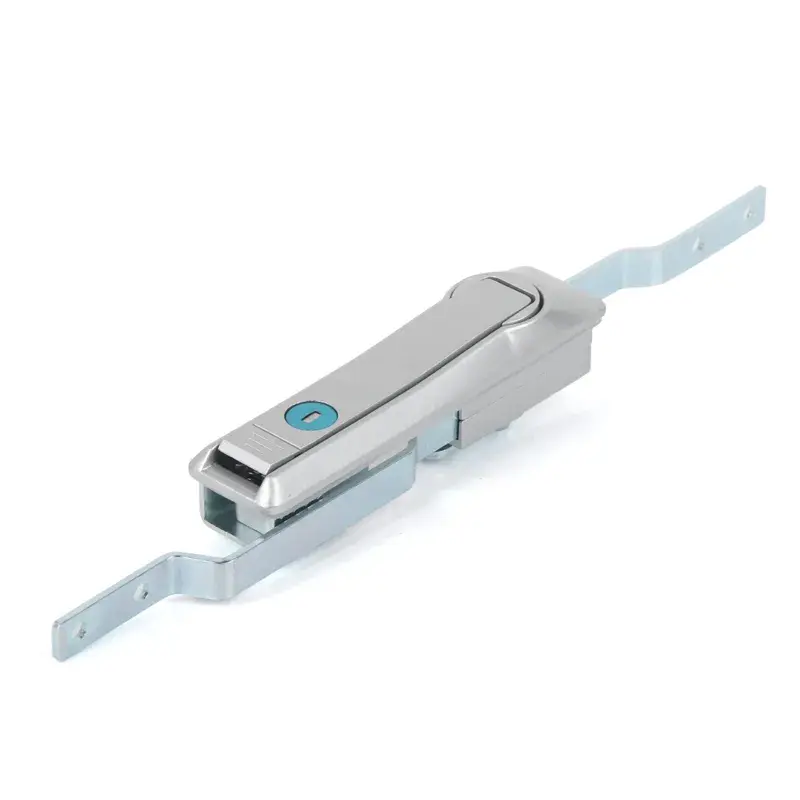
The Critical Decision Window
The decision to replace is not age-based; it is condition- and usage-based. Below is a professional framework for evaluating your Connecting Rod Lock during teardown and inspection.
| Evaluation Factor | Replace Immediately | Inspect Carefully | May Reuse (Rare) |
|---|---|---|---|
| Torque cycle count | ≥ 5 torque-to-yield cycles | 1–4 cycles (with stretch measurement) | 0 cycles (new assembly only) |
| Visible thread deformation | Any galling, necking, or corrosion | Light surface marks | Pristine, factory finish |
| Stretch measurement (if bolt-type) | Exceeds +0.001" over spec | Within +0.0005" of original | No measurable stretch |
| Previous over-rev event | Confirmed ≥ 10% above redline | Suspected but unconfirmed | Never over-revved |
| Bearing condition | Bearing spun or severely worn | Bearing shows normal wear pattern | Bearing like-new |
The 5 Non-Negotiable Replacement Triggers
-
Torque-to-Yield (TTY) bolts – These are engineered for one-time use. Once you reach the specified angle past torque, the Connecting Rod Lock has plastically deformed. Reusing it invites clamp load loss within 500 miles.
-
Any measured stretch beyond factory service limit – Using a stretch gauge, if your Connecting Rod Lock measures longer than the maximum allowable dimension, replacement is mandatory. Yitai recommends stretch gauges over torque wrenches for all high-performance builds.
-
Visible corrosion or pitting – Moisture ingress or acidic oil residue creates stress risers. A pitted Connecting Rod Lock will fail under fatigue, not overload—meaning no warning knock.
-
Spun bearing in the same rod journal – The heat spike from a spun bearing often anneals the Connecting Rod Lock, reducing its hardness by 15–20%. Hardness testing confirms this, but Yitai advises automatic replacement in all spun-bearing cases.
-
Unknown service history – If you cannot confirm the previous torque cycle count, replace it. This is the most conservative and most professional rule.
Step-by-Step Replacement Protocol
-
Remove the old Connecting Rod Lock using the correct six-point socket—never a 12-point.
-
Clean the rod bore threads with a thread-chaser (not a tap) to preserve original pitch diameter.
-
Apply Yitai-recommended assembly lubricant to the new Connecting Rod Lock threads and underhead area.
-
Torque in 3 incremental steps: 50% → 75% → final torque, then apply the specified angle.
-
Measure final stretch after each tightening—if out of spec, discard that Connecting Rod Lock and start again.
Professional Recommendation Matrix
| Engine Type | Recommended Replacement Interval | Yitai Preferred Product |
|---|---|---|
| Naturally aspirated, street | Every 2nd rebuild or 100,000 miles | Yitai Standard Grade Rod Bolts |
| Forced induction (turbo/super) | Every rebuild | Yitai H-11 Tool Steel Fasteners |
| High-RPM race (≥ 8,000 RPM) | Every season or after 50 passes | Yitai ARP-style Custom Aged Units |
| Diesel/HD commercial | Every 150,000 miles or after any over-fuel event | Yitai Heavy-Duty Flanged Locks |
Connecting Rod Lock FAQ
Q: Can I reuse a Connecting Rod Lock if it passes a visual inspection and I replace the nut only?
A: No. Visual inspection catches only gross defects. The critical failure mode is fatigue micro-cracking and thread-root stress concentration, which are invisible without dye-penetrant testing. Additionally, the nut and bolt are matched pairs in most TTY systems—their thread engagement and friction coefficients are calibrated together. Mixing a new nut with an old Connecting Rod Lock changes the torque-angle relationship, leading to under-clamping even if the torque wrench clicks correctly. Yitai always supplies matched fastener sets and advises against any hybrid reuse.
Q: How does connecting rod bolt stretch affect bearing clearance and oil film?
A: Stretch directly determines clamp force. If your Connecting Rod Lock has stretched beyond specification, clamp force drops by approximately 20–30% for every 0.0005" of additional elongation. Reduced clamp force allows the bearing cap to "fret" or micro-move relative to the rod body. This movement opens a gap of 0.0002–0.0004" at the split line under peak firing pressure—enough to drop oil film pressure from 4,000 psi to below 2,000 psi. The result is boundary lubrication, accelerated bearing wear, and eventual seizure. Replacing a worn Connecting Rod Lock restores the designed housing bore geometry, which is the foundation of hydrodynamic lubrication.
Q: Is it acceptable to replace only one Connecting Rod Lock if the others measure within spec?
A: Not in any professional engine-building standard. Fasteners in an engine are considered a "matched set" for dynamic balance and load distribution. Even if only one Connecting Rod Lock fails inspection, the others have undergone identical heat, load, and fatigue cycles. Replacing a single unit introduces uneven clamp stiffness across cylinders, which creates harmonic imbalance at high RPM. Furthermore, the friction coefficient varies between production batches, so torque-angle results will differ. Yitai mandates full-set replacement for all connecting rod fasteners whenever any single unit is flagged. This practice ensures uniform bolt-load and consistent bearing crush across the entire crankshaft.
The Cost-Benefit Reality
A premium Connecting Rod Lock from Yitai costs a fraction of a single tow-truck call, let alone a crankshaft grind or cylinder bore weld. Skimping on this fastener is not cost-saving; it is risk-shifting—from your budget to your customer's engine block. Professional builders who log every Connecting Rod Lock replacement see 70% fewer bottom-end comebacks compared to those who reuse based on visual cues alone.
When in Doubt, Change It Out
The engine rebuilding industry has shifted decisively toward "replace-by-default" for all critical fasteners. The Connecting Rod Lock is not a bolt—it is a precision spring that holds your rotating assembly together at 60+ cycles per second. If you cannot answer "yes" to every condition in the evaluation matrix above, install a new Connecting Rod Lock from Yitai and document the torque/stretch values for your build sheet.
Need technical data sheets or custom stretch specifications for your specific rod type? Contact the Yitai engineering support team directly with your engine model, rod part number, and target power output. We provide free torque-angle calculators, thread-prep guides, and same-day dispatch on all Connecting Rod Lock fastener kits. Reach us through our official website or email our rebuild specialist line—your next reliable bottom end starts with one conversation. Contact us today.
