

An air dryer filter is an essential component in compressed air systems where moisture, oil aerosols, rust particles, and other contaminants can affect equipment reliability and product quality. However, choosing an unsuitable filter may lead to excessive pressure drop, inadequate contaminant removal, frequent maintenance, and unexpected production interruptions. This guide explains how air dryer filters work, the differences between common filtration types, the factors that determine proper selection, and the maintenance practices that help protect downstream equipment. Whether you operate a manufacturing facility, an automated production line, or a compressed air treatment system, understanding filtration requirements can help you build a more reliable and cost-effective compressed air network.
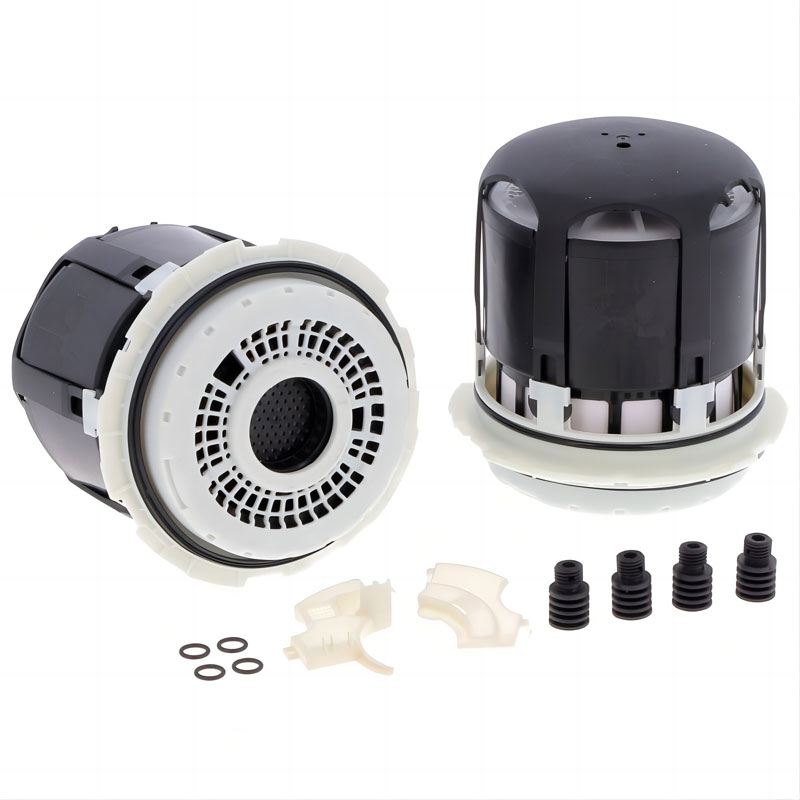
What Is an Air Dryer Filter?
An air dryer filter is a filtration component used in compressed air treatment systems to remove specific contaminants from compressed air. Depending on its design, it may capture liquid water droplets, oil aerosols, solid particles, rust, pipe scale, and other unwanted substances before the air reaches sensitive equipment.
Compressed air is widely used in manufacturing, packaging, automotive production, electronics, food processing, pharmaceutical operations, and many other industries. Although the air entering a compressor may appear clean, the compression process concentrates contaminants and can introduce additional oil or wear particles into the system. Atmospheric humidity also becomes a significant concern as air is compressed and subsequently cools.
Without suitable treatment, these contaminants can travel through pipelines and reach pneumatic valves, cylinders, instruments, spray equipment, and production tools. The resulting problems may include corrosion, blocked passages, unreliable movement, product defects, and unplanned maintenance.
Key principle: An air dryer filter and an air dryer perform different but complementary jobs. The filter removes contaminants according to its filtration capability, while the dryer reduces the amount of water vapor in compressed air. Reliable air quality usually requires the correct combination of treatment equipment.
The best filter is not necessarily the one with the finest advertised filtration rating. It is the one that achieves the required air quality under actual operating conditions without creating unnecessary pressure loss or maintenance costs.
Why Does Compressed Air Contamination Matter?
Compressed air quality directly affects the performance and service life of equipment connected to the system. Contamination is especially troublesome because it can spread throughout a distribution network and create problems far from the compressor room.
Moisture and Liquid Water
Moisture can condense when compressed air cools. Liquid water in pipelines may cause corrosion, damage pneumatic components, interfere with coatings, and create problems in processes that require dry air. A suitable dryer reduces water vapor, while appropriately selected separators and filters remove liquid droplets and other contaminants.
Oil Aerosols and Residues
Oil-lubricated compressors may introduce oil aerosols into the compressed air stream. These contaminants can affect product surfaces, sensitive instruments, and certain production processes. Coalescing filters are commonly used to capture liquid aerosols, but their effectiveness depends on the filter specification and operating conditions. Vapor-phase oil requires appropriate treatment, such as a suitable adsorption stage, when the application demands it.
Solid Particles
Rust, dust, pipe scale, and particles released by aging components can restrict small passages and accelerate wear. Fine filtration may be needed to protect downstream equipment, especially in systems that contain precision valves, instruments, or sensitive process equipment.
Unnecessary Operating Costs
Contaminated air can increase maintenance frequency, reduce production consistency, and shorten component life. A poorly selected filter can create another cost: excessive pressure drop forces the compressor to work harder to maintain the required pressure.
| Contaminant | Potential Consequence | Common Treatment Approach |
|---|---|---|
| Liquid water | Corrosion, sticking valves, damaged tools | Water separator, suitable filtration, and air drying |
| Oil aerosols | Surface contamination and process problems | Compatible coalescing filtration |
| Solid particles | Wear, blockage, and instrument malfunction | Particulate filtration matched to required cleanliness |
| Water vapor | Condensation when air cools under unsuitable conditions | Refrigerated or desiccant air dryer as appropriate |
| Oil vapor | Odor or contamination in applications with strict air purity needs | Suitable vapor adsorption treatment when required |
It is important to match the treatment method to the actual contaminant. No single filter should be assumed to remove every form of water, oil, and particulate matter.
Which Types of Air Dryer Filters Are Used in Compressed Air Systems?
Different filters serve different purposes. A treatment system may use one filter or several stages arranged to meet the required air quality. Understanding these differences prevents buyers from selecting equipment that looks suitable on paper but fails to address the real operating problem.
1. Particulate Filters
Particulate filters capture solid contaminants such as dust, rust, pipe scale, and other particles. Their suitability depends on the rated filtration performance and the particle-size requirements of the application.
Typical purpose: Protect downstream components from solid contamination.
2. Coalescing Filters
Coalescing filters are designed to capture fine liquid aerosols, including oil droplets and water aerosols. Captured droplets combine into larger drops that can drain from the filter element when the unit is designed and installed correctly.
Typical purpose: Reduce liquid aerosol contamination.
3. General-Purpose Filters
General-purpose filtration is often used as an initial treatment stage to reduce larger particles and liquid contamination. It may help protect finer downstream elements from premature loading.
Typical purpose: Initial filtration and equipment protection.
4. Activated Carbon Filters
Activated carbon filters or adsorption units can reduce certain oil vapors and odors. They do not replace coalescing filters for liquid aerosols, and their performance depends on the media, operating conditions, and replacement schedule.
Typical purpose: Additional vapor or odor treatment where required.
5. Dryer Inlet and Outlet Filters
Filters positioned around a compressed air dryer can protect the dryer and downstream equipment. The correct arrangement depends on dryer technology, contaminant loading, and the manufacturer's recommendations.
Typical purpose: Support dryer performance and protect the air network.
6. High-Efficiency Final Filters
Final filters provide an additional treatment stage for applications with demanding cleanliness requirements. Their ratings and performance must be suitable for the process rather than chosen solely on the basis of a very small nominal particle size.
Typical purpose: Achieve a defined downstream air quality.
Not every installation requires all these filter types. The correct combination depends on the compressor, dryer, piping system, required air purity, and the sensitivity of the connected process.
Which Factors Determine the Right Air Dryer Filter?
Choosing an air dryer filter should begin with the operating requirements, not simply the connection size or purchase price. A technically suitable product must handle the expected flow, pressure, temperature, contamination load, and required air quality.
1. Required Air Quality
Start by identifying what the compressed air will be used for. General pneumatic tools may tolerate a different contamination level from precision instruments, painting operations, or processes that bring compressed air into direct contact with a product.
Where applicable, define the required particulate, moisture, and oil-contamination levels using the relevant compressed air quality classification and test methods. ISO 8573-1 is commonly used to specify compressed air purity classes, but the required class must be selected for the actual application.
2. Airflow Capacity
The filter must accommodate the actual flow demand. An undersized filter can produce excessive pressure drop and may not provide the intended performance at peak demand. When comparing products, check the manufacturer's rated flow conditions and correction factors.
Do not compare flow ratings without confirming their reference pressure, temperature, inlet conditions, and measurement basis. Two ratings expressed in different reference conditions may not be directly comparable.
3. Operating Pressure and Temperature
Check that the housing, filter element, seals, and drain components are compatible with the system's operating pressure and temperature. The maximum allowable rating must be appropriate for the installation, including foreseeable operating conditions.
4. Pressure Drop
Pressure drop is the difference between the pressure upstream and downstream of a filter. Every filter creates some resistance to airflow, and that resistance may increase as the element accumulates contaminants.
A filter with an unnecessarily high pressure drop can increase energy consumption and reduce pressure available to downstream equipment. Evaluate pressure drop at the expected flow and compare clean-element performance as well as the manufacturer's recommended service limits.
5. Contaminant Loading
Systems with high levels of rust, dust, liquid water, or oil may need appropriate pre-filtration and more frequent element replacement. If contaminants enter a fine filter in large quantities, the element may load quickly and increase operating costs.
6. Connection Size and Installation Space
Confirm the connection standard, nominal pipe size, flow direction, drain arrangement, available clearance, and maintenance access. A filter that is difficult to service may increase maintenance time and encourage operators to postpone necessary element replacement.
7. Replacement Elements and Lifecycle Cost
Check the availability, cost, and recommended replacement interval of filter elements. A low initial price may not provide good long-term value if elements are expensive, difficult to obtain, or require frequent replacement.
Practical selection rule: Specify the required air quality first, verify the operating conditions second, and compare airflow, pressure drop, element life, maintenance access, and total ownership cost before making the final decision.
Air Dryer vs. Air Filter: Understanding the Difference
The terms air dryer and air dryer filter are sometimes used interchangeably, but they describe different functions. Understanding the distinction is essential when diagnosing moisture problems.
| Equipment | Main Function | Important Limitation |
|---|---|---|
| Air dryer | Reduces water vapor and helps control the pressure dew point | Does not automatically remove all solid particles or oil aerosols |
| Particulate filter | Captures solid particles within its rated performance range | Does not remove water vapor like a dryer |
| Coalescing filter | Removes liquid aerosols and fine droplets | Does not replace a dryer for reducing water vapor |
| Activated carbon treatment | Reduces certain oil vapors and odors | Does not replace appropriate particulate or liquid-aerosol filtration |
Refrigerated dryers cool compressed air to condense moisture, while desiccant dryers use moisture-adsorbing material to achieve lower pressure dew points. The correct technology depends on the required dryness, ambient conditions, energy considerations, and process needs.
Filters are often installed before or after a dryer depending on the equipment design and the required treatment sequence. Some systems use inlet filtration to protect dryer components and outlet filtration to control particles or other contaminants. Follow the specific dryer and filter manufacturer's installation recommendations.
Important: If water repeatedly appears downstream of a dryer, replacing the filter alone may not solve the problem. Investigate the dryer's performance, actual pressure dew point, drain operation, bypass valves, temperature conditions, and the possibility of condensation in downstream piping.
Industrial Applications and Their Filtration Requirements
Different industries have different priorities, so a suitable air dryer filter should be selected according to the application rather than a universal specification.
Manufacturing and Pneumatic Automation
Automated production lines depend on reliable cylinders, valves, actuators, and control equipment. Moisture and particles can interfere with movement or accelerate wear. General filtration and moisture control are often important starting points, with additional stages selected according to the equipment requirements.
Automotive Painting and Surface Finishing
Painting and finishing operations can be sensitive to oil, water, and particles. Contamination may lead to surface defects, rework, and wasted materials. The treatment system should be designed for the specific paint process, and air quality should be verified at the point of use.
Food and Beverage Processing
Applications involving product contact require careful assessment of contamination risks and applicable industry requirements. Filtration alone does not establish that compressed air is suitable for food contact. Moisture, oil, microorganisms, and other potential contaminants should be addressed through a documented air-quality management program.
Electronics and Precision Instruments
Fine particles, moisture, and oil contamination can affect sensitive equipment and precision processes. These applications may require more stringent air-quality targets and verification than ordinary utility air.
Pharmaceutical and Medical-Related Production
Where compressed air is used in regulated or critical processes, the required purity, validation, monitoring, and maintenance procedures should be defined by the applicable standards and site quality system. A filter's product description alone is not proof that a complete compressed air system meets those requirements.
In every industry, the most effective design starts with a clear understanding of where the compressed air will be used, which contaminants are unacceptable, and how performance will be monitored over time.
How Can Proper Installation Improve Filter Performance?
Even a high-quality filter may underperform if it is installed incorrectly. Good installation protects the filter element, reduces avoidable pressure loss, and makes routine servicing safer and easier.
- Confirm the flow direction. Follow the arrows and installation markings on the filter housing.
- Provide suitable upstream treatment. Where contaminant loading warrants it, use an appropriate separator or pre-filter to protect finer elements.
- Check the rated operating conditions. Verify pressure, temperature, flow, and material compatibility before commissioning.
- Install drains correctly. Ensure condensate can be removed as intended and that drainage does not create a safety or environmental issue.
- Prevent bypass leakage. Check seals, connections, and housing closure according to the manufacturer's procedure.
- Allow maintenance access. Provide sufficient space to remove the element, inspect the housing, and service drain components.
- Monitor the initial condition. Record baseline inlet and outlet pressure or differential pressure under representative operating conditions.
Where possible, locate monitoring points so that changes in filter pressure drop can be observed. A clear baseline makes it easier to determine whether rising resistance is caused by element loading or another system problem.
Always isolate and depressurize the housing according to the manufacturer's instructions before opening it. Compressed air stores energy, and a pressurized housing must never be opened for routine service.
Maintenance and Troubleshooting for Air Dryer Filters
Routine maintenance helps maintain filtration performance and reduces the likelihood of unexpected pressure loss or contamination reaching downstream equipment. The appropriate service interval depends on the filter design, contaminant loading, operating hours, and manufacturer's instructions.
Maintenance Checklist
- Inspect the housing for corrosion, damage, and visible leakage.
- Check differential pressure where suitable monitoring is available.
- Inspect condensate drains and verify correct operation.
- Replace filter elements according to service limits and manufacturer guidance.
- Check seals and O-rings whenever the housing is opened.
- Confirm that replacement elements are compatible with the original filter.
- Record service dates, operating conditions, and observed problems.
- Verify system performance after maintenance.
Common Problems and Their Possible Causes
| Problem | Possible Cause | Suggested Investigation |
|---|---|---|
| High differential pressure | Loaded element, excessive flow, unsuitable filter sizing | Check flow conditions, element condition, and rated capacity |
| Water downstream | Dryer issue, drain failure, condensation, unsuitable treatment layout | Check dew point, drains, bypasses, and downstream temperatures |
| Oil contamination | Inadequate aerosol filtration, oil vapor, compressor carryover | Identify the contaminant form and verify treatment stages |
| Frequent element replacement | High contaminant loading or insufficient pre-filtration | Investigate contamination sources and review system design |
| Air leakage around housing | Damaged seal, incorrect assembly, worn components | Depressurize safely and inspect sealing components |
| Unstable downstream pressure | Excessive pressure drop, changing demand, other system restrictions | Compare upstream and downstream pressure under operating load |
Replacing a filter element may resolve a problem caused by contaminant loading, but recurring failures should trigger a wider investigation. Repeated blockage, for example, may indicate that the upstream separator is ineffective, the piping is corroding, or the filter is too small for the actual demand.
How Can You Improve Efficiency and Control Long-Term Costs?
The initial purchase price represents only part of an air dryer filter's total cost. Energy consumption, replacement elements, labor, production downtime, and the consequences of inadequate air quality can have a greater impact over the service life of the equipment.
Reduce Unnecessary Pressure Drop
Choose a filter with an appropriate flow rating and compare pressure-drop data under realistic operating conditions. An undersized unit or an element that remains in service beyond its recommended limit can increase the pressure required to deliver usable air.
Use Filtration Stages Strategically
Pre-filtration can help prevent large contaminant loads from reaching finer elements. However, additional stages should serve a defined purpose. Unnecessary filters may add cost, maintenance requirements, and pressure loss without delivering meaningful benefits.
Use Condition-Based Maintenance Where Practical
Monitoring differential pressure and operating trends can help maintenance teams identify when an element is approaching its service limit. Follow the manufacturer's replacement criteria rather than waiting until the system experiences a serious performance problem.
Protect Downstream Equipment
The cost of poor compressed air quality may include damaged tools, rejected products, unplanned repairs, and lost production time. A properly designed treatment system can reduce these risks when its performance is matched to the actual application.
Evaluate the Complete Lifecycle
When comparing filters, review element cost and availability, expected service life, ease of maintenance, housing durability, pressure-drop characteristics, and compatibility with the existing system. A slightly higher purchase price may be justified if the unit provides lower operating costs and more reliable service.
What Should Buyers Confirm Before Ordering an Air Dryer Filter?
Clear technical information helps suppliers recommend suitable products and reduces the risk of receiving a filter that does not match the installation.
Before requesting a quotation, prepare the following information:
- Required compressed air quality and intended application.
- Operating pressure and temperature range.
- Actual airflow demand and peak consumption.
- Contaminants that need to be removed.
- Required filtration performance and relevant test conditions.
- Pipe connection size and connection standard.
- Available installation space and flow direction.
- Existing dryer type and upstream treatment equipment.
- Preferred drain configuration and maintenance access.
- Replacement element availability and service requirements.
It is also useful to explain any current problems, such as recurring water downstream, high differential pressure, oil contamination, or frequent element changes. These details help distinguish a filter-selection issue from a dryer, compressor, drainage, or piping problem.
For industrial buyers, distributors, and equipment integrators, product consistency and technical communication matter just as much as nominal filtration ratings. Confirm the manufacturer's documented specifications, operating limits, element compatibility, and applicable quality documentation before finalizing an order.
GREEN-FILTER is a brand buyers can explore when researching filtration products and supplier information. To learn more about the company, visit the GREEN-FILTER company information page. For a specific air dryer filter application, confirm the available product range and technical specifications directly with the supplier.
Frequently Asked Questions About Air Dryer Filters
An air dryer filter removes specific contaminants from compressed air, such as solid particles, liquid water droplets, or oil aerosols, depending on the filter type. It supports the compressed air treatment system but does not automatically replace the moisture-removal function of an air dryer.
The replacement interval depends on the filter design, contamination level, operating hours, differential pressure, and manufacturer's recommendations. Inspect performance regularly and replace the element according to the specified service limits rather than relying on one universal interval.
No. A filter may capture liquid droplets, but it does not generally remove water vapor to the same extent as a compressed air dryer. When dry air is required, select an appropriate dryer and use compatible filtration as part of the overall treatment system.
Common causes include a loaded filter element, excessive airflow, incorrect filter sizing, or unsuitable operating conditions. Compare differential pressure with the manufacturer's recommendations and check whether the element needs replacement.
No. A finer-rated element may create greater resistance or require more frequent servicing, depending on its design and operating conditions. Select the filtration performance needed for the application while considering flow capacity, pressure drop, and lifecycle cost.
The filter may not be designed for the specific form of oil contamination. Liquid oil aerosols, liquid oil, and oil vapor require different treatment approaches. Investigate the source of contamination and verify that the filter stages are suitable for the required air quality.
That depends on total airflow, pressure, air quality requirements, peak demand, distribution layout, and the characteristics of the connected processes. A central treatment system may be suitable for general plant air, while sensitive applications may need additional point-of-use treatment.
A pre-filter typically removes larger or more abundant contaminants to protect downstream equipment. A final filter provides the additional treatment needed to achieve the required air quality at the point of use. Their exact functions depend on the specified element ratings and system design.
Possible signs include excessive pressure drop at normal operating flow, insufficient downstream pressure during peak demand, and operating conditions outside the manufacturer's rated capacity. Verify the actual airflow and compare it with the filter's performance data under matching conditions.
Provide the required air quality, airflow, operating pressure and temperature, connection size, contaminant type, installation conditions, and details of the existing compressor and dryer. Information about current filtration problems also helps the supplier assess the application more accurately.
Choose the Right Air Dryer Filter for Reliable Compressed Air
An effective air dryer filter helps protect compressed air equipment, maintain process consistency, and reduce avoidable maintenance. However, reliable performance depends on more than selecting a filter by name or nominal rating. Air quality requirements, contaminant type, airflow, operating pressure, temperature, pressure drop, and maintenance access all influence the final choice.
By identifying the actual contamination risks, selecting compatible treatment stages, installing the equipment correctly, and monitoring performance over time, businesses can build a compressed air system that better supports production demands.
When evaluating filtration solutions, take time to compare technical specifications and confirm that the proposed equipment matches the intended operating conditions. The right selection can help reduce pressure losses, protect downstream components, and improve long-term operating reliability.
Looking for an Air Dryer Filter Solution?
Choosing the right filtration equipment starts with understanding your compressed air quality requirements and operating conditions. GREEN-FILTER provides company information and filtration-related resources to help buyers begin their supplier evaluation.
Have questions about product specifications, filtration requirements, or your application? Visit the GREEN-FILTER website to learn more, and contact us to discuss your requirements and identify a suitable filtration solution for your compressed air system.
