

Finding the correct cross reference fuel water separator P551425 is essential for maintaining diesel engine performance and protecting sensitive fuel system components. However, purchasing a replacement filter based on a part number alone can lead to compatibility problems, installation difficulties, and unnecessary equipment downtime.
This guide explains the function, specifications, compatible reference numbers, application considerations, and replacement procedures associated with the P551425 fuel water separator cartridge. It also provides practical advice to help equipment owners, maintenance professionals, distributors, and wholesale buyers identify suitable replacement filters with greater confidence.
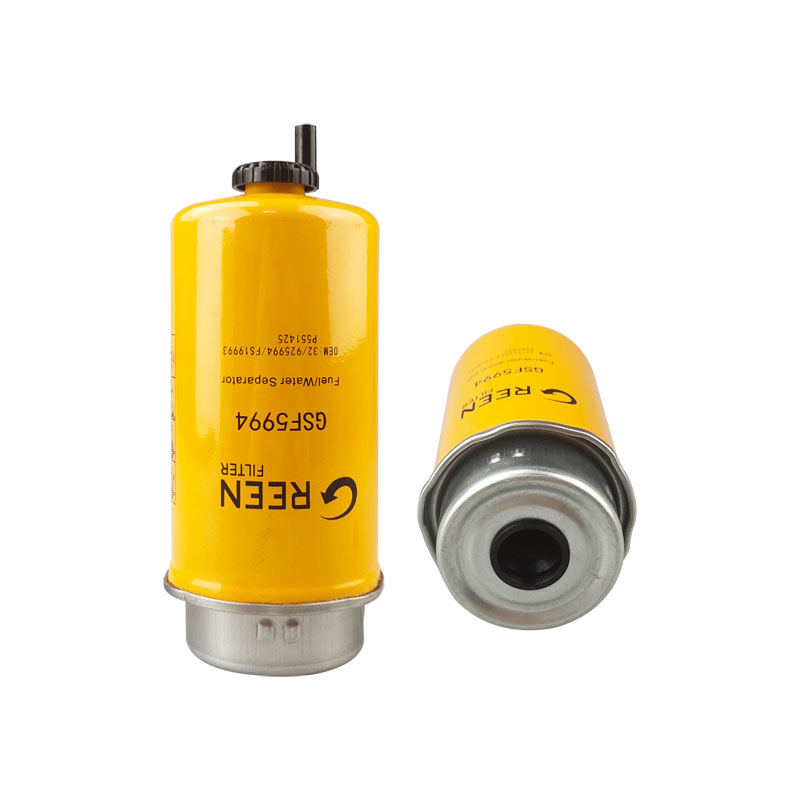
1. Understanding the P551425 Fuel Water Separator
The Donaldson P551425 is a fuel filter and water separator cartridge designed for diesel fuel systems. Its primary purpose is to help remove particulate contaminants and separate water from fuel before the fuel reaches sensitive engine components.
Diesel engines depend on relatively clean fuel to maintain stable combustion, consistent power output, and reliable operation. Dirt, rust, dust, and water can enter fuel systems during transportation, storage, refueling, or normal equipment operation. Without suitable filtration, these contaminants may accelerate wear in fuel pumps and injectors.
The P551425 uses cellulose and meltblown filter media to support particulate filtration and water separation. Its cartridge-style construction is intended for compatible filter housings and can work with suitable OEM accessories, including water collection bowls, drain valves, and water-in-fuel sensors.
For buyers sourcing replacement filters, understanding the cartridge design is particularly important. A filter that looks similar externally may have a different sealing arrangement, internal structure, or installation interface.
2. Why Fuel Water Separation Matters for Diesel Engines
Water contamination is a common concern in diesel fuel storage and delivery systems. Temperature changes, condensation inside storage tanks, contaminated fuel supplies, and improper handling can all contribute to water entering the fuel system.
2.1 Reducing Fuel System Wear
Modern diesel injection systems operate with precise fuel delivery requirements. Water and abrasive particles can interfere with lubrication and contribute to corrosion or wear in pumps, injectors, and other precision components.
A suitable fuel water separator provides an important filtration stage that helps reduce these contamination risks.
2.2 Supporting More Consistent Engine Operation
Excessive water or particulate contamination can contribute to rough operation, reduced engine efficiency, difficult starting, and unexpected interruptions. Maintaining an appropriate filtration system helps support stable fuel delivery under normal operating conditions.
2.3 Reducing Maintenance Costs
Replacing a fuel filter at the recommended service interval is generally more manageable than dealing with damage caused by neglected contamination. For construction equipment, agricultural machinery, and industrial vehicles, preventing unnecessary downtime can make a significant difference to operating costs.
3. P551425 Technical Specifications
Before ordering a replacement, buyers should review the technical specifications of the original filter. Dimensions, filtration performance, media construction, and housing compatibility are all important selection criteria.
| Specification | P551425 Reference Data |
|---|---|
| Part Number | P551425 |
| Product Type | Fuel Filter / Water Separator |
| Filter Style | Cartridge |
| Outer Diameter | 80 mm (3.15 inches) |
| Length | 196.3 mm (7.73 inches) |
| Filtration Efficiency | 99% at 4 microns (published specification) |
| Efficiency Test Standard | SAE J1985 |
| Emulsified Water Efficiency | 95% |
| Filter Media | Cellulose and Meltblown |
| Primary Application Reference | CAT, CNH, JCB |
These specifications provide a useful starting point for cross-reference research. Nevertheless, published catalogs may contain different historical ratings or measurement conventions. Some older references list a 5-micron efficiency rating, while newer product specifications list 99% efficiency at 4 microns.
Buyers should therefore confirm the applicable specification against the current manufacturer's technical documentation and the exact replacement product being supplied.
Why Do Dimensions Matter?
The outer diameter and overall length influence whether a replacement cartridge can fit inside the existing filter housing. Even a small dimensional difference may affect installation clearance, sealing performance, or the ability to close the housing correctly.
It is also important to inspect the inner opening, sealing surfaces, end-cap construction, and drainage arrangement rather than relying on outer dimensions alone.
4. Common P551425 Cross Reference Numbers
Cross-reference numbers help maintenance departments, distributors, and purchasing teams identify potential alternatives when the original part number is unavailable or when comparing different filter brands.
The P551425 is associated with several OEM and aftermarket reference numbers. Commonly published cross-reference examples include the following:
| Brand | Reference Part Number |
|---|---|
| John Deere | RE67901, RE53727, RE54719, RE62420 |
| Caterpillar | 145-4501, 223-0702 |
| Fleetguard | FS19971 |
| Baldwin | BF7677-D |
| WIX | 33132 |
| Luber-finer | L3441F |
| Stanadyne | 32179 |
| AGCO | 4224701M1, 4280915M1 |
| Case / Case IH | 87802921, 87803441 |
| JCB | 32925869 |
Important: This table presents cross-reference examples found in product catalogs and aftermarket listings. It is not a universal interchangeability guarantee. Part number availability and compatibility can vary by equipment model, production year, engine configuration, and filter housing design.
Why Are Cross Reference Numbers Useful?
- Alternative sourcing: Buyers can investigate additional brands when the original filter is unavailable.
- Inventory management: Distributors can organize related part numbers and identify potential purchasing alternatives.
- Maintenance planning: Service teams can prepare replacement options before scheduled maintenance.
- Procurement efficiency: Purchasing departments can compare specifications and supplier quotations more efficiently.
A cross-reference database should always be treated as a starting point for verification, not a substitute for technical fitment confirmation.
5. How to Verify Equipment Compatibility
One of the most common purchasing mistakes is assuming that every filter listed under the same cross-reference family will fit every machine. In reality, equipment configurations can vary considerably.
Follow these steps before purchasing a replacement for P551425.
Step 1: Check the Original Filter Number
Remove or inspect the existing filter and record the complete part number. Check for additional suffixes, manufacturer markings, and product identification labels.
Step 2: Identify the Equipment Model
Record the machine manufacturer, model number, engine model, and serial number. This information helps narrow down the correct filtration requirements.
Step 3: Compare Physical Dimensions
Compare the replacement filter's length, outside diameter, inner opening, end-cap configuration, and sealing surfaces with the original component.
Step 4: Confirm Filtration Requirements
Check the required filtration efficiency, water separation performance, and media characteristics. A filter with an unsuitable rating may not provide the required protection.
Step 5: Verify the Housing and Accessories
Confirm that the replacement works with the existing housing, water collection bowl, drain valve, and water-in-fuel sensor arrangement where applicable.
6. Key Factors When Selecting a Replacement
Finding a replacement fuel water separator involves more than locating a similar-looking product. The following considerations can help buyers make a more informed decision.
6.1 Filtration Efficiency
Filtration efficiency describes how effectively a filter captures particles of a specified size under defined testing conditions. Buyers should check both the micron rating and the corresponding efficiency percentage.
A smaller micron number does not automatically mean that a filter is suitable for every engine. The replacement must meet the engine manufacturer's filtration requirements.
6.2 Water Separation Performance
Water separation is especially important in diesel applications where fuel quality and storage conditions may vary. Review the stated water separation efficiency and the test method used to establish that performance.
6.3 Filter Media Quality
Cellulose, synthetic, and multilayer media can have different filtration and water-handling characteristics. The appropriate material depends on the product design and intended operating conditions.
6.4 Structural Reliability
Inspect the filter housing interface, end caps, seals, drainage components, and overall construction. Poor dimensional control or unsuitable sealing materials can lead to leakage and installation problems.
6.5 Supplier Documentation
A professional supplier should be able to provide clear product identification, technical specifications, relevant cross-reference information, and appropriate quality documentation.
| Selection Factor | What Buyers Should Check |
|---|---|
| Dimensions | Length, outside diameter, inner opening |
| Filtration | Micron rating and efficiency percentage |
| Water Separation | Published separation performance |
| Construction | Media, end caps, seals, and drainage design |
| Compatibility | OEM part number and equipment application |
| Quality Control | Inspection procedures and technical documentation |
7. Replacement and Installation Guidelines
Correct installation is essential for maintaining fuel system integrity. Even a suitable replacement cartridge may perform poorly if the housing is contaminated or the sealing components are incorrectly positioned.
Always follow the equipment manufacturer's service instructions. A general replacement procedure includes the following steps:
- Prepare the equipment. Park the machine safely, shut down the engine, and allow the system to reach a safe service condition.
- Relieve system pressure. Follow the manufacturer's specified fuel system depressurization procedure before opening the filter housing.
- Prepare the work area. Keep dirt, water, and other contaminants away from the open fuel system. Use suitable protective equipment and an appropriate container for collected fuel.
- Remove the old cartridge. Open the housing according to the service instructions and carefully remove the used element.
- Inspect the housing. Check for contamination, damaged sealing surfaces, worn O-rings, or other visible defects.
- Install the new filter. Confirm the replacement part number and position the cartridge and seals correctly.
- Reassemble the housing. Follow the specified tightening procedure and torque requirements.
- Prime and inspect. Use the manufacturer's recommended priming procedure, then check for leaks before returning the equipment to operation.
Never force a cartridge into a housing or reuse damaged seals. Incorrect installation can result in fuel leakage, air entering the system, or reduced filtration performance.
8. Maintenance Practices for Better Filter Performance
Regular maintenance helps preserve filtration performance and reduces the likelihood of unexpected fuel system problems.
Follow Recommended Replacement Intervals
Replace the filter according to the equipment manufacturer's maintenance schedule. Machines operating in dusty environments, under heavy workloads, or with variable fuel quality may require closer monitoring.
Drain Accumulated Water When Applicable
If the filtration assembly includes a water collection bowl or drain valve, inspect and service it according to the equipment manufacturer's instructions. Dispose of collected fuel and water safely and in compliance with applicable regulations.
Use Clean Fuel
Fuel storage tanks, transfer equipment, and refueling containers should be maintained properly. Contaminated storage systems can introduce water and debris even when a new filter has been installed.
Keep Maintenance Records
Record filter part numbers, installation dates, operating hours, and observed contamination levels. These records help identify recurring problems and improve future purchasing decisions.
9. Common Fuel Filter Problems and Solutions
Understanding common symptoms can help equipment operators identify possible filtration issues before they develop into more serious maintenance problems.
| Observed Problem | Possible Cause | Recommended Action |
|---|---|---|
| Difficulty starting | Fuel restriction, air in the system, or fuel contamination | Inspect the filter and follow the engine diagnostic procedure. |
| Reduced engine power | Restricted fuel flow or contaminated fuel | Check filter condition and fuel supply. |
| Water warning indicator | Water accumulated in the separator assembly | Inspect and drain the collection system as instructed. |
| Fuel leakage | Damaged seals or incorrect installation | Inspect the housing, O-rings, and cartridge positioning. |
| Repeated filter blockage | Contaminated fuel storage or excessive dirt | Investigate the fuel source and storage system. |
These symptoms do not necessarily indicate a defective P551425 filter. Fuel supply restrictions, pump problems, electrical faults, and other engine issues may produce similar symptoms. A proper diagnosis should be completed before replacing additional components.
10. Choosing a Reliable Fuel Filter Supplier
For equipment maintenance companies, distributors, wholesalers, and international buyers, supplier reliability is an important part of the procurement process.
A competitive quotation is useful, but the lowest price should not be the only consideration. Product consistency, technical support, documentation, and delivery arrangements can all affect the long-term value of a purchasing decision.
Check Product Identification and Traceability
Ensure that the supplier can clearly identify the offered product and provide the relevant part number, specifications, and product documentation.
Request Technical Confirmation
Provide your original filter number and equipment information. A knowledgeable supplier should be willing to review compatibility rather than simply promise that every cross-reference number is interchangeable.
Evaluate Quality Management
Ask about material inspection, dimensional inspection, production quality control, and batch traceability where applicable. These measures help purchasing teams evaluate whether a supplier can support repeat orders.
Consider Long-Term Supply Capability
For wholesale buyers and distributors, stable product availability, reasonable lead times, clear communication, and flexible order arrangements are important factors in establishing a sustainable supply relationship.
Zhejiang Zhenhang International Trade Co., Ltd. focuses on international trade and supporting customers with product sourcing and procurement communication. For buyers researching fuel filtration products and related replacement parts, providing accurate application information is a practical starting point for discussing suitable supply solutions.
11. Frequently Asked Questions
Q1. What is the P551425 fuel water separator used for?
The P551425 is a diesel fuel filter and water separator cartridge. It helps remove particulate contaminants and separate water from fuel before the fuel reaches sensitive engine components.
Q2. Which equipment brands are associated with P551425?
Published application references commonly associate P551425 with Caterpillar (CAT), CNH, and JCB equipment. Actual fitment depends on the specific machine, engine, serial number, and filter housing.
Q3. What is the filtration efficiency of P551425?
Published specifications list 99% efficiency at 4 microns under the SAE J1985 test standard. Some older catalogs contain different ratings, so buyers should confirm the current specification of the product being purchased.
Q4. What are the dimensions of P551425?
The commonly published dimensions are approximately 80 mm (3.15 inches) in outside diameter and 196.3 mm (7.73 inches) in length. Additional interface and sealing dimensions should also be checked.
Q5. Is John Deere RE67901 interchangeable with P551425?
RE67901 is listed as a cross-reference for P551425 in aftermarket product catalogs. However, buyers should verify the exact equipment application and current OEM requirements before ordering.
Q6. Can I replace P551425 with any filter having the same dimensions?
No. Similar dimensions alone do not establish compatibility. Filtration efficiency, water separation capability, sealing arrangement, media construction, and housing design must also meet the required specifications.
Q7. How often should a P551425 fuel water separator be replaced?
There is no universal replacement interval for every application. Follow the equipment manufacturer's service schedule and consider operating hours, fuel quality, working conditions, and contamination levels.
Q8. Does P551425 have a threaded connection?
P551425 is a cartridge-style filter element rather than a conventional threaded spin-on filter. It is designed to work with a compatible filter housing and sealing arrangement.
Q9. Can P551425 remove all water from diesel fuel?
No fuel water separator should be assumed to remove all water under every operating condition. Its performance depends on the filter design, fuel characteristics, operating conditions, and the type of water contamination.
Q10. What information should I provide when requesting a P551425 replacement quotation?
Provide the original part number, equipment brand, machine model, engine model, serial number, required quantity, and destination country. Photographs and existing product specifications can also help suppliers verify the requested item.
Conclusion: Make the Right P551425 Replacement Decision
Selecting the correct cross reference fuel water separator P551425 requires more than matching a part number. Buyers should consider filtration efficiency, water separation performance, cartridge dimensions, housing design, and the specific requirements of their diesel equipment.
By checking OEM references, comparing technical specifications, and confirming equipment compatibility before purchasing, maintenance teams and distributors can reduce sourcing mistakes and improve replacement planning.
Whether you are maintaining construction machinery, managing an agricultural equipment fleet, or sourcing filtration products for wholesale distribution, accurate product information and dependable supplier communication are essential to making the right purchasing decision.
Looking for Reliable Fuel Filter Sourcing Support?
Need assistance with P551425 cross references, replacement filter specifications, or bulk procurement inquiries? Zhejiang Zhenhang International Trade Co., Ltd. welcomes your product requirements.
Send us your part number, equipment details, and quantity requirements. Let us discuss suitable sourcing solutions for your business.
Contact UsRelated Keywords: Cross Reference Fuel Water Separator P551425, P551425 Replacement, P551425 Fuel Filter, Diesel Fuel Water Separator, Fuel Filter Cross Reference, Diesel Filter Cartridge, RE67901 Replacement, Heavy Equipment Fuel Filter.
