

Which Factors Determine the Stroke Length of Tractor Hydraulic Cylinders?
2026-10-26
A farmer replaces the hydraulic cylinder on the three-point hitch of a 90 hp tractor. The original cylinder has a 200 mm stroke. The local dealer has a cylinder with a 250 mm stroke in stock and suggests it will "give more lift." The farmer installs it. The implement now lifts higher, but the lift arms hit the rear tires at full extension, and the piston rod bends within two weeks. The problem is not the cylinder quality. It is the stroke length. The stroke of Tractor Hydraulic Cylinders is not a catalog number that can be rounded up for convenience. It is determined by the geometry of the implement, the lift angle, and the hydraulic system. This guide explains the factors that determine the correct stroke length.
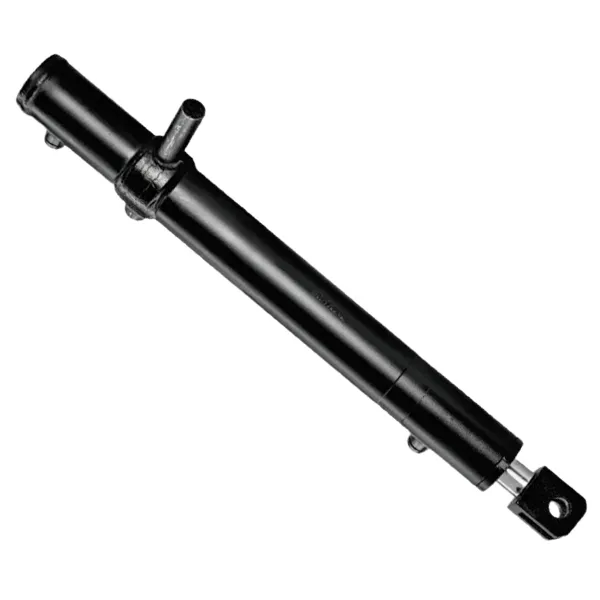
1. Why Can't Stroke Length Be Selected From the Cylinder Catalog Alone?
The stroke length is the distance the piston rod travels from the fully retracted position to the fully extended position. In a tractor application, this distance is determined by the implement's movement, not by the cylinder's availability. The same tractor may be used with a plow, a mower, a trailer, or a loader. Each implement has a different lift requirement. A cylinder that is correct for one implement may be too short or too long for another. In our factory, we manufacture Tractor Hydraulic Cylinders with strokes from 100 mm to 1,200 mm. Raydafon Technology Group Co.,Limited has been producing tractor hydraulic cylinders for over 20 years.
Selecting the stroke from the catalog alone is a common mistake. The catalog lists the strokes that are available, not the strokes that are required. The required stroke must be calculated from the implement geometry. If the stroke is too short, the implement cannot reach the working or transport position. If the stroke is too long, the implement can over-travel, which causes interference with the tractor structure or the tires. The over-travel also extends the piston rod beyond its stable length, which increases the bending stress and can cause the rod to bend or the seal to leak.
2. How Does the Mounting Geometry of the Implement Define the Required Stroke?
The required stroke is calculated from three geometric inputs. The first is the distance between the cylinder mounting points when the implement is in the lowered position. The second is the distance between the same points when the implement is in the raised position. The third is the maximum lift angle. The stroke is the difference between the raised and lowered distances, plus a small allowance for the mounting pins and the rod end. The table below shows the typical lift angle and stroke range for common tractor implements.
| Implement type | Typical lift angle | Typical stroke range (mm) | Mounting consideration |
| Three-point plow | 25 – 35 degrees | 150 – 250 | Lower link geometry limits travel |
| Rotary mower | 20 – 30 degrees | 120 – 200 | PTO shaft angle must be maintained |
| Front-end loader | 45 – 60 degrees | 400 – 700 | Bucket leveling linkage affects stroke |
| Trailer tipping | 50 – 70 degrees | 500 – 900 | Hinge position and bed length determine stroke |
| Rear blade | 30 – 45 degrees | 200 – 350 | Offset and tilt functions add stroke |
In our factory, we ask the customer to provide the mounting point distances in the lowered and raised positions. We then calculate the stroke and recommend the closest standard stroke that meets the requirement without over-travel. We also provide a mounting drawing that shows the pin locations and the clearance envelope. Raydafon Technology Group Co.,Limited works with the implement manufacturer when the tractor and implement are from different suppliers.
3. What Happens When Stroke Length Is Mismatched With the Tractor's Hydraulic System?
The stroke length affects the volume of oil required to extend the cylinder. A longer stroke requires more oil. If the tractor's hydraulic pump has a low flow rate, a long-stroke cylinder will extend slowly. If the tractor's reservoir is small, a long-stroke cylinder may draw more oil than the reservoir can supply, which causes cavitation and pump damage. The stroke also affects the cycle time. A longer stroke increases the time required to raise and lower the implement. The table below shows the effect of stroke mismatch on the tractor hydraulic system.
| Stroke mismatch | Field symptom | System risk | Recommended action |
| Stroke too short | Implement does not reach transport height | Implement damage during road transport | Replace with correct stroke |
| Stroke too long (minor) | Implement over-travels; lift arms hit tires | Bent piston rod; structural damage | Add mechanical stop or replace |
| Stroke too long (major) | Oil reservoir empties; pump cavitates | Pump failure; system contamination | Replace with correct stroke |
| Stroke matched but flow low | Slow lift; poor cycle time | None (productivity loss) | Increase pump flow or reduce load |
Application engineer's note: The stroke length must be matched to the hydraulic system as well as to the implement geometry. A cylinder that is geometrically correct but hydraulically oversized will cause slow operation or pump damage. In our factory, we provide the oil volume per 100 mm of stroke for each cylinder bore size. The customer can compare this volume with the tractor's pump flow and reservoir capacity before ordering. Raydafon Technology Group Co.,Limited provides a hydraulic system checklist with every quotation.
4. Why Does Stroke Length Affect Cylinder Strength, Stability, and Seal Life?
The stroke length affects the stability of the piston rod. When the rod is fully extended, the unsupported length is at its maximum. The critical buckling load decreases as the unsupported length increases. A cylinder with a long stroke must have a larger rod diameter or a longer guide bushing to maintain stability. The stroke also affects the seal life. A longer stroke means more sliding distance per cycle, which increases the wear on the rod seal and the piston seal. The table below shows the relationship between stroke length, rod diameter, and critical buckling load.
| Stroke (mm) | Recommended rod diameter (mm) | Critical buckling load (kN) | Maximum working load (kN) |
| 200 | 30 | 85 | 42 |
| 400 | 35 | 95 | 47 |
| 600 | 40 | 110 | 55 |
| 800 | 45 | 125 | 62 |
| 1,000 | 50 | 140 | 70 |
In our factory, we calculate the critical buckling load for every Tractor Hydraulic Cylinders order. The calculation uses the Euler formula with a safety factor of 2.0. If the working load exceeds the maximum allowable load for the selected rod diameter, we recommend a larger rod or a shorter stroke. We also recommend a guide bushing length of at least 1.5 times the rod diameter to resist side loads. Raydafon Technology Group Co.,Limited provides the buckling calculation with the quotation so that the customer can verify the selection.
5. How Should Dealers and Farmers Verify Stroke Length Before Ordering?
The verification process has four steps. The first is to check the implement manual for the recommended stroke. The manual usually lists the cylinder specification, including the stroke. The second is to measure the mounting point distance in the lowered and raised positions. The third is to confirm that the cylinder will not interfere with the tractor structure or the tires at full extension. The fourth is to confirm that the tractor's hydraulic system can supply the required oil volume. A common mistake is to replace a cylinder based on its external dimensions without checking the stroke. If the implement has been changed, the old cylinder's stroke may no longer be correct. In our factory, we recommend that the dealer ask the farmer three questions before ordering: what implement is used, what is the required lift height, and what is the tractor model. The answers determine the stroke and the mounting configuration.
We also recommend that the dealer provide a mounting drawing to the farmer before delivery. The drawing shows the cylinder in the retracted and extended positions, with the clearance envelope. The farmer can check the drawing against the actual implement before the cylinder is installed. Raydafon Technology Group Co.,Limited provides this drawing as a standard part of our dealer support package.
Frequently Asked Questions About Stroke Length in Tractor Hydraulic Cylinders
Summary for Dealers and Farmers
The stroke length of Tractor Hydraulic Cylinders is determined by the implement geometry, the lift angle, the tractor hydraulic system, and the cylinder stability. It cannot be selected from the catalog alone. The required stroke is calculated from the mounting point distances in the lowered and raised positions. A stroke that is too short prevents the implement from reaching the working position. A stroke that is too long causes over-travel, structural interference, and rod bending. The stroke must also be matched to the pump flow and reservoir capacity. Before ordering, the dealer should confirm the implement type, the required lift height, and the tractor model. Raydafon Technology Group Co.,Limited has been producing tractor hydraulic cylinders for over 20 years and provides full stroke calculation and verification support for our dealers and customers.
