

Which RJ45 Signal Connector Should You Choose for Industrial Ethernet
2026-09-29
Industrial Ethernet environments demand more than a standard office-grade connection. When vibration, moisture, electromagnetic interference, and extreme temperatures are part of daily operation, selecting the right RJ45 signal connector becomes a critical design decision. At Reunion, we have supported industrial networking projects across factory automation, transportation, and energy systems, and we have seen how a single connector choice can determine whether a network stays stable for years or fails within months. This guide breaks down the key selection criteria, compares common options, and answers the questions engineers ask most often.
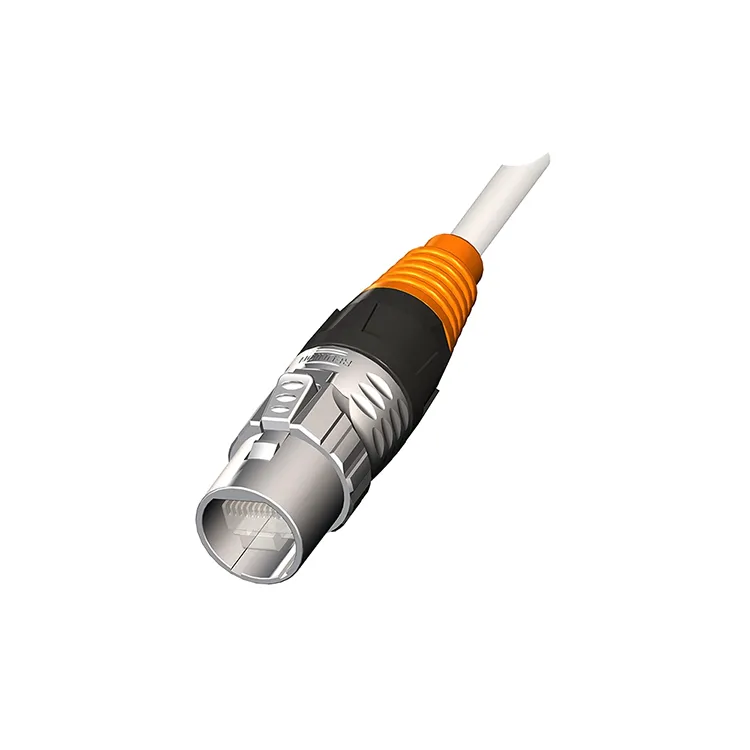
Why Industrial Ethernet Requires a Different RJ45 Signal Connector
A standard RJ45 signal connector designed for office cabling typically uses a plastic housing and an unshielded twisted pair interface. In an industrial setting, that same connector may face:
-
Continuous mechanical vibration from motors or conveyors
-
Temperature swings from -40°C to 85°C
-
Exposure to oil, coolant, dust, and moisture
-
High levels of electromagnetic interference from drives and power lines
-
Repeated mating and unmating during maintenance
Reunion designs its industrial RJ45 signal connectors to address these conditions through reinforced housings, secure locking mechanisms, and optional shielding.
Key Selection Criteria
| Criterion | What to Evaluate | Recommended Direction |
|---|---|---|
| Housing material | Plastic vs. metal | Metal for high EMI and impact |
| Shielding | UTP vs. STP vs. FTP | Shielded for noisy environments |
| Locking mechanism | Snap-in vs. screw vs. bayonet | Screw or bayonet for vibration |
| Ingress protection | IP20 vs. IP67 vs. IP68 | IP67 or higher for washdown |
| Temperature range | Standard vs. extended | -40°C to 85°C for outdoor/industrial |
| Mating cycles | 750 vs. 5,000+ | Higher cycles for serviceable ports |
| Data rate support | Cat5e vs. Cat6A | Cat6A for 10G industrial Ethernet |
Common Industrial RJ45 Signal Connector Types
-
Standard RJ45 with reinforced housing – Suitable for control cabinets and light industrial use.
-
IP67 shielded RJ45 signal connector – Ideal for machine-mounted equipment and outdoor enclosures.
-
M12-to-RJ45 hybrid connector – Used where vibration resistance and sealed connection are both required.
-
Push-pull RJ45 signal connector – Preferred for high-density panels and quick maintenance.
-
Ruggedized Cat6A RJ45 signal connector – Best for high-bandwidth vision systems and industrial IoT.
How Reunion Approaches Industrial RJ45 Signal Connector Design
Reunion focuses on three principles: mechanical reliability, signal integrity, and long-term supply consistency. Each RJ45 signal connector undergoes:
-
Insertion loss and return loss verification
-
Shield effectiveness testing
-
Vibration and shock simulation
-
Salt spray and humidity aging
-
Mating cycle durability checks
This approach helps customers reduce field failures and simplify certification.
RJ45 Signal Connector FAQ
Q: What is the difference between a standard RJ45 signal connector and an industrial RJ45 signal connector?
A: A standard RJ45 signal connector is designed for controlled indoor environments and typically offers IP20 protection, a plastic latch, and limited resistance to vibration and EMI. An industrial RJ45 signal connector uses a reinforced or metal housing, optional shielding, a locking mechanism such as screw or bayonet, and a wider operating temperature range. It also supports higher mating cycles and better protection against dust, moisture, and mechanical stress.
Q: Which RJ45 signal connector is best for high-vibration industrial Ethernet applications?
A: For high-vibration environments, choose a RJ45 signal connector with a screw-lock or bayonet-lock mechanism rather than a standard snap-in latch. A metal-shell, shielded version further improves stability. Reunion recommends IP67-rated connectors with positive locking for robotics, conveyors, and machine tools, because they prevent accidental disconnection and maintain contact integrity under continuous motion.
Q: Does shielding in an RJ45 signal connector really matter for industrial Ethernet?
A: Yes. In industrial settings, variable-frequency drives, servo motors, and power cables generate significant electromagnetic interference. A shielded RJ45 signal connector combined with STP or FTP cable reduces noise coupling and helps maintain signal integrity at higher data rates. For Cat6A and 10G applications, shielding is often essential to meet performance and EMC requirements.
Q: Can I use a standard RJ45 signal connector in an IP67 enclosure?
A: You can, but the connector itself will not be sealed. The enclosure provides protection, while the RJ45 signal connector remains IP20. If the connection point is exposed to moisture or dust, a dedicated IP67 RJ45 signal connector is the safer choice. Reunion offers both panel-mount and cable-end sealed versions to match different enclosure designs.
Q: How do I choose between Cat5e and Cat6A RJ45 signal connectors for industrial Ethernet?
A: Choose based on data rate, distance, and future upgrade plans. Cat5e RJ45 signal connectors support 1G Ethernet and are cost-effective for many control applications. Cat6A RJ45 signal connectors support 10G Ethernet, offer tighter impedance control, and provide better margin for harsh environments. For new industrial installations with vision systems, edge computing, or long service life expectations, Cat6A is the more future-proof option.
Final Selection Checklist
-
Confirm the required data rate and cable category
-
Match the connector rating to the actual environment
-
Verify locking type against vibration levels
-
Check shielding requirements for EMC compliance
-
Review mating cycles and maintenance access
-
Validate temperature and chemical resistance
Reunion supports engineers from connector selection through qualification testing. For technical datasheets, sample requests, or a customized RJ45 signal connector solution for your industrial Ethernet project, contact us today and our team will respond with a recommendation tailored to your application.
