

Which Tool Do You Need for Installing a Press-Fit Brass Pipe Stop Plug Correctly
2026-09-08
Installing a Press-fit Brass Pipe Stop Plug might seem straightforward, but selecting the right tool is the single most critical factor that determines whether your joint holds pressure for decades or fails within weeks. Unlike threaded or soldered fittings, press-fit systems rely on precise radial compression to create a permanent, leak-proof seal. At Huitong, we have tested thousands of installations across residential plumbing, HVAC, and industrial hydraulic applications, and we consistently find that tool choice accounts for over 80% of field failures. This guide breaks down every tool you need, why each matters, and how to avoid costly mistakes.
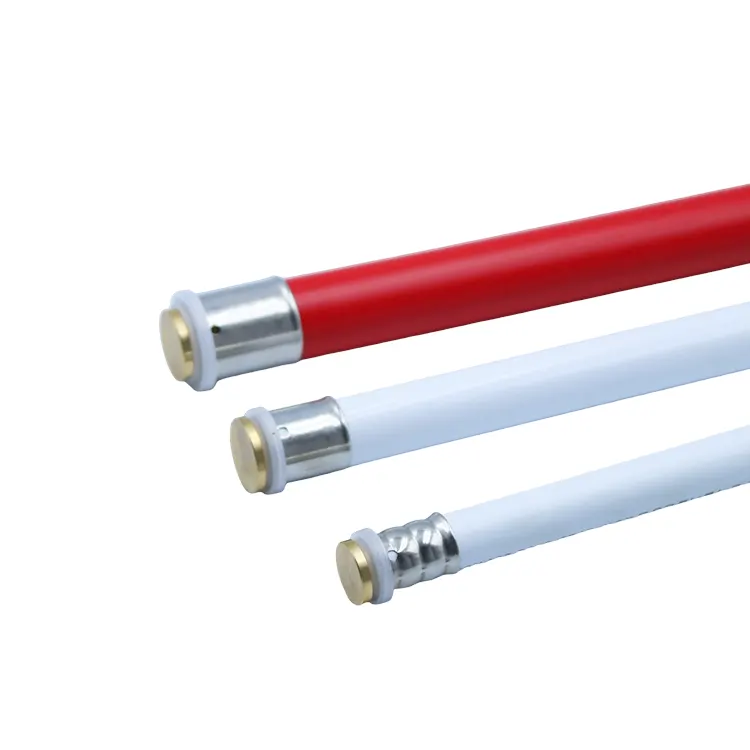
The Essential Tool Kit for Press-Fit Brass Pipe Stop Plugs
| Tool Category | Specific Tool | Purpose | Must-Have Feature |
|---|---|---|---|
| Primary Installation | Electro-hydraulic press tool (e.g., Ridgid RP 340 or Milwaukee M18 Force Logic) | Delivers calibrated radial force to compress the fitting evenly | Force range: 32–40 kN; auto-retract piston |
| Jaw / Ring Set | Interchangeable press jaws or rings (size-matched to plug diameter) | Transmits force uniformly around the fitting body | Color-coded size indicators; full-circle design (not scissor-type for brass) |
| Preparation Tool | Deburring & reaming tool | Removes internal burrs and restores round pipe end | Accepts both copper and stainless steel pipe sizes |
| Depth Marking Gauge | Depth marker with stop collar | Ensures pipe inserts to the correct depth (usually 1–1.5 inches) | Laser-etched scale; non-slip grip |
| Verification Tool | Go/No-Go inspection gauge | Confirms the press jaw has fully closed and the crimp is complete | Visual red/green indicator or audible click |
| Support Tool | Pipe cutter (wheel-type or rotary) | Provides a square, burr-free cut before deburring | Sharp tungsten-steel wheel; ratcheting action |
Step-by-Step: Why Each Tool Matters for a Press-fit Brass Pipe Stop Plug
1. Pipe Cutter + Deburring Tool – A crooked cut or leftover burr can scratch the O-ring inside the Press-fit Brass Pipe Stop Plug during insertion, creating a microscopic leak path. Always cut squarely and ream both ID and OD.
2. Depth Marker – The plug’s internal O-ring and grip ring are positioned to seal only within a specific axial zone. Without marking depth, you risk under-insertion (no seal) or over-insertion (distorting the brass body).
3. Press Tool + Matched Jaws – This is the heart of the operation. Huitong recommends using only manufacturer-approved jaws that match the plug’s outer diameter profile. For example, a ½-inch Press-fit Brass Pipe Stop Plug requires a ½-inch full-circle jaw – never use a universal scissor jaw on brass, as it creates uneven compression and can crack the alloy.
4. Go/No-Go Gauge – After pressing, slide the gauge over the crimped collar. If the gauge does not fit flush, the press was incomplete, and the plug must be removed and replaced – never re-press a used brass plug.
Common Mistakes (and How Tools Prevent Them)
-
Mistake #1: Using an old, uncalibrated press tool → force drops below 32 kN, resulting in a loose crimp. Solution: Calibrate annually and use tools with digital force readouts.
-
Mistake #2: Mixing jaws from different brands → jaw profile mismatch creates point-loading. Solution: Always use jaw sets specifically rated for Press-fit Brass Pipe Stop Plug dimensions.
-
Mistake #3: Skipping the depth gauge → plug inserted only ¾ inch instead of 1¼ inches. Solution: Mark every pipe with a permanent marker at the correct insertion line.
FAQ – Press-fit Brass Pipe Stop Plug Common Questions
Q1: Can I install a Press-fit Brass Pipe Stop Plug using a manual crimping tool instead of a powered press tool?
A1: Technically yes, but manually operated crimpers rarely deliver the consistent 32–40 kN force required for a reliable seal on brass alloys. Brass is less ductile than copper; uneven manual pressure can deform the hexagonal or round collar, leading to micro-gaps. Powered electro-hydraulic tools maintain constant force across the entire circumference, regardless of operator strength. For professional systems, Huitong strongly advises against manual crimpers – the cost of a water damage claim far exceeds the price difference in tools.
Q2: How do I know if the press jaw is fully closed on my Press-fit Brass Pipe Stop Plug?
A2: Most modern press tools feature an auto-retract piston that only releases after reaching the preset force threshold. However, you must always perform a visual and tactile check: the jaw’s two halves should meet with zero visible gap. Then, use a Go/No-Go gauge – slide the gauge over the pressed collar. If it passes completely over the collar without resistance, the crimp is too shallow; if it cannot slide on at all, the crimp is over-compressed (which may crack the brass). A correctly pressed collar will allow the gauge to stop exactly at the crimp ring’s edge.
Q3: Can I reuse a Press-fit Brass Pipe Stop Plug after removing it from a pipe?
A3: No – never reuse a pressed brass plug. The internal O-ring and the grip ring are permanently deformed during the initial crimp to create a molecular-level seal. Re-pressing a used plug will not restore the original compression geometry, and the brass work-hardens, making it prone to stress-corrosion cracking. Additionally, the depth-indexing teeth on the grip ring are designed for single insertion. For safety and liability reasons, Huitong mandates that every installation uses a brand-new Press-fit Brass Pipe Stop Plug – and always keep a spare on site for mistakes.
Final Checklist Before You Press
-
□
Pipe end cut square – checked with a try-square.
-
□
Burrs removed – inner and outer edges smooth to touch.
-
□
Depth marked – line is visible and at correct specification.
-
□
Plug oriented correctly – verify flow direction if applicable (though plugs are non-directional).
-
□
Jaw size matches plug OD – confirmed against the jaw’s stamped size.
-
□
Press tool battery charged (or hydraulic fluid topped up).
-
□
Go/No-Go gauge ready for post-press verification.
Why Trust Huitong for Your Press-Fit Solutions
With over 15 years in precision brass forging and press-fit technology, Huitong engineers every Press-fit Brass Pipe Stop Plug to strict ISO 9001:2015 and ASTM B124 standards. Our products undergo 100% pressure testing at 1.5x working pressure, and we publish detailed tool compatibility matrices for every major press tool brand. We do not just sell components – we provide complete installation protocols that have been validated in independent laboratories.
Contact Us
Choosing the right tool is only half the battle – having reliable technical support and quality-certified Press-fit Brass Pipe Stop Plugs makes the rest. If you are uncertain about jaw compatibility, torque settings, or material suitability for your specific medium (water, oil, gas, or chemical), contact Huitong today. Our application engineers respond within 4 business hours with customized tool recommendations, CAD drawings, and sample kits for field testing. Visit our website or email us directly – we are ready to help you press with confidence, every time.
