

Why Are Micro Thermoelectric Coolers for Lidar Essential to High-Precision Sensing Systems?
2026-01-27
LiDAR (Light Detection and Ranging) technology has become a core component in autonomous driving, intelligent transportation, robotics, and advanced mapping systems. As LiDAR systems continue to evolve toward higher precision, longer detection range, and greater environmental adaptability, thermal management of key components—especially laser diodes and photodetectors—has become a critical design challenge. This is where Micro Thermoelectric Coolers for Lidar play an irreplaceable role.
Micro thermoelectric coolers (TECs) provide precise, fast, and reliable temperature control in compact spaces, enabling LiDAR systems to maintain stable optical performance even under harsh or fluctuating environmental conditions.
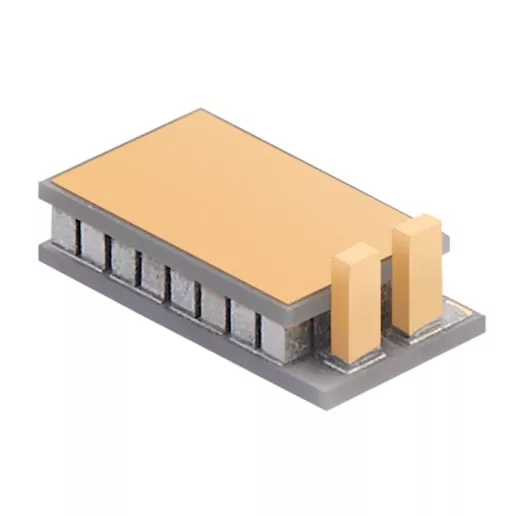
What Are Micro Thermoelectric Coolers for Lidar?
Micro Thermoelectric Coolers for Lidar are miniature solid-state cooling devices based on the Peltier effect. By applying a DC current, these coolers actively transfer heat from sensitive LiDAR components to a heat sink, achieving accurate temperature stabilization without moving parts or refrigerants.
Compared with traditional cooling methods, micro TECs are specially designed for:
-
Limited installation space
-
High temperature accuracy (±0.1°C or better)
-
Long-term reliability
-
Silent operation
Key Functions and Roles in LiDAR Systems
Micro thermoelectric coolers serve multiple essential functions in LiDAR applications:
1. Laser Wavelength Stabilization
Laser diodes are highly sensitive to temperature changes. Even minor fluctuations can shift the emission wavelength, affecting ranging accuracy. Micro TECs keep the laser at an optimal operating temperature, ensuring consistent signal output.
2. Noise Reduction in Detectors
Photodetectors generate thermal noise that degrades signal quality. Active cooling significantly improves signal-to-noise ratio (SNR), enhancing detection sensitivity and measurement accuracy.
3. System Reliability Enhancement
By preventing overheating and thermal stress, micro TECs extend the service life of critical LiDAR components.
Micro Thermoelectric Coolers vs. Passive Cooling
| Aspect | Micro Thermoelectric Coolers | Passive Cooling |
|---|---|---|
| Temperature Control | Active & precise | Limited & slow |
| Size Adaptability | Ultra-compact | Bulky heat sinks |
| Control Accuracy | High (±0.1°C) | Low |
| Environmental Adaptability | Excellent | Poor |
This comparison clearly shows why Micro Thermoelectric Coolers for Lidar are preferred in high-end and mission-critical applications.
Performance Benefits in Real-World Use
Using micro thermoelectric coolers in LiDAR systems delivers measurable performance improvements:
-
Improved ranging accuracy under extreme temperatures
-
Higher data stability in continuous operation
-
Faster system response to environmental changes
-
Lower maintenance requirements due to solid-state design
These benefits are especially valuable in autonomous vehicles and outdoor sensing scenarios where temperature conditions vary significantly.
Why Choose Fuzhou X-Meritan Technology Co., Ltd.?
Fuzhou X-Meritan Technology Co., Ltd. specializes in the development and manufacturing of high-performance micro thermoelectric cooling solutions tailored for advanced photonic and sensing applications.
Our advantages include:
-
Custom-designed Micro Thermoelectric Coolers for Lidar
-
Strict quality control and reliability testing
-
Proven experience in optoelectronics and precision cooling
-
Engineering support from concept to mass production
By combining technical expertise with application-driven design, we help LiDAR manufacturers achieve superior system performance and long-term stability.
Conclusion
As LiDAR technology moves toward higher accuracy and broader deployment, effective thermal management is no longer optional—it is essential. Micro Thermoelectric Coolers for Lidar provide the precision, reliability, and compactness required to support next-generation sensing systems.
If you are looking for a trusted partner to enhance your LiDAR thermal control design, Fuzhou X-Meritan Technology Co., Ltd. is ready to support your innovation.
👉 Contact us today to discuss customized micro thermoelectric cooling solutions for your LiDAR applications.
