

Why Are Stainless Steel Seamless Pipes Becoming the Future of Industrial Piping Systems?
2025-10-28
Stainless steel seamless pipes have become a cornerstone in modern industry, representing precision, durability, and resistance to harsh environments. Unlike welded pipes, seamless pipes are produced without any joints or seams, providing superior mechanical strength and a smooth internal surface that minimizes friction losses and contamination risks. These pipes are widely used in industries such as petrochemical, oil and gas, power generation, pharmaceuticals, and construction, where reliability and safety are crucial.
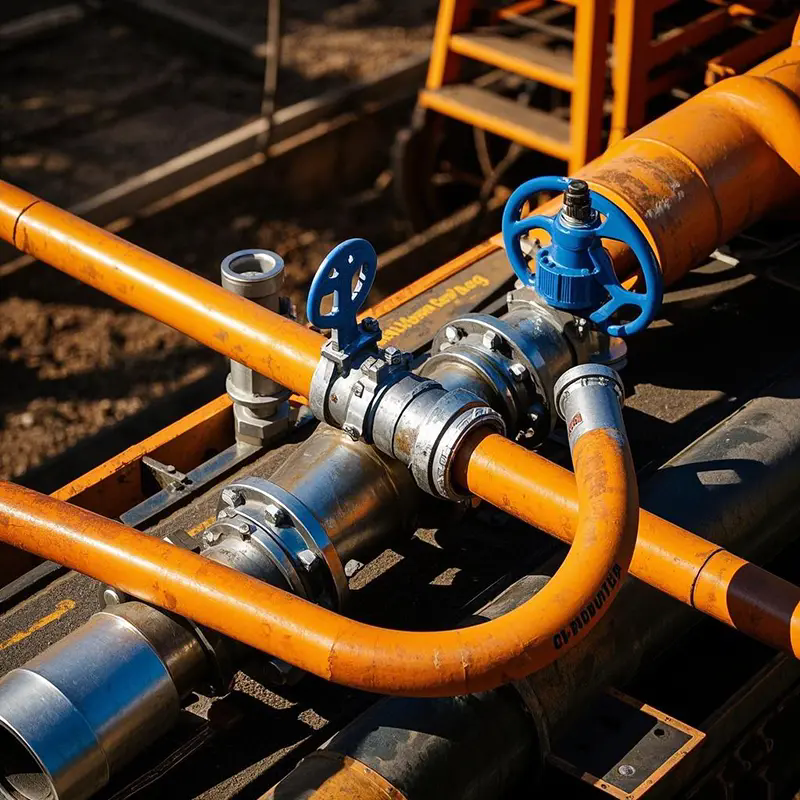
Seamless pipes are manufactured through a process known as extrusion, where a solid billet is heated and then pierced to create a hollow tube. This process results in uniform wall thickness, high-pressure tolerance, and a corrosion-resistant surface that meets stringent international standards such as ASTM, ASME, DIN, and EN.
The purpose of this article is to explore the advantages, applications, technical parameters, and future trends of stainless steel seamless pipes—explaining what makes them superior to welded alternatives, how they contribute to global infrastructure, and why they continue to shape industrial evolution.
Why Choose Stainless Steel Seamless Pipes Over Welded Pipes?
The choice between seamless and welded pipes often depends on performance requirements. However, seamless stainless steel pipes have proven to outperform welded types in critical applications due to several technical advantages:
Key Advantages of Stainless Steel Seamless Pipes:
| Parameter | Stainless Steel Seamless Pipe | Typical Range/Specification |
|---|---|---|
| Material Grades | 304, 304L, 316, 316L, 321, 347, 904L, Duplex 2205, Super Duplex 2507 | ASTM A312 / A213 / A269 / A790 standards |
| Outer Diameter (OD) | 6 mm – 630 mm | Customized sizes available |
| Wall Thickness (WT) | 1 mm – 60 mm | Based on pressure and application requirements |
| Surface Finish | Pickled, Polished, Bright Annealed, Mill Finish | For aesthetic and corrosion-resistant applications |
| Production Method | Cold Drawn / Hot Rolled / Extruded | Ensures structural integrity and precision |
| Pressure Rating | Up to 20,000 psi (depending on size and grade) | Suitable for high-pressure systems |
| Temperature Resistance | Up to 870°C (depending on grade) | Excellent for thermal power and chemical industries |
| Tolerances | ASTM A999 / EN ISO 1127 compliant | High dimensional accuracy |
| Applications | Oil & Gas, Petrochemical, Power, Marine, Construction, Food Processing | Broad industrial relevance |
These pipes are designed to endure aggressive conditions—both mechanical and environmental. Their seamless structure eliminates weak points, making them ideal for transporting fluids, gases, and chemicals under extreme pressure and temperature.
Why Seamless Means Stronger Performance
-
No Weak Seams: Welded pipes often have a weld line that can become a weak spot under pressure or during corrosion exposure. Seamless pipes, being monolithic, are stronger and safer.
-
Better Corrosion Resistance: Seamless pipes are less prone to intergranular corrosion since there is no welded area where impurities might concentrate.
-
Higher Pressure Handling: The uniform structure allows seamless pipes to handle higher internal and external pressure.
-
Enhanced Aesthetic and Cleanliness: The smooth inner surface reduces fluid resistance and prevents contamination—an essential factor in food, beverage, and pharmaceutical industries.
How Are Stainless Steel Seamless Pipes Shaping Industrial Growth and Future Trends?
The global industrial landscape is rapidly evolving, with increased demand for sustainable, efficient, and long-lasting infrastructure materials. Stainless steel seamless pipes are at the forefront of this evolution.
Emerging Trends and Market Growth
-
Shift Toward Energy Transition
With the rise of hydrogen, LNG, and renewable energy sectors, seamless pipes are becoming vital components due to their ability to withstand extreme pressures and temperatures. -
Focus on Corrosion-Resistant Infrastructure
As industries move toward coastal and offshore environments, corrosion-resistant materials such as duplex and super duplex stainless steels are in high demand. Seamless pipes made from these alloys ensure long-term reliability. -
Automation and Smart Manufacturing
Advanced production techniques—like cold-drawing automation and AI-based quality inspection—are improving consistency, reducing waste, and ensuring dimensional precision. -
Customization for Specialized Applications
Modern projects demand tailored solutions. Manufacturers are now producing custom-sized pipes for sectors like aerospace, pharmaceuticals, and water treatment. -
Sustainability and Lifecycle Cost Reduction
Stainless steel is 100% recyclable. Its longevity reduces replacement cycles, making it an eco-friendly choice for future infrastructure development.
Industrial Applications Driving Demand
-
Oil & Gas Industry: Transporting crude oil, natural gas, and refinery fluids under extreme pressure.
-
Power Generation: Superheater tubes, boiler lines, and heat exchangers.
-
Chemical Processing: Handling corrosive fluids such as acids and alkalis.
-
Construction: Structural support systems and architectural designs requiring aesthetic appeal.
-
Pharmaceutical and Food Industry: Hygienic fluid transfer systems ensuring product purity.
These trends clearly show that seamless pipes are not merely industrial products—they represent a commitment to safety, efficiency, and environmental responsibility.
Common Questions About Stainless Steel Seamless Pipes
Q1: What factors should be considered when selecting a stainless steel seamless pipe?
A1: Selection depends on the working environment, temperature, pressure, and type of fluid being transported. For example, grade 316L is preferred in marine environments due to its high resistance to chloride corrosion, while 304L is widely used in general chemical and food applications. Wall thickness and diameter must comply with the required pressure ratings defined by ASTM or ASME standards. Always consider the compatibility between pipe material and the fluid medium to ensure long service life and minimal maintenance.
Q2: How to maintain stainless steel seamless pipes for long-term performance?
A2: Regular inspection and cleaning are crucial. Even though stainless steel is corrosion-resistant, exposure to certain chemicals or saline conditions can lead to surface oxidation. Cleaning with neutral pH solutions, avoiding contact with carbon steel tools, and ensuring proper drainage to prevent standing water will maintain surface integrity. Periodic passivation can further enhance the protective oxide layer, improving durability and corrosion resistance.
Why Shuangsen Stainless Steel Seamless Pipes Are a Reliable Choice
As global industries seek materials that combine efficiency, safety, and sustainability, Shuangsen continues to deliver excellence through precision manufacturing and high-quality stainless steel seamless pipes. The company’s production facilities adhere to international standards, ensuring consistent mechanical strength, dimensional accuracy, and flawless finishing.
Shuangsen’s stainless steel seamless pipes are trusted across oil refineries, chemical plants, power stations, and infrastructure projects worldwide. Each pipe undergoes rigorous quality inspection, including ultrasonic testing, hydrostatic pressure testing, and spectrochemical analysis, ensuring that only the best products reach customers.
In a world where durability and performance define industrial success, stainless steel seamless pipes will continue to dominate due to their unmatched reliability and versatility. As industries evolve toward higher safety and environmental standards, Shuangsen remains committed to innovation, delivering pipes that perform beyond expectations and stand the test of time.
For more information or to discuss custom stainless steel seamless pipe requirements, contact us today and discover how Shuangsen can support your next project with precision and quality you can trust.
