

Why Choose a Maze Single Seat Control Valve for Industrial Applications?
2026-01-19
Abstract: The Maze Single Seat Control Valve is a highly efficient solution for fluid control in industries requiring high erosion resistance and pressure differential handling. This article explores its design, technical parameters, benefits, and common operational challenges, providing guidance for selecting the optimal valve for various applications.
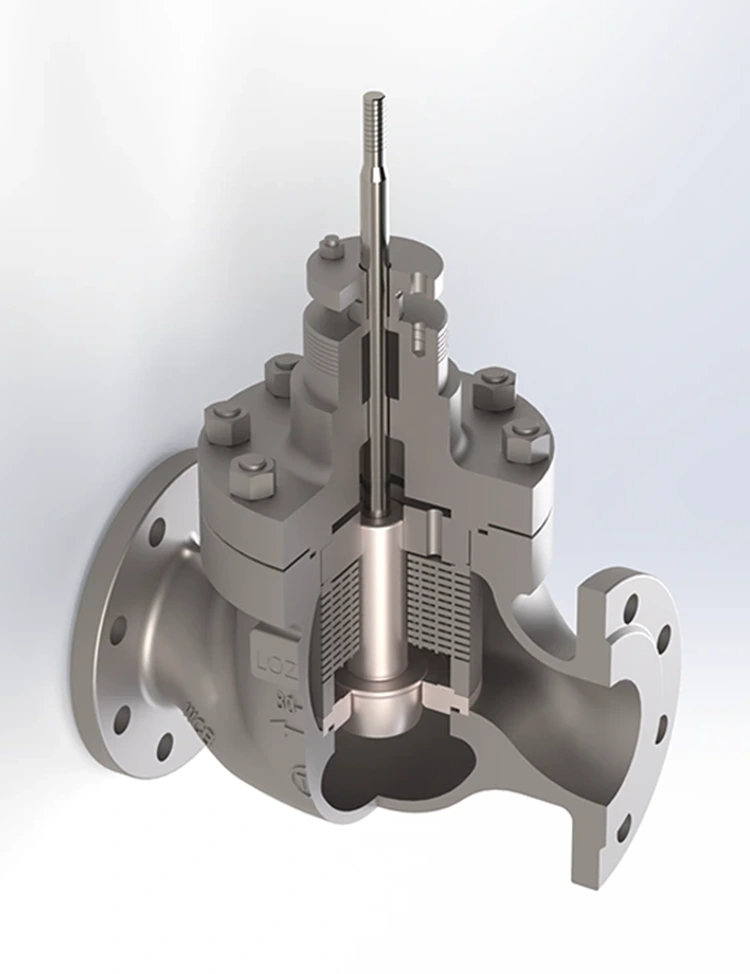
Table of Contents
- Overview of Maze Single Seat Control Valve
- Design and Structure
- Technical Specifications
- Industrial Applications
- Maintenance and Operational Tips
- Frequently Asked Questions
- Contact LOZOSE
Overview of Maze Single Seat Control Valve
The Maze Single Seat Control Valve is engineered to provide precise flow control under high-pressure differential and high-erosion conditions. Combining the benefits of a labyrinth valve cage and single seat valve core, it offers robust performance in harsh industrial environments. By gradually reducing pressure through multi-stage channels, it prevents flash evaporation, cavitation, and internal erosion.
Design and Structure
The valve features a labyrinth multi-stage pressure reducing sleeve design. The fluid passes through winding channels multiple times, controlling flow and minimizing wear on internal components. Key design features include:
- Straight-through or angle-type structures
- Compatibility with pneumatic, electric, hydraulic, or manual actuators
- Multi-stage pressure reduction for high differential pressure handling
- Self-cleaning and anti-blocking functionality
Technical Specifications
| Parameter | Specification |
|---|---|
| Nominal Diameter | DN20 ~ DN200 |
| Nominal Pressure | PN16 ~ PN100, ANSI CL150 ~ 2500 |
| Temperature Range | -29°C to 500°C |
| Valve Seat Sealing Level | ANSI B16.104 Class V (soft), Class VI (hard) |
| Pressure Reduction Stages | Up to 24 stages |
| Maximum Pressure Differential | 38 MPa |
Industrial Applications
The Maze Single Seat Control Valve is ideal for industries with demanding fluid control requirements:
- Petroleum processing plants
- Chemical manufacturing facilities
- Power generation systems
- Pulp and paper production
Its ability to operate under high temperature and pressure, along with resistance to blockage and erosion, makes it suitable for severe flash evaporation and cavitation scenarios.
Maintenance and Operational Tips
To ensure long-term reliability and performance:
- Regularly inspect valve seats and labyrinth sleeves for wear
- Clean debris from fluid channels to prevent blockage
- Ensure actuator calibration is maintained for precise control
- Use online disassembly for maintenance to reduce downtime
Frequently Asked Questions
Q1: How does the Maze Single Seat Control Valve prevent cavitation?
A1: The multi-stage labyrinth flow path gradually reduces pressure and directs the fluid through winding channels, limiting turbulence and preventing cavitation.
Q2: What actuator types are compatible with this valve?
A2: The valve supports pneumatic, electric, hydraulic, and manual actuators, allowing flexible integration into various control systems.
Q3: What industries benefit most from using this valve?
A3: It is widely used in petroleum, chemical, power, and paper industries, particularly in high-pressure, high-temperature, and erosive conditions.
Q4: What materials are used for durability?
A4: Critical components, including the valve body and cover, are made from WCB, WC6, and CF8 materials, ensuring long-lasting performance under extreme conditions.
Contact LOZOSE
For tailored solutions and professional consultation regarding the Maze Single Seat Control Valve, contact us today. Our team at LOZOSE is ready to help optimize your fluid control systems with reliable, high-performance valves.
