

Why Concrete Block Moulds Maintenance Is Critical for Stable Production?
2026-03-23
Why Does Mould Maintenance Directly Affect Production Stability?
In modern concrete product manufacturing, maintaining consistent output quality is a key performance indicator for any production line. Concrete block moulds play a central role in shaping, compressing, and forming blocks with precise dimensions. When maintenance is neglected, even minor wear can lead to dimensional inconsistencies, surface defects, and increased rejection rates.
Operators across Europe and North America often refer to this issue as production instability, where unplanned interruptions disrupt workflow and increase operational costs. Our factory has seen many cases where insufficient mould care resulted in frequent downtime, directly affecting delivery schedules and customer satisfaction.
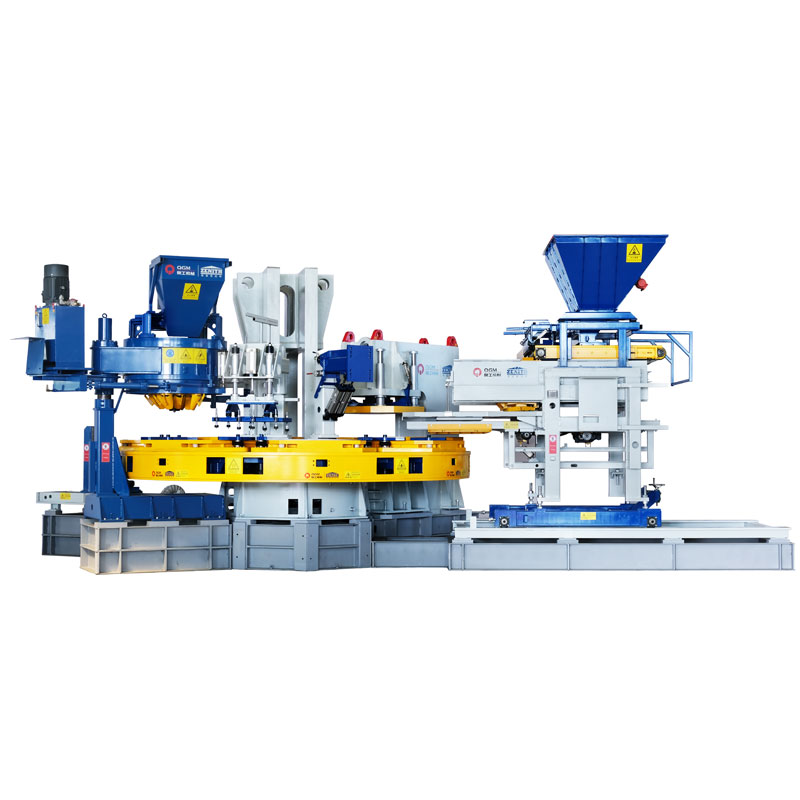
In automated systems such as QGM Block Making Machine, mould precision becomes even more critical because high-frequency cycles accelerate wear. At Quangong Machinery Co., Ltd., our engineering teams emphasize that stable production is not only about machine performance but also about maintaining mould integrity over time. Proper care ensures consistent compaction, uniform density, and reliable output.
How Does Regular Maintenance Extend Mould Lifespan?
Routine maintenance is widely recognized as the most effective method to extend mould lifespan and reduce replacement costs. Regular cleaning, lubrication, and inspection help prevent material buildup and surface damage.
Our factory recommends daily cleaning to remove residual concrete, especially in high-humidity environments where hardened deposits can form quickly. Weekly inspections should focus on wear zones such as edges and corners, which are more susceptible to abrasion.
In high-capacity systems like QGM Block Making Machine, moulds are subjected to continuous vibration and pressure. Without proper lubrication and alignment checks, micro-cracks may develop, eventually leading to structural failure. By implementing structured maintenance routines, our clients often achieve longer service intervals and improved production efficiency.
| Maintenance Task | Frequency | Purpose |
| Surface Cleaning | Daily | Remove concrete residue |
| Lubrication | Weekly | Reduce friction and wear |
| Visual Inspection | Weekly | Detect cracks or deformation |
| Alignment Check | Monthly | Ensure dimensional accuracy |
| Full Inspection | Quarterly | Evaluate overall condition |
Quangong Machinery Co., Ltd. integrates maintenance guidance into every project to ensure optimal performance across different production environments.
What Technical Parameters Influence Mould Performance?
The durability and performance of concrete block moulds depend heavily on material quality, hardness, and manufacturing precision. In industrial terminology, these factors are often grouped under wear resistance and structural integrity.
Our factory uses high-strength alloy steel combined with advanced heat treatment processes to improve hardness and resistance to deformation. These features are especially important in high-load production environments where moulds are exposed to repeated stress cycles.
When paired with QGM Block Making Machine, optimized mould parameters ensure stable output and reduce vibration-related wear. Proper design also enhances compatibility with automated systems, improving overall production efficiency.
| Parameter | Specification | Benefit |
| Material | Alloy steel | High durability |
| Hardness | HRC 58–62 | Improved wear resistance |
| Surface Treatment | Heat treatment | Enhanced strength |
| Precision Tolerance | ±0.1 mm | Accurate block dimensions |
| Cycle Life | 100,000+ cycles | Extended service life |
These technical specifications are essential for maintaining consistent quality and minimizing downtime in demanding production environments.
How Does Preventive Maintenance Reduce Downtime Risks?
Preventive maintenance is a proactive approach that focuses on identifying potential issues before they lead to equipment failure. In concrete block production, this strategy is critical for avoiding costly interruptions.
Our factory often works with clients to implement maintenance schedules tailored to their production capacity and environmental conditions. By monitoring wear patterns and replacing components at the right time, operators can maintain steady output levels.
In systems powered by QGM Block Making Machine, predictive maintenance can further enhance reliability. Sensors and monitoring tools help track operational parameters, allowing early detection of abnormal conditions. This approach aligns with modern manufacturing practices, where minimizing downtime is a top priority.
Zenith supports customers with technical guidance and after-sales service to ensure long-term operational stability.
Why Is Operator Training Essential for Mould Maintenance?
Even the most advanced equipment requires skilled operation to achieve optimal performance. Improper handling, incorrect installation, and lack of awareness can accelerate mould wear and reduce efficiency.
Our factory emphasizes operator training as a key component of maintenance strategy. Workers should understand proper cleaning methods, lubrication procedures, and inspection techniques. In many regions, standardized training programs are considered best practice for ensuring workplace safety and equipment longevity.
When operating QGM Block Making Machine, trained personnel can quickly identify early signs of wear and take corrective action. This not only reduces downtime but also improves overall production quality. Investing in training ensures that equipment and moulds are used correctly, maximizing their lifespan.
FAQ
How often should concrete block moulds be maintained in industrial production?
In most production environments, moulds should be cleaned daily and inspected weekly. For high-volume operations, a full inspection is recommended every one to three months to prevent wear-related failures and ensure consistent product quality.
What are the most common causes of concrete block mould wear?
The main causes include abrasive raw materials, improper lubrication, misalignment, and continuous high-pressure operation. Without proper maintenance, these factors can lead to surface damage, dimensional inaccuracies, and reduced mould lifespan.
How can proper maintenance extend the lifespan of concrete block moulds?
Regular cleaning, lubrication, and alignment checks help reduce friction and prevent structural damage. Using high-quality materials and following a preventive maintenance schedule can significantly extend service life and reduce replacement costs.
Conclusion
Maintaining concrete block moulds is essential for achieving stable production, consistent product quality, and reduced operational costs. From proper material selection to preventive maintenance and operator training, every step plays a role in ensuring long-term performance.
Our factory is committed to delivering reliable solutions that meet the demands of modern manufacturing. If you are looking to improve production stability and reduce downtime, contact our team today to explore customized solutions tailored to your operational needs.
