

Why Customized Auxiliary Machinery Solutions Are Gaining Popularity?
2026-03-03
Across North America and Europe, plant managers are rethinking how auxiliary systems support their main production lines. Instead of buying off-the-shelf add-ons, they are demanding tailored configurations that match real plant layouts, utility capacity, and throughput goals. From concrete block facilities in Texas to infrastructure projects in Eastern Europe, production teams want equipment that integrates seamlessly with existing PLC systems, conveyor setups, and curing chambers.
Customized auxiliary machinery solutions are gaining popularity because they reduce bottlenecks, minimize downtime, and improve overall equipment effectiveness. Our engineering team has observed that standardized equipment often creates workflow interruptions, especially in block production lines where timing, humidity control, and material handling must align precisely. When auxiliary systems are designed around actual production capacity instead of theoretical ratings, performance becomes predictable and scalable.
At Quangong Machinery Co., Ltd., our factory develops integrated support systems tailored to regional power standards, safety codes, and climate conditions. Whether operating under OSHA compliance in the United States or CE requirements in the European Union, customers expect localized solutions rather than generic exports.
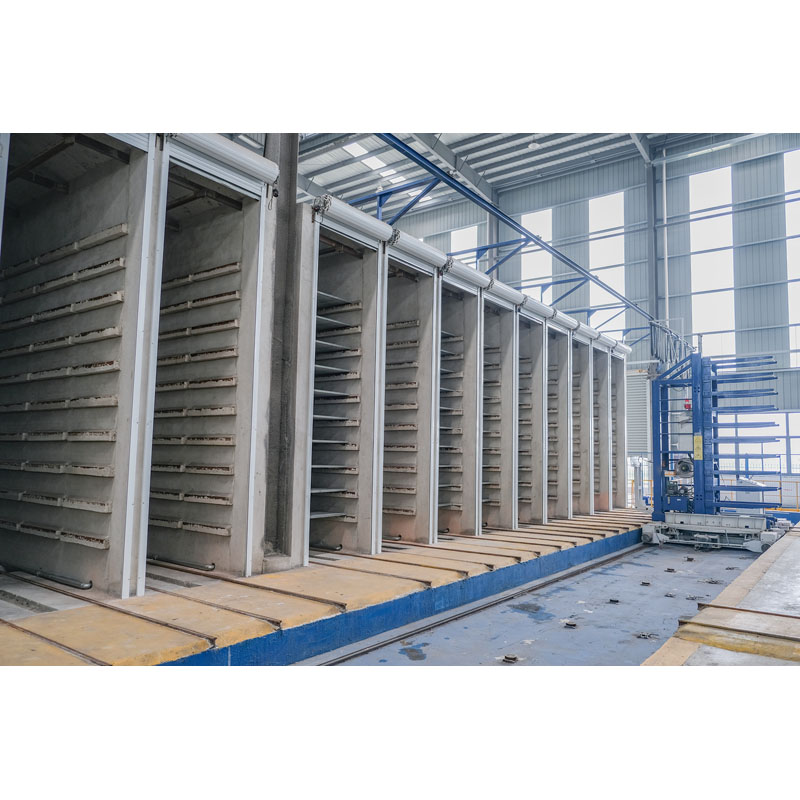
How Do Customized Brick Machine Curing Room Configurations Improve Production Efficiency?
In modern masonry manufacturing, curing consistency directly impacts compressive strength, dimensional stability, and surface finish. A properly engineered Brick Machine Curing Room is not simply an enclosed chamber. It is a controlled environment that balances temperature, humidity, airflow circulation, and curing duration based on raw material composition and block density.
Our customized systems adjust steam distribution, thermal insulation thickness, and rack loading design according to plant output targets. Instead of forcing customers to adapt their workflow to fixed chamber sizes, we configure dimensions, door mechanisms, and rail alignment to match the block handling system already in place.
| Parameter | Standard Range | Customized Option |
| Chamber Length | 12 m to 30 m | Up to 45 m based on layout |
| Temperature Control | 35 to 60 degrees Celsius | Programmable multi stage control |
| Humidity Level | 70 to 95 percent | Automatic sensor based regulation |
| Steam Distribution | Single line injection | Multi point uniform distribution |
| Insulation Thickness | 50 mm | 80 to 120 mm for cold climates |
When a Brick Machine Curing Room is customized to local environmental conditions, energy consumption drops while curing time shortens. In colder regions, additional insulation and high efficiency steam recirculation maintain internal stability without excessive fuel usage. Our factory frequently adapts chamber sealing systems for high humidity coastal environments, preventing corrosion and maintaining structural integrity.
By aligning chamber throughput with molding cycle time, production managers eliminate idle pallet accumulation. This synchronization is a major reason why Brick Machine Curing Room upgrades are now prioritized in capital expenditure planning.
What Technical Advantages Do Integrated Auxiliary Systems Deliver to Concrete Block Plants?
Beyond curing chambers, auxiliary machinery includes pallet circulation systems, automatic stackers, steam boilers, dust collection units, and control cabinets. When these components are sourced separately, compatibility issues often arise. Voltage mismatches, inconsistent control logic, and uneven material flow reduce efficiency.
Our integrated approach ensures that the Brick Machine Curing Room, steam supply module, and material transfer units communicate through unified control architecture. We design systems compatible with mainstream industrial controllers used in the United States and Europe, including modular PLC frameworks and HMI interfaces familiar to local technicians.
| System Component | Performance Indicator | Operational Benefit |
| Steam Boiler Unit | Thermal efficiency above 92 percent | Lower fuel cost per cubic meter of blocks |
| Automated Pallet Circulation | Cycle accuracy within 2 seconds | Reduced manual handling |
| Control System | Remote monitoring capability | Predictive maintenance support |
| Dust Collection Module | Filtration efficiency 99 percent | Compliance with workplace safety standards |
Because our factory calibrates these systems during commissioning, customers experience smoother ramp-up periods. In many cases, our clients report measurable reductions in labor hours and utility expenses within the first year of operation. The Brick Machine Curing Room works as part of a synchronized ecosystem rather than a standalone unit.
Why Is Flexibility Critical for Long Term Manufacturing Competitiveness?
Construction markets fluctuate. Public infrastructure projects may surge one year and slow the next. Plants must adapt product specifications quickly, switching between hollow blocks, solid pavers, or high strength structural units. A rigid auxiliary setup limits this flexibility.
Customized configurations allow chamber segmentation, adjustable curing cycles, and modular expansion. For example, a Brick Machine Curing Room can be designed with partitioned zones so operators can run multiple curing profiles simultaneously. This is especially valuable in regions where contractors demand varying compressive strength classes under ASTM or EN standards.
Quangong Machinery Co., Ltd. has implemented scalable layouts that enable customers to add new chambers without disrupting existing production lines. Our technical consultants analyze future growth projections before finalizing engineering drawings. As a result, our systems support expansion rather than constrain it.
Another major driver behind the rising demand is data transparency. Plant owners increasingly rely on performance dashboards to track energy usage per batch. Our control integration within each Brick Machine Curing Room provides real time temperature logs and cycle reports, helping management optimize resource allocation.
How Does Localized Engineering Support Strengthen Buyer Confidence?
In Western markets, after sales service and compliance documentation carry as much weight as equipment pricing. Buyers expect clear electrical schematics, load calculations, and structural certifications. Generic equipment often fails to meet regional documentation standards.
Quangong Machinery Co., Ltd. emphasizes localized engineering packages that include detailed installation drawings, operation manuals in fluent English, and remote troubleshooting guidance. Our factory prepares electrical systems aligned with local grid frequency, whether 60 Hz in North America or 50 Hz in Europe. This eliminates costly retrofitting upon arrival.
Our project teams also conduct performance testing before shipment. Each Brick Machine Curing Room undergoes thermal uniformity checks and safety inspections. Because our solutions are engineered around specific plant requirements, installation time is shortened and commissioning becomes predictable.
FAQ
Why Customized Auxiliary Machinery Solutions Are Gaining Popularity?
They are gaining popularity because manufacturers seek higher efficiency, lower operating costs, and improved production consistency. Tailored systems align with real plant layouts and regional standards, reducing integration risks and long term maintenance expenses.
How does a customized Brick Machine Curing Room differ from a standard model?
A customized model is engineered according to specific output capacity, climate conditions, and product mix. It features adjustable temperature zones, optimized steam routing, enhanced insulation options, and control integration that matches existing plant automation systems.
Can customized auxiliary systems reduce total cost of ownership?
Yes. By improving energy efficiency, minimizing downtime, and extending equipment lifespan, tailored solutions lower cumulative operational costs. They also reduce the need for future retrofits when production capacity expands.
Customized auxiliary machinery is no longer a luxury but a strategic investment for competitive manufacturers. From integrated steam systems to advanced Brick Machine Curing Room engineering, tailored solutions deliver measurable gains in efficiency, compliance, and scalability. Quangong Machinery Co., Ltd. continues to refine our design standards so our partners can operate with confidence in demanding markets. Contact our team today to discuss how our factory can configure a solution that aligns precisely with your production goals and regional requirements.
