

Why Do Power Plants Choose ePTFE Sealing Cord?
2026-10-10
A power plant maintenance engineer reviews the leak history for the past three years. The steam line flanges have been opened six times for inspection. Each time, the flanges were re-gasketed with traditional fiber or graphite sheet gaskets. Two of the six re-gaskets leaked within the first month of operation. One leak required an unplanned outage. The engineer decides to switch to Expanded PTFE Products for the next maintenance cycle. After the switch, the same flanges have been opened three times with zero leaks. The difference is not the bolting procedure or the flange condition. It is the sealing material and how it behaves under compression and thermal cycling. This guide explains why ePTFE sealing cord has become the preferred choice for power plant maintenance.
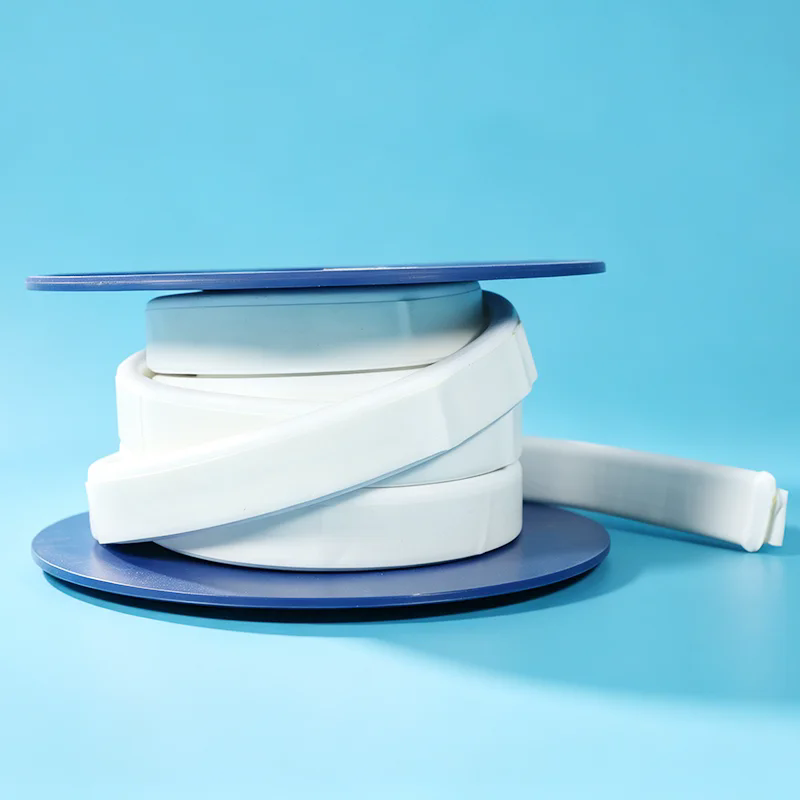
1. What Causes Flange Sealing Failures in Power Plants?
Flange sealing failures in power plants are caused by four factors: thermal cycling, chemical attack, creep relaxation, and installation error. Thermal cycling causes the flange and the gasket to expand and contract at different rates. If the gasket does not recover its thickness after compression, a gap forms, and leakage begins. Chemical attack occurs when the gasket material is not compatible with the medium, such as steam, ammonia, or acid. Creep relaxation occurs when the gasket material deforms permanently under bolt load, which reduces the sealing stress. Installation error occurs when the gasket is damaged, misaligned, or over-torqued. The table below shows the failure modes and their frequency in power plant flange systems.
| Failure mode | Frequency | Primary cause | Prevention |
| Thermal cycling leakage | 45% | Gasket does not recover after compression | Use a material with high recovery |
| Chemical attack | 25% | Gasket incompatible with medium | Select chemically resistant material |
| Creep relaxation | 20% | Gasket deforms permanently under load | Use a material with low creep |
| Installation error | 10% | Damage or misalignment | Training and proper tools |
In our factory, we have analyzed returned gaskets from power plant maintenance. The gaskets that failed due to thermal cycling showed a permanent compression set of 40 to 60 percent. The gaskets that survived showed a compression set of less than 15 percent. This is the key difference. Expanded PTFE Products have a compression set of less than 10 percent, which allows them to recover and maintain the seal through thermal cycles. Ningbo Taifno PTFE Plastic Products Co., Ltd. has been manufacturing ePTFE sealing cord for over 12 years.
2. How Does ePTFE Sealing Cord Perform Under Thermal Cycling?
The performance of a sealing material under thermal cycling is determined by its recovery characteristics. When the flange is bolted up, the gasket is compressed. When the system heats up, the flange expands more than the gasket, which reduces the compression. When the system cools down, the flange contracts, and the gasket must expand to fill the gap. If the gasket does not recover, a leak path forms. Expanded PTFE Products have a unique fibrillated structure that gives them excellent recovery. The table below compares the recovery of different gasket materials after thermal cycling.
| Material | Compression set after 100 cycles (%) | Recovery (%) | Leakage rate after cycling |
| Compressed fiber sheet | 45 – 60 | 40 – 55 | High |
| Graphite sheet | 30 – 40 | 60 – 70 | Moderate |
| Expanded PTFE (ePTFE) | 8 – 12 | 88 – 92 | Very low |
| PTFE envelope gasket | 15 – 25 | 75 – 85 | Low |
The ePTFE gasket recovers 88 to 92 percent of its original thickness after compression, compared to 40 to 55 percent for a compressed fiber sheet. This high recovery maintains the sealing stress through thermal cycles, which prevents leakage. In our factory, we test every batch of Expanded PTFE Products for recovery according to ASTM F36. The recovery must be at least 85 percent to meet our specification. Taifno PTFE Plastic provides test reports with every shipment.
3. How Does ePTFE Resist Chemical Attack and High Temperature?
PTFE is chemically inert to almost all industrial chemicals, including acids, bases, solvents, and steam. The only exceptions are molten alkali metals and elemental fluorine. This makes ePTFE sealing cord suitable for the widest range of power plant media, including boiler feedwater, steam, ammonia, and flue gas condensate. The temperature range of ePTFE is -240°C to +260°C. For short periods, it can withstand up to 300°C. The table below shows the chemical compatibility of ePTFE with common power plant media.
| Medium | Temperature | Compatibility with ePTFE | Alternative material |
| Steam (high pressure) | Up to 260°C | Excellent | Graphite (limited by oxidation) |
| Boiler feedwater | Up to 150°C | Excellent | EPDM (limited temperature) |
| Ammonia | -33°C to +50°C | Excellent | Nitrile (limited chemical resistance) |
| Sulfuric acid (dilute) | Up to 100°C | Excellent | None (most materials degrade) |
| Flue gas condensate | Up to 80°C | Excellent | PTFE envelope (higher cost) |
The chemical inertness of Expanded PTFE Products means that the gasket does not degrade, swell, or dissolve in the medium. This ensures a long service life and eliminates the risk of product contamination. In our factory, we use only virgin PTFE resin for our ePTFE sealing cord. We do not use recycled or filled PTFE, which can contain impurities that reduce chemical resistance. Ningbo Taifno PTFE Plastic Products Co., Ltd. provides a material certificate with every order.
4. How Should ePTFE Sealing Cord Be Installed to Avoid Errors?
Even the best sealing material can fail if it is installed incorrectly. The most common installation errors are over-torquing, under-torquing, and damaging the gasket during installation. For ePTFE sealing cord, the correct installation procedure involves four steps. First, clean the flange faces and remove all traces of the old gasket. Second, cut the cord to the correct length and form it into a ring with a slight overlap. Third, place the ring on the flange and align it with the bolt holes. Fourth, tighten the bolts in a star pattern to the specified torque. The table below shows the recommended bolt torque for different flange sizes and pressure classes.
| Flange size (DN) | Pressure class | Bolt size | Recommended torque (Nm) |
| 25 | PN16 | M12 | 45 – 55 |
| 50 | PN16 | M16 | 80 – 100 |
| 100 | PN25 | M20 | 150 – 180 |
| 150 | PN25 | M24 | 250 – 300 |
| 200 | PN40 | M27 | 350 – 420 |
Installation tip: Do not use a torque wrench that is too large for the bolt size. A large wrench makes it difficult to feel the correct torque, and it is easy to over-torque. Use a wrench with a range that puts the target torque in the middle of the scale. For ePTFE sealing cord, the torque should be sufficient to compress the cord by 25 to 30 percent of its original thickness. Over-torquing crushes the cord and reduces its recovery.
Frequently Asked Questions About ePTFE Sealing Cord in Power Plants
Summary for Power Plant Maintenance Engineers
Expanded PTFE Products, and ePTFE sealing cord in particular, are the preferred choice for power plant flange sealing because they recover 88 to 92 percent of their original thickness after compression, resist chemical attack from almost all power plant media, and withstand temperatures up to 260°C. These properties address the four main causes of flange leakage: thermal cycling, chemical attack, creep relaxation, and installation error. By selecting the correct cord diameter, following the proper installation procedure, and using the recommended bolt torque, maintenance engineers can achieve zero-leak performance and extend the interval between maintenance outages. Ningbo Taifno PTFE Plastic Products Co., Ltd. has been manufacturing ePTFE sealing cord for over 12 years and supplies to power plants worldwide.
Ningbo Taifno PTFE Plastic Products Co., Ltd. manufactures Expanded PTFE Products, including sealing cord, tape, and sheet, in a range of sizes and densities. We provide material certificates, test reports, and installation guides for all of our products.
