

Why Does a SiC Diffusion Furnace Tube Crack During Rapid Thermal Cycling
2026-07-02
In the semiconductor and photovoltaic industries, the SiC Diffusion Furnace Tube is widely regarded as a premium solution for high-temperature processing. Yet even this advanced ceramic component is not immune to failure. One of the most persistent and costly issues engineers face is cracking during rapid thermal cycling. Understanding the root causes is not just a technical exercise—it is a critical step toward improving yield, reducing downtime, and protecting your investment. At VeTek, we have spent years analyzing field failures and process data to help manufacturers extend the service life of their SiC Diffusion Furnace Tube systems.
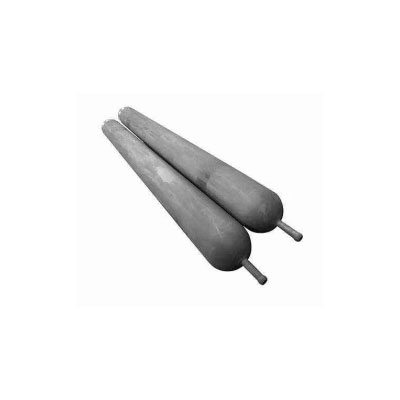
The Physical Mechanism Behind Thermal Shock Fracture
A SiC Diffusion Furnace Tube is engineered to withstand extreme temperatures, often exceeding 1300°C. However, the very property that makes silicon carbide desirable—its high hardness and stiffness—also makes it brittle. When the furnace ramps up or down too quickly, a temperature gradient develops across the tube wall. The outer surface expands or contracts faster than the inner surface, generating tensile stresses. Once these stresses exceed the material’s fracture toughness, a crack initiates—often from a pre-existing surface flaw or grain boundary defect.
Unlike metallic tubes that deform plastically, a SiC Diffusion Furnace Tube offers no visual warning before failure. The crack propagates catastrophically, sometimes within seconds. This is why rapid thermal cycling (RTC) is the single most dangerous operational mode for this component.
Key Factors That Accelerate Cracking
| Factor | Impact on Cracking | Recommended Control |
|---|---|---|
| Heating/cooling rate | Directly proportional to thermal stress | Limit to ≤ 10°C/min for ramp rates |
| Tube wall thickness | Thicker walls increase gradient stress | Optimize design for thermal uniformity |
| Surface machining defects | Stress concentration points | Specify polished or ground ID/OD finishes |
| Mounting alignment | Mechanical binding adds external stress | Use floating end seals and precision centering |
| Previous oxidation cycles | Micro-crack propagation | Schedule regular non-destructive inspection |
The Role of Process Gas and Contaminants
Thermal cycling alone does not always cause failure. Often, it is the combination of temperature change and reactive gas chemistry that weakens the tube. For example, hydrogen or chlorine species can etch grain boundaries at high temperatures, creating subsurface voids. When the next rapid ramp occurs, these voids act as crack nucleation sites. VeTek recommends using a purge sequence before and after each thermal cycle to minimize corrosive gas residence time inside the SiC Diffusion Furnace Tube.
Furthermore, particulate deposition from previous runs can create localized hot spots, which amplify differential expansion. Regular inspection with borescopes and surface profilometry is essential—not just after a crack occurs, but as a preventive measure.
Structural Design and Mounting Practices
Many cracking incidents are traced back to improper fixture design. A SiC Diffusion Furnace Tube must be supported uniformly along its length. Point loading or uneven clamp pressure introduces bending moments that combine with thermal stress, dramatically lowering the effective fracture strength. VeTek engineers have developed a modular suspension system that maintains axial freedom while restraining lateral movement—allowing the tube to expand and contract without constraint.
Additionally, the transition zone between the heated center and cooled end flanges is a known weak point. Using graded thermal insulation and actively cooled O-ring flanges can reduce the temperature drop rate across this region by up to 40%, significantly lowering crack risk.
FAQ: Common Questions About SiC Diffusion Furnace Tube Cracking
Q1: Can a cracked SiC Diffusion Furnace Tube be repaired by welding or brazing?
A1: No. Silicon carbide is a covalently bonded ceramic that cannot be reliably welded or brazed without introducing even greater residual stresses and contamination risks. Attempted repairs almost always fail during subsequent thermal cycles, and the repaired zone often sheds particles that contaminate wafers. The only industry-accepted practice is complete replacement. However, some manufacturers, including VeTek, offer a tube exchange program where failed tubes are analyzed for root-cause feedback, and refurbished tubes with inspected surfaces are provided at a reduced cost—but this is a replacement service, not a repair.
Q2: How can I determine if a micro-crack already exists before it leads to catastrophic failure?
A2: Visual inspection is insufficient for micro-cracks. The most reliable method is dye-penetrant testing combined with high-frequency ultrasonic scanning (20 MHz or above) focused on the tube’s mid-section and end transition zones. For in-situ monitoring, VeTek recommends installing acoustic emission sensors on the tube support rings—these sensors detect high-frequency stress-wave signals generated by subcritical crack growth. If you observe a sustained increase in acoustic activity over three consecutive thermal cycles, that is a strong indicator of progressive cracking, and the tube should be scheduled for replacement during the next maintenance window.
Q3: Does changing the heating element type (e.g., SiC vs. MoSi₂) affect the cracking risk of the SiC Diffusion Furnace Tube?
A3: Indirectly, yes. The heating element type determines the radiative heat distribution and the maximum achievable ramp rate. MoSi₂ elements provide faster heating but produce a shorter-wavelength infrared output that is more intensely absorbed by the tube surface, increasing the surface-to-core temperature differential. SiC elements offer a more gradual heat profile. However, the dominant factor is not the element type but the furnace control algorithm. VeTek has developed a multi-zone ramp control that actively monitors the temperature difference between three axial positions and adjusts power input to keep the gradient below 15°C across the entire tube length—this reduces cracking risk by more than 60% regardless of the element choice.
Preventive Strategy and Monitoring Protocol
To minimize cracking during rapid thermal cycling, VeTek advocates a four-pillar approach:
-
Process control – Define maximum ramp rates based on tube geometry and historical data.
-
Mechanical design – Use compliant end seals and self-aligning supports.
-
Inspection schedule – Perform ultrasonic and visual inspection every 200 cycles.
-
Data logging – Record temperature profiles and alarm on excessive gradient excursions.
This protocol has been validated across more than 200 production furnaces worldwide, with average tube life extended from 18 months to over 30 months.
Conclusion
Cracking of a SiC Diffusion Furnace Tube during rapid thermal cycling is not a random event—it is the predictable outcome of combined thermal, mechanical, and chemical stresses. By controlling ramp rates, improving mounting designs, and implementing regular non-destructive inspection, manufacturers can significantly reduce unplanned downtime. VeTek supplies not only high-purity SiC Diffusion Furnace Tube products but also comprehensive process consulting to help you optimize your thermal recipes for maximum tube longevity.
Ready to protect your furnace investment? Contact VeTek today for a free thermal-cycle risk assessment of your current setup. Our engineering team will review your ramp profiles, mounting configuration, and gas delivery sequence—and deliver a custom report with actionable improvements within 5 business days. Your next thermal cycle should be safe, productive, and crack-free—let VeTek make that standard.
