

Why Does Lubrication Matter for Bevel Gear Performance and Service Life?
2026-11-16
A maintenance team replaces a failed set of Bevel Gear units in a mixer drive. The teeth show scoring along the full length of the flank, and the oil in the housing is dark and smells burnt. The team checks the alignment and the backlash and finds both within specification. The failure is not a geometry problem. It is a lubrication problem. The oil was the correct viscosity grade, but it had been in service for four years without an oil analysis, and its extreme pressure additives had depleted. The teeth were operating in boundary lubrication, metal to metal, and the surface failed. This guide explains why lubrication is not a consumable item but a structural part of bevel gear performance and service life.
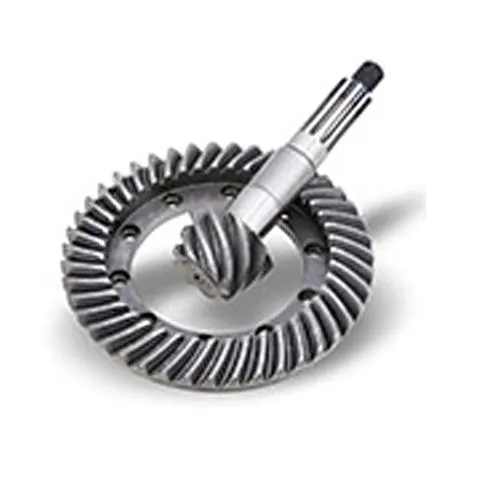
1. Why Is Lubrication the Most Overlooked Failure Cause in Bevel Gear Systems?
Bevel gears are often treated as a mechanical component that either fits or does not fit. The alignment, the backlash, and the contact pattern receive attention during assembly, and the oil receives attention only when the level is low. In our factory, we review field returns and maintenance logs, and lubrication related failures appear more often than geometry related failures. The reason is that the oil degrades silently. The viscosity changes, the additives deplete, and the water content rises, but the gear set continues to run until the surface damage becomes visible. By then, the repair cost is high and the downtime is long. Saifu has been supplying bevel gear sets for over 15 years and provides a lubrication schedule with every gearbox.
The second reason is that bevel gears operate with combined rolling and sliding. The sliding component is much higher than in a parallel shaft spur gear, especially near the toe and the heel of the tooth. The oil film must separate the surfaces under sliding as well as rolling, and that requirement is more demanding than most maintenance teams assume. A lubricant that works in a spur gearbox may not protect a bevel gear set in the same duty.
2. How Does the Oil Film Separate the Tooth Surfaces Under Combined Rolling and Sliding?
The oil film thickness depends on the entraining velocity, the lubricant viscosity, the contact pressure, and the surface roughness. In a Bevel Gear mesh, the entraining velocity changes along the line of action, and the sliding velocity changes from zero at the pitch point to a maximum at the tooth extremities. The film is thinnest where the sliding velocity is highest and the radius of curvature is smallest, which is near the toe and the heel. If the film thickness falls below the composite surface roughness, the asperities contact each other, and the surface begins to wear. The table below shows the relationship between film thickness ratio and the lubrication regime.
| Film thickness ratio | Lubrication regime | Typical wear rate | Expected surface condition |
| Greater than 3.0 | Full film | Very low | Polished, no visible wear |
| 1.0 to 3.0 | Mixed film | Low to moderate | Light polishing, minor asperity contact |
| 0.5 to 1.0 | Boundary film | Moderate to high | Scuffing, mild scoring |
| Below 0.5 | Boundary or dry | Very high | Severe scoring, pitting, seizure |
In our factory, we calculate the film thickness ratio for each application using the operating speed, the load, the oil viscosity at the operating temperature, and the measured surface roughness. When the ratio falls below 1.5, we recommend a higher viscosity grade, a lower operating temperature, or a change in the oil formulation. Saifu Vietnam Company Limited provides the film thickness calculation with the gearbox selection report.
3. Which Lubricant Properties Matter Most for Bevel Gear Contact?
Four lubricant properties determine whether the film survives the bevel gear contact. The first is the viscosity at the operating temperature. The viscosity must be high enough to form a film, but not so high that the churning loss overheats the oil. The second is the viscosity index, which describes how much the viscosity changes with temperature. A high viscosity index keeps the film stable across the operating range. The third is the extreme pressure additive package, which reacts with the metal surface under high load to prevent welding and scoring. The fourth is the oxidation stability, which determines how long the oil lasts before it degrades. The table below shows the recommended values for each property.
| Property | Recommended value | Effect on bevel gear performance |
| Viscosity at 40 degrees Celsius | 220 to 460 cSt (ISO VG 220 to 460) | Film thickness and churning loss |
| Viscosity index | 95 or higher | Film stability across temperature range |
| Extreme pressure additive | Sulfur phosphorus type, Timken OK load 60 lb or higher | Scoring resistance under high load |
| Oxidation stability | TOST life 2,000 hours or higher | Oil life and sludge formation |
| Water separation | Less than 0.1 percent water after 30 minutes | Corrosion protection and film strength |
Lubrication engineer's note: The extreme pressure additive is what protects the tooth surface when the film breaks down momentarily under shock load. A gear oil that meets the viscosity requirement but lacks the extreme pressure package will score under the same load that a properly additized oil handles without damage. In our factory, we require the oil supplier to provide the Timken OK load and the four ball weld load data, and we verify the data against the application requirement. Saifu Vietnam Company Limited reviews the oil data sheet with the customer before the gearbox is shipped.
4. Why Do Wrong Oil Selection and Contamination Cause Different Failure Modes?
The failure mode tells the maintenance team what went wrong. Scoring, which appears as torn metal along the sliding direction, indicates that the film broke down under high load or high sliding speed. Pitting, which appears as small craters on the tooth flank, indicates that the surface fatigued under repeated contact stress, often because the oil was too thin or the surface was too rough. Wear, which appears as a uniform removal of metal across the flank, indicates that the oil was contaminated with abrasive particles or that the oil was too thin for the load. Sludge and varnish, which appear as a dark deposit on the tooth and the housing, indicate that the oil oxidized or that the operating temperature was too high. Each failure mode points to a different corrective action. In our factory, we ask the customer to send an oil sample and a photograph of the failed tooth before we recommend a change. The sample is analyzed for viscosity, water content, acid number, and wear metals. The photograph is examined for the failure pattern. The combination of the two tells us whether the problem is the oil grade, the oil condition, or the operating condition.
The contamination path is often indirect. A breather that is not filtered allows dust into the housing. A seal that is worn allows water into the oil. A cooler that is corroded allows coolant into the oil. Each of these paths changes the oil properties and accelerates the failure. The maintenance team should check the breather, the seals, and the cooler at every oil change, not only when a leak is visible.
5. How Should Engineers Specify, Apply, and Verify Bevel Gear Lubrication?
The specification should include the viscosity grade, the extreme pressure requirement, the oxidation stability, and the water separation requirement. The application should include the fill volume, the oil change interval, and the filtration requirement. The verification should include the oil analysis at commissioning and at each oil change, and the inspection of the tooth surface at each gearbox opening. In our factory, we provide a lubrication plate on the gearbox that lists the oil grade, the fill volume, and the change interval. We also provide an oil analysis schedule that shows the parameters to test and the acceptance limits. Saifu recommends an oil analysis at 500 hours after commissioning, then every 2,000 hours, and a tooth inspection every 5,000 hours.
We recommend that the buyer specify the oil brand and grade in the purchase order and that the maintenance team use the same oil for top up. Mixing two oils with different additive packages can cause the additives to drop out of suspension and can reduce the film strength. If a different brand must be used, the system should be flushed before the new oil is added.
Frequently Asked Questions About Bevel Gear Lubrication
Lubrication matters for Bevel Gear performance and service life because the oil film separates the tooth surfaces under combined rolling and sliding, and the film thickness determines whether the contact is full film, mixed, or boundary. The lubricant properties that matter most are the viscosity at operating temperature, the viscosity index, the extreme pressure additive package, and the oxidation stability. The failure mode, whether scoring, pitting, wear, or sludge, tells the maintenance team which property failed. The specification should include the viscosity grade and the additive requirement, and the verification should include an oil analysis and a tooth inspection at defined intervals. When the lubrication is planned as carefully as the geometry, the gear set reaches its design life.
