

Why Does My Downward Expansion Discharge Valve Keep Chattering Under Variable Backpressure Conditions
2026-07-23
If you have ever stood next to a pressure relief system and heard that rapid, hammering metallic staccato, you know exactly how unsettling valve chattering can be. For engineers and plant operators, this noise is not just an annoyance—it is a clear warning sign. When a Downward Expansion Discharge Valve begins to chatter persistently under fluctuating backpressure, the root cause often lies in a mismatch between the valve’s design dynamics and the system’s real-time hydraulic behavior. At LOZOSE, we have analyzed hundreds of field cases, and the consensus is clear: chattering under variable backpressure is rarely a random event; it is a symptom of unstable force balance, incorrect sizing, or inadequate inlet/outlet piping configurations.
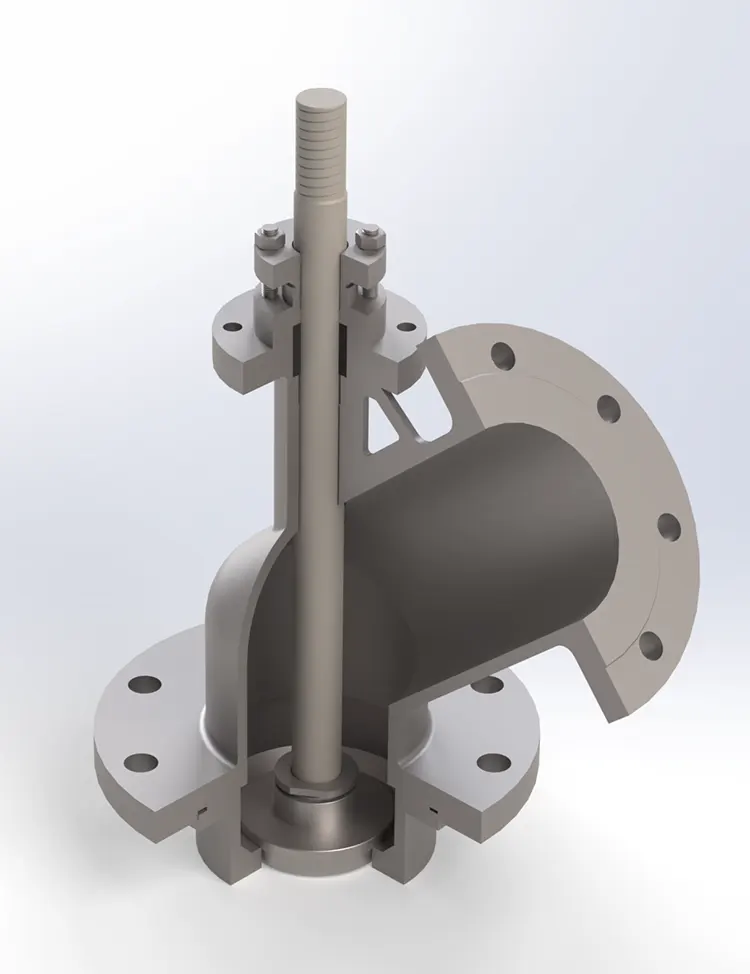
The Core Mechanism: Why Backpressure Destroys Stability
A Downward Expansion Discharge Valve relies on a precise balance between inlet pressure, spring force, and downstream backpressure to maintain a stable modulating position. When backpressure fluctuates—due to parallel relief trains, upstream compressor surges, or undersized discharge headers—the net force acting on the disc becomes erratic.
| Operating Condition | Valve Response | Likely Outcome |
|---|---|---|
| Steady backpressure (<10% of set pressure) | Stable lift, smooth flow | Normal operation, no chatter |
| Backpressure rises above 15–20% of set pressure | Reduced differential pressure across disc | Partial opening, rapid reopening cycles |
| Rapid backpressure transients (≥ 5% set pressure/sec) | Delayed pilot response or spring hysteresis | Sustained high-frequency chattering |
| Backpressure exceeds 50% of set pressure (conventional valves) | Disc slams shut, then reopens violently | Severe mechanical wear and seat damage |
The table above illustrates that even moderate backpressure variations can push a conventional Downward Expansion Discharge Valve into an unstable loop. Each time the valve cracks open, flow enters the discharge header, which momentarily elevates backpressure, forcing the disc downward—only for the pressure to drop again as flow momentarily ceases. This cycle repeats at frequencies up to 30–40 Hz, creating the chattering signature.
Field Diagnostics: Five Likely Culprits
Through thousands of service reports, LOZOSE engineers have identified five primary reasons for chattering under variable backpressure:
-
Undersized outlet piping – Creates excessive velocity head that translates into unpredictable backpressure spikes.
-
Improper balancing bellows or pilot configuration – Non-balanced designs cannot compensate for superimposed backpressure.
-
Set pressure too close to system operating pressure – Leaves insufficient margin (minimum 10–15%) for stable modulation.
-
Inadequate inlet pressure drop ratio – If inlet losses exceed 3% of set pressure, the valve experiences rapid flutter.
-
Missing or fouled backpressure compensation ports – Common in older installations where maintenance schedules were neglected.
Practical Solutions from the Field
To resolve chattering, LOZOSE recommends a structured approach:
-
Step 1: Measure dynamic backpressure at the valve outlet flange using a high-speed pressure transducer (sampling ≥ 1 kHz) during actual upset conditions.
-
Step 2: Compare the measured backpressure against the valve’s certified backpressure capacity. If it exceeds 30% of set pressure for a conventional Downward Expansion Discharge Valve, switch to a balanced-bellows or pilot-operated design.
-
Step 3: Recalculate the discharge header size. A general rule: header cross-sectional area should be at least 1.5× the total outlet area of all connected valves.
-
Step 4: Verify that the inlet pipe length does not exceed 10× the pipe diameter without additional supports or straightening vanes.
Downward Expansion Discharge Valve FAQ – Common Questions from Engineers
Q1: What is the maximum allowable superimposed backpressure for a conventional Downward Expansion Discharge Valve before chattering becomes inevitable?
A: For a conventional, non-balanced Downward Expansion Discharge Valve, the maximum recommended superimposed backpressure is 10% of the set pressure. Beyond this threshold, the closing force increases disproportionately, reducing the net opening force and causing the disc to hover near the seat. Under variable conditions, this hovering translates directly into chattering. If your system experiences backpressure above 10%, you must either install a balanced-bellows design (which can tolerate up to 30–40% backpressure) or a pilot-operated valve (which can handle up to 70% or more). Always consult the certified flow coefficient (Cv) curves provided by the manufacturer—LOZOSE supplies these curves for every valve family, validated by independent third-party flow loop testing.
Q2: How can I differentiate between chattering caused by backpressure fluctuations versus chattering caused by undersized inlet piping?
A: This is a critical distinction because the remedies are entirely different. To differentiate, perform a two-step diagnostic test:
First, isolate the outlet side. Install a temporary isolation valve or blind flange downstream and slowly open the Downward Expansion Discharge Valve at 75% of set pressure while monitoring outlet pressure. If chattering stops entirely, the root cause is outlet-related (backpressure/header sizing). If chattering persists, measure the inlet pressure drop at the valve inlet flange during the same test. If the inlet pressure drop exceeds 3% of set pressure, your inlet piping is too long, too narrow, or has too many elbows. LOZOSE field kits include portable pressure loggers that simultaneously record inlet and outlet transients, giving you a clear fingerprint of which side is driving the instability.
Q3: Does increasing the spring rate or adding a damping orifice stop chattering, or does it merely mask the underlying issue?
A: Increasing the spring rate or adding a damping orifice is a temporary palliative measure, not a permanent solution. A stiffer spring raises the natural frequency of the moving assembly, which can shift the chattering frequency out of the audible range, but the valve will still cycle rapidly—just at a higher frequency that may damage the stem and guide bushings faster. A damping orifice reduces the response speed of the pilot or main valve, but it also degrades the opening time during a real emergency relief event, potentially violating API 520 or ASME Section VIII response time requirements. At LOZOSE, we advise against field modifications of spring or damping components unless recalculated by a certified engineer. The correct solution is to properly size the Downward Expansion Discharge Valve for your specific backpressure profile using dynamic simulation (e.g., CFD or lumped-parameter modeling), and if necessary, upgrade to a balanced or pilot-operated variant that inherently compensates for variable downstream conditions.
Preventative Maintenance and Monitoring
To avoid recurring chattering, LOZOSE recommends a quarterly health check that includes:
-
Stroke-testing the Downward Expansion Discharge Valve at 50%, 75%, and 90% of set pressure.
-
Recording lift height versus inlet pressure to detect hysteresis drift.
-
Inspecting the discharge header for liquid accumulation or blockages that create intermittent backpressure waves.
Take Control of Your Relief System Today
Chattering is not a problem you can afford to ignore. It accelerates seat wear, fatigues springs, and can render your Downward Expansion Discharge Valve inoperable at the very moment you need it most. The engineering team at LOZOSE specializes in diagnosing dynamic instability in pressure relief systems, from single-valve installations to complex multi-header networks.
Contact us today for a comprehensive backpressure analysis and valve selection review. Our experts will provide a customized report with time-domain pressure traces, recommended trim upgrades, and piping modification drawings—all tailored to your specific process conditions. Visit our website or reach out directly to schedule a consultation. Your safety and uptime are our priority.
Downward Expansion Discharge Valve