

Why Efficient Steam Supply Systems Are Critical for AAC Sheet Lines
2026-04-01
In autoclaved aerated concrete production, steam is not just a utility. It is the core driver behind material transformation. During high-pressure curing, consistent steam temperature and pressure determine the hydration reaction of lime, cement, and silica. If steam distribution is uneven, it leads to inconsistent density, reduced compressive strength, and higher rejection rates.
In our factory, we have seen that unstable steam supply can increase crack formation and dimensional deviation, especially in high-capacity AAC Sheet Production Line Equipment. This is why leading manufacturers focus on saturated steam stability, dryness fraction, and pressure uniformity.
Zenith integrates steam control logic directly into system engineering to ensure that each curing cycle maintains uniform heat penetration. Our experience shows that optimizing steam flow reduces curing time while improving final product integrity.
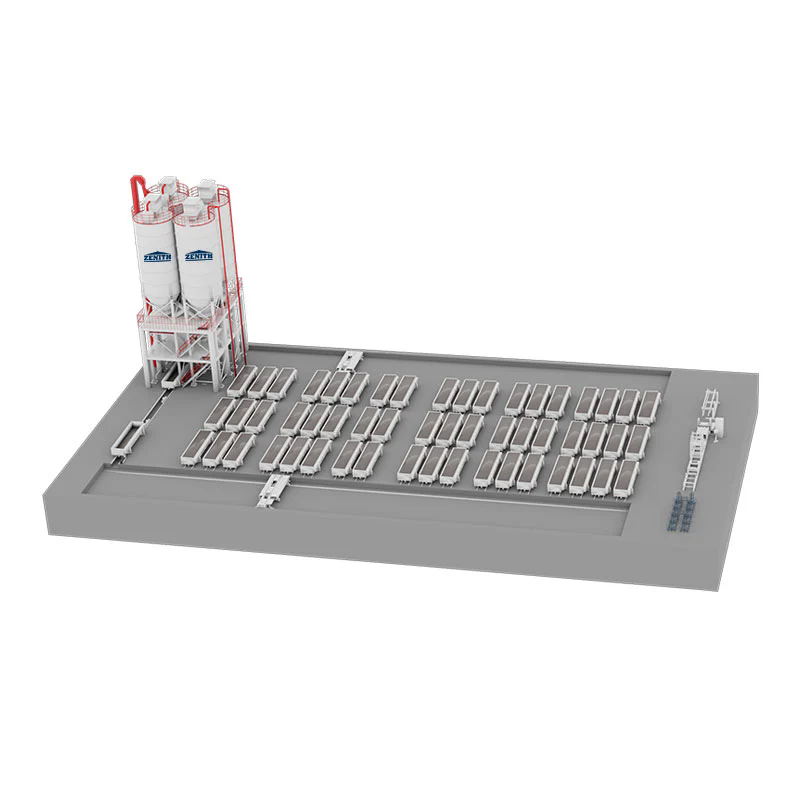
Why Do Modern AAC Sheet Lines Require High-Efficiency Steam Distribution Systems?
Modern plants operate at higher throughput and tighter tolerances. This makes steam efficiency a decisive factor in both production output and energy consumption. A well-designed system minimizes heat loss, reduces condensate accumulation, and ensures rapid pressure build-up inside autoclaves.
Our engineering approach focuses on pipeline insulation, automated valve control, and balanced steam routing. In large-scale AAC Sheet Production Line Equipment, even minor inefficiencies can lead to significant energy waste and inconsistent curing cycles.
Zenith has optimized steam header layouts and condensate recovery systems to match regional industrial standards. Our solutions align with practical operating conditions found in North America, Europe, and Southeast Asia, where energy costs and environmental regulations continue to tighten.
What Technical Parameters Define an Efficient Steam Supply System?
To ensure reliable performance, several technical indicators must be carefully controlled. These parameters directly impact curing quality, production stability, and operational costs. Based on our factory experience, the following specifications are considered industry benchmarks:
| Parameter | Recommended Range | Impact on Production |
| Steam Pressure | 1.2–1.6 MPa | Ensures proper autoclave curing reaction |
| Steam Temperature | 180–200°C | Controls hydration and crystal formation |
| Dryness Fraction | >95% | Prevents water accumulation and defects |
| Condensate Recovery Rate | >80% | Improves energy efficiency and reduces cost |
| Heat Loss Rate | <5% | Maintains stable curing environment |
These parameters are critical when designing or upgrading AAC Sheet Production Line Equipment. Our team ensures that every project meets these benchmarks through detailed system configuration and on-site testing.
How Does Steam System Design Influence Energy Consumption and Operating Cost?
Energy efficiency has become a top priority for AAC manufacturers. Steam generation and distribution account for a large portion of total energy use. Poor insulation, inefficient boilers, and outdated piping systems can significantly increase fuel consumption.
Our factory has implemented closed-loop condensate recovery systems that reduce water and fuel usage. In addition, intelligent control valves help regulate steam flow based on real-time demand, avoiding unnecessary pressure fluctuations.
Zenith applies practical design principles such as short pipeline routing, high-performance insulation materials, and automated pressure balancing. These improvements not only reduce operational expenses but also extend the lifespan of AAC Sheet Production Line Equipment.
| System Component | Optimization Method | Benefit |
| Boiler System | High-efficiency combustion control | Lower fuel consumption |
| Piping Network | Thermal insulation upgrade | Reduced heat loss |
| Steam Valves | Automatic regulation | Stable pressure control |
| Condensate System | Closed-loop recovery | Water and energy savings |
What Common Steam System Issues Affect AAC Sheet Line Performance?
Operational challenges often arise from overlooked system inefficiencies. In our factory, we frequently encounter problems such as pressure instability, excessive condensate, and uneven heat distribution. These issues directly affect curing quality and production efficiency.
For example, inadequate steam dryness can cause surface defects in AAC panels. Poor pipeline design may result in delayed pressure build-up, extending cycle time. In high-output AAC Sheet Production Line Equipment, these inefficiencies quickly translate into production losses.
Our engineering team focuses on preventive design and regular system audits. By identifying weak points early, we help operators maintain consistent performance and reduce unexpected downtime.
FAQ
Why Efficient Steam Supply Systems Are Critical for AAC Sheet Lines in terms of product quality?
Efficient steam systems ensure uniform temperature and pressure inside the autoclave, which directly affects the chemical reaction of raw materials. Without stable steam conditions, AAC sheets may develop cracks, uneven density, or reduced strength, leading to higher rejection rates and inconsistent product standards.
Why Efficient Steam Supply Systems Are Critical for AAC Sheet Lines when considering energy efficiency?
Steam generation and distribution consume a significant portion of plant energy. An optimized system reduces heat loss, improves condensate recovery, and stabilizes pressure control. This results in lower fuel consumption, reduced operating costs, and improved sustainability, especially in large-scale production environments.
Why Efficient Steam Supply Systems Are Critical for AAC Sheet Lines in high-capacity operations?
In high-capacity lines, even minor fluctuations in steam supply can disrupt the entire production cycle. Efficient systems ensure fast pressure build-up, consistent curing conditions, and minimal downtime. This is essential for maintaining throughput, meeting delivery schedules, and maximizing equipment utilization.
Efficient steam supply systems are a fundamental part of modern AAC production. From ensuring product quality to reducing energy consumption, their role cannot be overlooked. Our factory continues to refine system design and integration to meet evolving industry demands. Zenith combines practical engineering experience with reliable system configuration to support stable and efficient AAC Sheet Production Line Equipment. If you are planning to upgrade your plant or improve operational efficiency, our team is ready to provide tailored solutions and technical support. Contact us today to explore how we can optimize your production performance.
