

Why High-Torque Concrete Mixers Perform Better in Large-Scale Projects?
2026-03-03
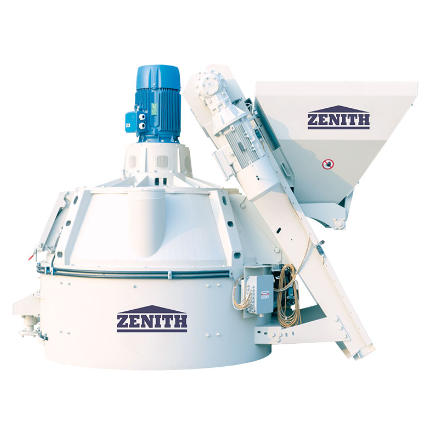
On large commercial builds across North America, contractors often describe equipment as job-site tough, high-output, and built for continuous pour cycles. In real-world conditions such as highway foundations, industrial slabs, wind farm bases, and high-rise core walls, torque is not just a specification. It determines how effectively material moves under load. A high-torque Concrete Mixer maintains drum momentum even when handling low-slump mixes, fiber-reinforced concrete, or high-density aggregates.
Torque directly impacts start-up power, resistance handling, and mixing consistency. When batches exceed standard capacity and aggregates include crushed stone with higher abrasion factors, insufficient torque leads to stall risk, uneven blending, and longer discharge time. Our engineering team focuses on torque-to-capacity balance, ensuring that the drive system delivers sustained rotational force rather than short bursts of power.
Quangong Machinery Co., Ltd. designs mixing systems for infrastructure-scale applications where cycle time and mix homogeneity affect both structural integrity and project schedule. In our factory, every drivetrain is calibrated to match motor output, reducer ratio, and drum geometry, allowing our equipment to perform reliably during extended operation windows.
How Does High Torque Improve Productivity on Large Infrastructure Projects?
Productivity on large-scale projects is measured in cubic yards per hour, turnaround time per batch, and overall uptime. A high-torque Concrete Mixer reduces mixing lag, especially when contractors are working with low water-cement ratios required for structural strength. Instead of increasing mixing time to compensate for resistance, adequate torque keeps aggregate and cement paste moving uniformly from the start.
Our systems are commonly deployed in ready-mix plants supplying bridge decks, airport pavements, and precast operations. In these scenarios, every minute saved per cycle adds measurable throughput gains. Our factory integrates heavy-duty gearboxes and reinforced ring gears to ensure consistent drum rotation under full load. This stability improves slump consistency and reduces rework caused by incomplete blending.
Below is a technical overview of typical high-torque configuration parameters used in large-capacity units manufactured by Quangong Machinery Co., Ltd.
| Rated Drum Capacity | 4.0 m3 to 8.0 m3 per batch |
| Motor Power Range | 75 kW to 160 kW industrial duty motors |
| Output Torque | 28,000 Nm to 65,000 Nm continuous torque |
| Reducer Type | Planetary gearbox with hardened alloy gears |
| Drum Speed | 12 to 18 rpm optimized for structural mixes |
| Discharge Time | Less than 30 seconds under full load |
These specifications allow our equipment to maintain high mixing intensity without sacrificing mechanical durability. Contractors benefit from shorter batching intervals and improved material uniformity across large pours.
Why Does Structural Concrete Demand Higher Mixing Force?
Modern structural designs often require high-strength grades such as C40, C50, or above. These mixes contain lower water content, supplementary cementitious materials, and chemical admixtures that increase viscosity. Under such conditions, a standard unit may struggle to rotate freely. A high-torque Concrete Mixer overcomes this resistance, preventing dead zones inside the drum.
Our design approach focuses on blade geometry and internal wear lining thickness. In our factory, mixing blades are manufactured using abrasion-resistant alloy steel to handle continuous exposure to coarse aggregates. The combination of torque and optimized blade angle enhances shear force, improving cement dispersion and reducing segregation risk.
Quangong Machinery Co., Ltd. also integrates thermal protection systems and reinforced shaft bearings to ensure operational safety during prolonged shifts. When infrastructure contractors operate double shifts to meet deadlines, reliable torque performance prevents overheating and mechanical fatigue.
| Blade Material | High chromium wear-resistant alloy |
| Lining Thickness | 20 mm to 30 mm replaceable liners |
| Drive Protection | Overload sensor with automatic shutdown |
| Lubrication System | Centralized automatic grease distribution |
| Frame Structure | Heavy-duty welded steel chassis |
These structural enhancements ensure that our systems maintain performance stability even in high-volume municipal or commercial developments.
How Does High Torque Reduce Maintenance Costs Over Time?
Contractors in the United States often calculate equipment value based on lifecycle cost rather than purchase price alone. When torque output is insufficient, motors operate under strain, increasing current draw and accelerating wear on gears and bearings. A properly engineered high-torque Concrete Mixer operates within optimal load parameters, reducing stress across the drivetrain.
Our preventive design philosophy emphasizes balance between rotational speed and force. Instead of over-revving the drum to compensate for resistance, our systems rely on steady torque transmission. This reduces vibration, minimizes gearbox heat buildup, and extends component lifespan.
Quangong Machinery Co., Ltd. conducts load simulation testing before delivery, ensuring our machines meet industrial plant standards. Our service team provides torque calibration and on-site commissioning to ensure alignment with batching plant configurations. Through consistent performance, contractors reduce downtime, spare part consumption, and emergency repair costs.
What Should Contractors Evaluate Before Selecting High-Torque Equipment?
Before specifying a unit for a major project, project managers typically review batch size requirements, target compressive strength, site power availability, and projected daily output. A high-torque Concrete Mixer should match these operational variables. Oversized torque without proper matching may increase energy consumption, while insufficient torque compromises output consistency.
Our technical advisors analyze mix design data, aggregate type, and production schedule to recommend optimized configurations. In our factory, customization options include motor voltage adjustment for regional standards, reinforced discharge systems for fast cycle turnover, and automation integration with batching control software.
By aligning torque capacity with production demand, contractors ensure reliable mixing performance and predictable operational cost.
Frequently Asked Questions
Q1: Why High-Torque Concrete Mixers Perform Better in Large-Scale Projects?
High torque enables the mixer to maintain consistent rotational force when handling dense, low-slump, or fiber-reinforced concrete. This prevents incomplete blending, reduces cycle time, and ensures uniform compressive strength across large pours. In large-scale projects where batch consistency directly affects structural safety and inspection approval, sustained torque output supports both productivity and quality assurance.
Q2: How does torque influence energy efficiency in large batching plants?
Proper torque reduces the need for excessive drum speed to overcome resistance. When force transmission is optimized, the motor operates within its designed efficiency range, lowering current draw and reducing mechanical strain. Over time, this translates into lower electricity consumption and extended component lifespan, which is critical for high-output commercial plants.
Q3: What maintenance practices maximize high-torque mixer performance?
Routine inspection of gearbox lubrication levels, blade wear condition, and bearing alignment is essential. Scheduled torque calibration and load testing ensure that mechanical components remain balanced. Following a structured maintenance plan prevents overload conditions and preserves drivetrain integrity during extended operational cycles.
High-torque performance is not simply a technical specification. It is the foundation of productivity, durability, and structural reliability in demanding construction environments. Quangong Machinery Co., Ltd. combines industrial-grade drivetrain engineering with precision manufacturing standards to deliver dependable solutions for infrastructure-scale developments. If you are planning a large commercial or municipal project, contact our team today to discuss customized configurations and request a detailed quotation tailored to your production requirements.
