

Why Industrial Air Conditioner Is Indispensable for BESS Container Thermal Management?
2026-09-22
When a battery energy storage system container reports a cell temperature differential above 5°C, the problem is rarely the battery itself. It is almost always the thermal management system. The Industrial Air Conditioner that cools the container is the single most critical auxiliary component in a BESS installation. If it fails, the battery management system will derate the charge and discharge rates to prevent thermal runaway. In severe cases, it will shut down the entire container. This guide is written for thermal engineers who need to understand why commercial air conditioners fail in BESS applications, what specifications matter for battery cooling, and how to validate performance before deployment.
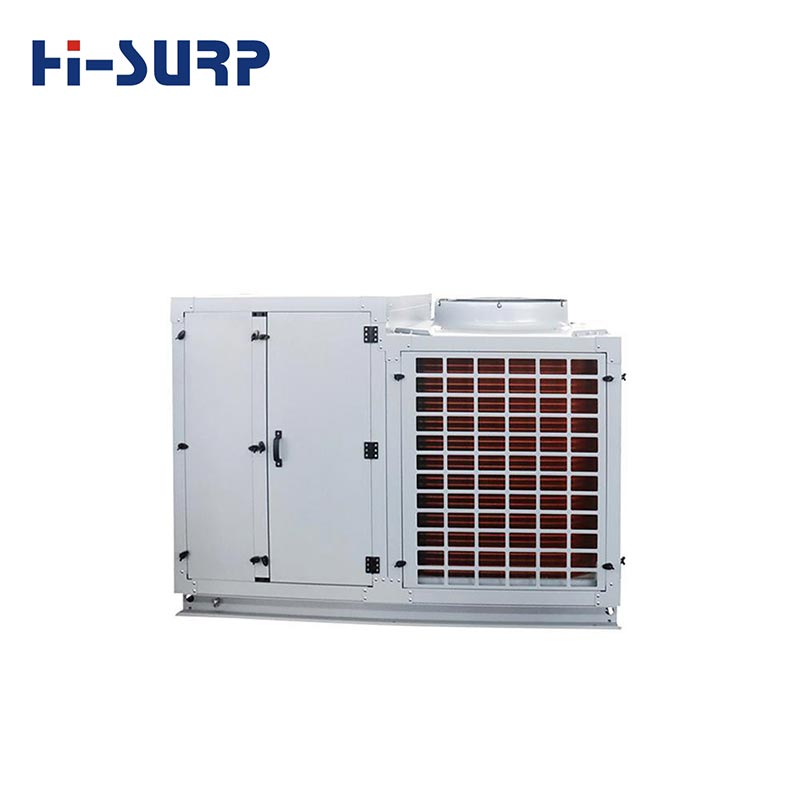
1. What Causes Commercial Air Conditioners to Fail in BESS Containers?
A commercial air conditioner is designed for human comfort. It operates in a temperature range of 18°C to 30°C and a humidity range of 30 to 60 percent. A BESS container operates in a much more demanding environment. The ambient temperature can reach 50°C in summer. The internal heat load is constant, 24 hours per day. The air contains dust, and in coastal installations, salt spray. The table below compares the operating conditions of a commercial air conditioner and an Industrial Air Conditioner in a BESS application.
| Operating parameter | Commercial air conditioner | Industrial Air Conditioner for BESS |
| Ambient temperature range | -5°C to +43°C | -40°C to +55°C |
| Continuous duty cycle | Intermittent (60-70%) | 100% continuous |
| Internal heat load | Variable (occupancy dependent) | Constant (battery charging/discharging) |
| Ingress protection | IPX4 (splash resistant) | IP55 (dust and water jet resistant) |
| Corrosion protection | Standard coil coating | Epoxy-coated coils, stainless hardware |
| Design life | 8 – 10 years | 15 – 20 years |
The most common failure mode is compressor burnout. The compressor in a commercial unit is not designed for 100 percent duty cycle at 50°C ambient. The oil breaks down, the windings overheat, and the compressor seizes. The second most common failure mode is coil corrosion. The aluminum fins on the condenser coil corrode in the presence of salt spray or hydrogen sulfide, which reduces heat transfer and raises the condensing temperature. In our factory, we have analyzed failed commercial units from BESS installations. The average time to failure was 14 months. An Industrial Air Conditioner designed for BESS service lasts 10 to 15 years.
2. What Specifications Matter Most for BESS Thermal Management?
When selecting an Industrial Air Conditioner for a BESS container, five specifications are critical. The first is the cooling capacity at the design ambient temperature. The capacity must be rated at 50°C, not at 35°C. A unit that delivers 10 kW at 35°C may deliver only 7 kW at 50°C. The second is the duty cycle. The unit must be rated for 100 percent continuous operation. The third is the ingress protection rating. IP55 is the minimum for outdoor BESS containers. The fourth is the corrosion protection. The coils must be epoxy-coated or have a similar protective finish. The fifth is the refrigerant. R410A and R32 are common, but R513A and R1234yf are increasingly used for lower global warming potential. The table below shows the specifications of our standard BESS cooling units.
| Specification | Model HC-10B | Model HC-15B | Model HC-20B |
| Cooling capacity at 50°C ambient | 10 kW | 15 kW | 20 kW |
| Cooling capacity at 35°C ambient | 14 kW | 21 kW | 28 kW |
| Duty cycle | 100% | 100% | 100% |
| Ingress protection | IP55 | IP55 | IP55 |
| Refrigerant | R410A | R410A | R513A |
| Operating temperature range | -40°C to +55°C | -40°C to +55°C | -40°C to +55°C |
Ningbo Hicon Industry Co., Ltd. manufactures Industrial Air Conditioner units with these specifications. Our factory tests every unit at 50°C ambient temperature before shipment. We also provide a performance derating curve so that customers can verify the capacity at their specific site conditions.
3. How Does Air Distribution Affect Temperature Uniformity Inside the Container?
Cooling capacity alone does not guarantee temperature uniformity. The air distribution inside the container determines whether the cool air reaches every battery module. A poorly designed air distribution system can create hot spots near the top of the rack and cold spots near the floor. The battery management system will limit the charge rate based on the hottest cell, not the average cell. This means that poor air distribution reduces the usable capacity of the entire container. The table below shows the temperature uniformity achieved with different air distribution designs.
| Air distribution design | Maximum temperature differential | Impact on usable capacity | Recommended application |
| Direct blow (no ducting) | 8 – 10°C | 20 – 25% derating | Not recommended |
| Perforated duct at floor level | 4 – 6°C | 10 – 15% derating | Small containers |
| Perforated duct at top and bottom | 2 – 4°C | 5 – 8% derating | Standard BESS containers |
| Ducted supply with return air plenum | 1 – 2°C | 2 – 3% derating | High-performance containers |
In our factory, we work with BESS integrators to design the air distribution system as part of the thermal management package. We provide computational fluid dynamics (CFD) analysis to verify that the temperature differential across the battery rack is within the specified limit. Our Industrial Air Conditioner units are compatible with standard ducting connections and can be configured for top discharge or bottom discharge.
4. How Should Thermal Management Performance Be Validated Before Deployment?
Validation should include three tests. The first is the capacity test. The unit is operated at 50°C ambient and the cooling capacity is measured. The capacity should be within 5 percent of the rated value. The second is the temperature uniformity test. The unit is operated with a simulated heat load and the temperature is measured at multiple points inside the container. The maximum differential should be less than 5°C. The third is the continuous operation test. The unit is operated for 500 hours without interruption. The compressor current, refrigerant pressure, and supply air temperature are monitored. Any deviation from the baseline indicates a potential problem. In our factory, we perform all three tests on every Industrial Air Conditioner before shipment. We provide the test data with the unit.
Field validation tip: After installation, measure the return air temperature and the supply air temperature at the unit. The difference should match the design value. If the difference is lower than expected, the refrigerant charge may be low or the coil may be dirty. If the difference is higher than expected, the airflow may be restricted.
Frequently Asked Questions About Industrial Air Conditioners for BESS Containers
Summary for BESS Thermal Engineers
The Industrial Air Conditioner is indispensable for BESS container thermal management because commercial units cannot withstand the continuous duty, high ambient temperature, and corrosive environment of a battery storage installation. The key specifications are cooling capacity at 50°C ambient, 100 percent duty cycle, IP55 ingress protection, and epoxy-coated coils. Air distribution design is equally important for temperature uniformity. Validation through capacity, uniformity, and continuous operation tests ensures that the system will perform as designed. Hisurp has been manufacturing Industrial Air Conditioner units for BESS applications for over 10 years and supplies to integrators worldwide.
Ningbo Hicon Industry Co., Ltd. manufactures Industrial Air Conditioner units with 100 percent duty cycle, IP55 protection, and R410A or R513A refrigerant. We provide CFD analysis and performance test data for all of our BESS cooling products.
