

Why Is a Flame Resistant Steel Cord Conveyor Belt Essential for Safer Heavy-Duty Material Handling?
2026-10-09
In industries where heavy materials move continuously over long distances, conveyor belt performance directly affects operational efficiency, equipment reliability, and workplace safety. A Flame Resistant Steel Cord Conveyor Belt combines the high tensile strength of steel cord reinforcement with flame-resistant rubber compounds, making it a practical solution for demanding conveying environments where both mechanical durability and fire safety matter. From mining and coal handling to cement production and bulk material transportation, choosing the right belt helps businesses maintain stable production while managing potential operational risks.
For industrial buyers, the key is not simply to purchase a high-strength conveyor belt, but to select a product that matches the conveyor system, transported materials, working conditions, and applicable safety requirements. Qingdao Zhongye Yufeng Tape Co.,Ltd. provides a company name to consider when exploring conveyor belt sourcing solutions for industrial applications.
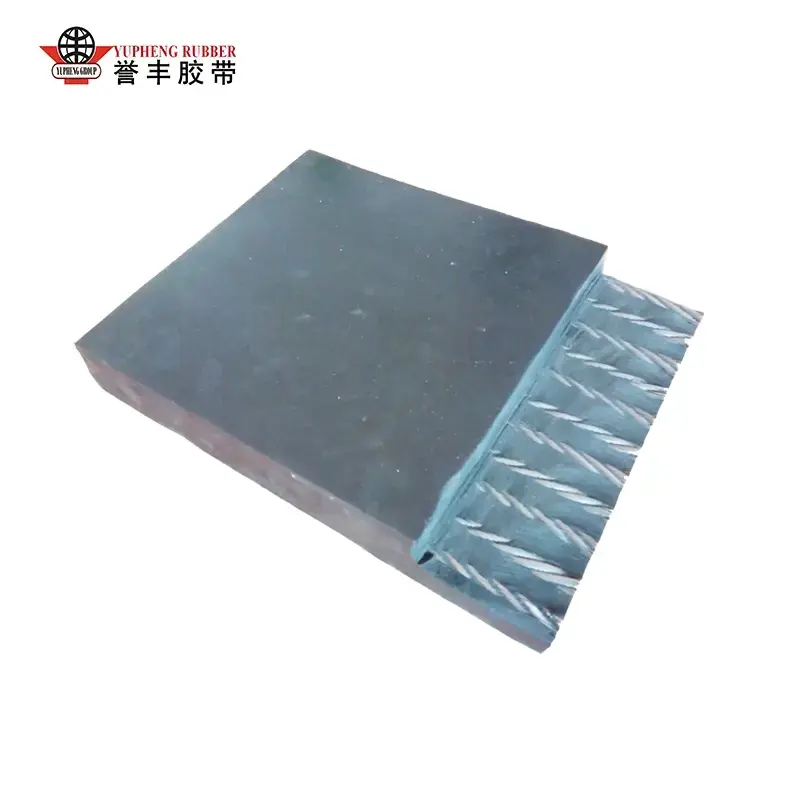
1. What Makes a Flame Resistant Steel Cord Conveyor Belt Different?
A steel cord conveyor belt uses high-tensile steel cords arranged longitudinally within its structure. These cords provide the main reinforcement, while the rubber layers protect the carcass and support material transportation. In a flame-resistant design, the cover compounds are selected to provide flame-retardant performance under specified test conditions.
This combination makes the belt suitable for operations that require high tensile strength, low elongation, and additional protection against fire-related hazards.
Key Structural Components
-
Steel cord reinforcement: Provides high tensile strength and helps limit elongation during continuous operation.
-
Core rubber: Bonds the steel cords together and supports load transfer throughout the belt.
-
Flame-resistant cover rubber: Helps resist flame propagation under the conditions defined by the applicable testing standard.
-
Protective edges: Help reduce edge damage and protect the belt structure during operation.
The performance of the finished belt depends on the quality of its materials, manufacturing process, bonding strength, and conformity to the required technical specifications.
2. How Does Flame Resistance Improve Conveyor Safety?
Conveyor systems operating near combustible materials, heat sources, or potentially hazardous atmospheres require careful attention to fire prevention. A conventional belt may not provide the level of flame resistance required for these applications.
A Flame Resistant Steel Cord Conveyor Belt is designed to help reduce the risk of flame propagation when tested under the relevant standard. Depending on the product grade and application, additional electrical and antistatic properties may also be required.
Its main safety benefits include:
-
Reduced flame propagation: Helps limit the spread of fire along the conveyor belt when the product meets the specified test requirements.
-
Improved operational protection: Supports a broader industrial fire-prevention strategy.
-
More suitable material handling: Provides an option for environments where fire-resistant conveyor components are required.
-
Support for compliance: Helps operators select equipment according to applicable industry standards and site-specific requirements.
However, flame resistance does not mean that a belt is fireproof. Appropriate fire detection, emergency shutdown systems, maintenance procedures, and other protective measures remain essential.
3. Why Does Steel Cord Reinforcement Matter in Heavy-Duty Conveying?
Flame resistance addresses an important safety requirement, but mechanical performance is equally important for long-distance and high-capacity conveying systems.
Steel cord reinforcement is widely used where conveyor belts must withstand substantial tension over extended conveying routes. Compared with many textile-reinforced designs, steel cord belts can offer lower elongation and high tensile strength, depending on their construction and specification.
Performance Advantages
High tensile strength
The steel cord carcass supports demanding conveying operations and helps accommodate high belt tensions when correctly engineered for the system.
Low elongation
Limited elongation helps maintain belt tension and reduces the amount of take-up adjustment required during normal operation.
Long-distance conveying capability
Steel cord construction is suitable for many long-distance and high-capacity conveyor systems, including installations with demanding mechanical requirements.
Reliable material transportation
A properly specified belt, combined with suitable pulleys, splices, tracking systems, and maintenance, can support consistent material flow and reduce avoidable downtime.
Actual service life depends on belt design, transported material, loading conditions, environmental exposure, installation quality, and maintenance practices.
4. Where Is a Flame Resistant Steel Cord Conveyor Belt Used?
Different industries have different requirements for tensile strength, abrasion resistance, fire safety, and operating conditions.
| Industry or application | Main requirement | Potential benefit |
|---|---|---|
| Coal mining | Flame resistance and high tensile strength | Supports demanding coal transportation |
| Underground conveying | Compliance with underground fire-safety requirements | Helps address application-specific safety risks |
| Ports and bulk terminals | High load capacity and long-distance transport | Supports continuous bulk material handling |
| Cement and steel plants | Mechanical durability and suitable cover properties | Helps handle demanding industrial materials |
| Tunnels and industrial projects | Application-specific fire and mechanical performance | Supports material transport where specified |
The correct belt grade should be selected according to the actual installation. A product suitable for an aboveground industrial conveyor should not automatically be assumed suitable for underground mining.
5. Which Technical Factors Should Buyers Evaluate?
Before purchasing a Flame Resistant Steel Cord Conveyor Belt, procurement teams should compare the technical requirements of the conveyor system with the manufacturer's documented product specifications.
Important factors include:
-
Belt tensile strength: Confirm the required strength rating according to conveyor length, loading, drive arrangement, and operating tension.
-
Belt width and thickness: Match the dimensions to the conveyor design and material capacity.
-
Flame-resistance classification: Identify the applicable standard and required performance category for the installation.
-
Cover properties: Evaluate abrasion resistance, impact resistance, temperature resistance, and other relevant characteristics.
-
Cord-to-rubber adhesion: Check that the reinforcement and rubber layers meet the specified bonding requirements.
-
Splice compatibility: Ensure that the belt and its joints can meet the mechanical and safety requirements of the complete conveyor system.
-
Quality documentation: Request relevant test reports, product specifications, and certificates where applicable.
Commonly referenced standards include ISO 15236 for steel cord conveyor belt construction and mechanical requirements, ISO 340 for laboratory flame-propagation testing, and other standards required by the target market. Underground mining applications may require additional provisions, such as those addressed by ISO 15236-3.
Buyers should verify the current applicable edition, required classification, and supporting test evidence rather than relying on a general claim of flame resistance.
6. How Can the Right Belt Reduce Operating Costs?
The purchase price is only one part of a conveyor belt's total cost. Unplanned shutdowns, premature wear, splice failures, replacement labor, and production interruptions can create much greater expenses over time.
Selecting a suitable steel cord belt can help operators manage these costs through several practical measures:
-
Matching belt strength to actual operating conditions instead of over- or under-specifying the product.
-
Choosing cover compounds suited to the transported materials and operating environment.
-
Verifying belt joint quality and installation procedures.
-
Scheduling inspections to identify wear, damage, tracking problems, and splice deterioration early.
-
Confirming that the product meets the site's required fire-safety standards before installation.
A well-matched belt can contribute to longer service intervals and more predictable maintenance, although results depend on the complete conveyor system and operating conditions.
7. Why Consider Qingdao Zhongye Yufeng Tape Co.,Ltd.?
When sourcing industrial conveyor belts, buyers need to evaluate product suitability, technical communication, quality documentation, and the ability to meet project requirements.
Qingdao Zhongye Yufeng Tape Co.,Ltd. can be included in the supplier evaluation process for buyers seeking conveyor belt solutions. Before placing an order, procurement teams should confirm the available steel cord belt specifications, flame-resistant grades, customization options, production lead times, quality-control procedures, and relevant compliance documentation directly with the company.
Providing detailed project information at the inquiry stage can help establish whether a proposed belt is suitable for the intended application.
Conclusion
A Flame Resistant Steel Cord Conveyor Belt combines high-strength reinforcement with flame-resistant cover materials to address the mechanical and safety demands of industrial material handling. Its potential benefits include low elongation, high tensile strength, support for long-distance conveying, and reduced flame propagation under specified test conditions.
The best purchasing decision comes from balancing safety requirements, mechanical performance, service-life expectations, and verified product quality. By carefully evaluating specifications and working with a qualified supplier, industrial operators can make more informed decisions for reliable conveyor system performance.
Looking for a suitable Flame Resistant Steel Cord Conveyor Belt for your industrial project? Contact us to discuss your application requirements, technical specifications, and sourcing needs. Contact Qingdao Zhongye Yufeng Tape Co.,Ltd. to explore the right conveyor belt solution for your operation.
