

Why Is a Worm Gearbox Popular in Robotics and Automation?
2026-09-28
When a robotics engineer specifies a joint transmission, the first priority is usually precision. Harmonic drives and planetary gearboxes offer the lowest backlash and the highest efficiency. Yet a Worm Gearbox continues to appear in thousands of automation designs, from AGV steering axles to camera pan tilt units and heavy duty robot arms. The reason is not that engineers are unaware of the alternatives. It is that the Worm Gearbox solves a specific set of problems that other transmissions cannot solve as elegantly. These problems are self-locking, compactness, and torque density. This guide explains how those characteristics translate into real benefits for robotics and automation systems.
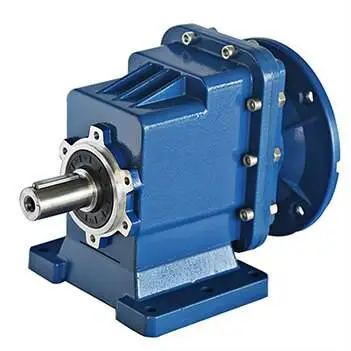
1. What Makes Self-Locking Critical for Robot Safety and Power Efficiency?
Self-locking is the property that prevents the output shaft from being back-driven by an external load. In a Worm Gearbox, self-locking occurs when the lead angle is smaller than the friction angle. This means that when the motor is de-energized, the load cannot drive the gearbox in reverse. For a robot arm, this is a safety feature. If power is lost, the arm will not fall. For an AGV steering system, self-locking prevents the wheels from turning the steering column when the vehicle is pushed. For a camera pan tilt unit, self-locking keeps the camera pointed in the same direction without continuous motor current. The table below compares the self-locking behavior of different transmission types.
| Transmission type | Self-locking | Backdriving torque | Holding current required |
| Worm Gearbox (lead angle < 4°) | Yes | Very high | None |
| Worm Gearbox (lead angle > 10°) | No | Low | Continuous |
| Planetary gearbox | No | Low | Continuous |
| Harmonic drive | No | Moderate | Continuous |
| Cycloidal gearbox | No | Moderate | Continuous |
In our factory, we manufacture Worm Gearbox units with lead angles from 1 degree to 25 degrees. For robotics and automation applications that require self-locking, we recommend a lead angle of 3 degrees or less. Saifu Vietnam Company Limited has tested these gearboxes under load and confirmed that they hold the rated torque without rotation when the motor is de-energized.
2. How Does the Compact Right-Angle Design Save Space in Robot Joints?
The Worm Gearbox is a right-angle transmission. The input shaft and the output shaft are perpendicular. This configuration allows the motor to be mounted along the arm or the base, rather than in line with the joint. In a robotic arm, this saves significant space and reduces the moment of inertia of the arm. A smaller moment of inertia means the motor can accelerate the arm faster with less torque. The table below compares the space envelope of a Worm Gearbox with an inline planetary gearbox for the same torque and ratio.
| Parameter | Worm Gearbox (right angle) | Planetary gearbox (inline) |
| Overall length (mm) | 80 | 140 |
| Diameter or width (mm) | 70 | 70 |
| Volume (cm³) | 392 | 539 |
| Weight (kg) | 1.8 | 2.4 |
| Motor mounting position | Perpendicular to output | Inline with output |
For a 6-axis robot, the space saving at each joint allows the arm to be more slender and more agile. Our factory designs Worm Gearbox units with compact aluminum housings that are optimized for robotic applications. We also offer hollow shaft output options for cable routing through the joint.
3. What Are the Torque and Shock Load Characteristics of a Worm Gearbox in Automation?
The Worm Gearbox has a high torque density because the worm and wheel engage over multiple teeth simultaneously. This distributes the load and allows a compact gearbox to transmit high torque. In automation applications, the gearbox must also handle shock loads from sudden starts and stops. The sliding contact between the worm and the wheel provides a damping effect that absorbs shock better than the rolling contact of a planetary gearbox. This is particularly important in AGV steering and heavy duty robot axes. The table below shows the torque capacity and shock load rating of our standard Worm Gearbox sizes.
| Gearbox size | Rated output torque (Nm) | Peak shock torque (Nm) | Typical robot application |
| 30 | 8 | 20 | Small camera pan tilt |
| 40 | 18 | 45 | AGV steering |
| 50 | 35 | 85 | Light robot arm joint |
| 63 | 70 | 170 | Medium robot arm joint |
| 80 | 140 | 340 | Heavy robot arm joint |
Saifu Vietnam Company Limited manufactures Worm Gearbox units in all of these sizes. We test each gearbox for peak shock torque at 2.5 times the rated torque. The gearbox must survive 1,000 shock cycles without cracking or permanent deformation.
4. What Are the Limitations of Worm Gearboxes in Robotics and When Should Another Transmission Be Used?
Despite their advantages, Worm Gearbox units have limitations. The most significant is efficiency. Because of the sliding contact, the efficiency of a self-locking Worm Gearbox is 30 to 50 percent. This means that a significant portion of the motor power is lost as heat. For high-speed or high-duty-cycle applications, this inefficiency can be a problem. The second limitation is backlash. A standard Worm Gearbox has a backlash of 10 to 30 arc minutes. This is too large for high-precision applications such as semiconductor wafer handling or surgical robots. The third limitation is wear. The sliding contact causes wear on the worm and wheel, which reduces the service life. For applications that require high precision and high efficiency, a harmonic drive or a planetary gearbox with low backlash is a better choice. The table below summarizes the selection criteria.
| Application requirement | Worm Gearbox | Planetary or harmonic |
| Self-locking required | Yes (best choice) | No (requires brake) |
| Space constrained right angle | Yes (best choice) | Limited |
| High efficiency > 90% | No | Yes (best choice) |
| Backlash < 3 arc minutes | No | Yes (best choice) |
| High shock load | Yes (good damping) | Moderate |
| Low cost | Yes (best choice) | No |
In our factory, we advise customers to use a Worm Gearbox when self-locking, right-angle configuration, or cost is the primary requirement. We advise using a planetary or harmonic gearbox when efficiency or precision is the primary requirement. For applications that require both, a hybrid system with a Worm Gearbox for the main axis and a planetary gearbox for the fine axis is often the best solution.
Frequently Asked Questions About Worm Gearboxes in Robotics and Automation
Summary for Robotics and Automation Engineers
The Worm Gearbox is popular in robotics and automation because it provides self-locking, a compact right-angle configuration, and high torque density at a low cost. These characteristics are valuable in AGV steering, camera pan tilt units, and heavy duty robot arms where holding position without power is important and space is limited. The limitations of the Worm Gearbox are its lower efficiency and higher backlash compared to planetary and harmonic drives. For applications that require high precision or high efficiency, a different transmission should be selected. Saifu Vietnam Company Limited has been manufacturing Worm Gearbox units for over 15 years and provides selection support for robotics and automation applications.
Saifu Vietnam Company Limited manufactures Worm Gearbox units with self-locking lead angles, compact aluminum housings, and hollow shaft options. We provide backlash data and back-driving torque data for all of our products.
