

Why Is Coating Pre-treatment Equipment Becoming the Key to High-Performance Industrial Finishing?
2025-11-27
Coating pre-treatment equipment plays a decisive role in ensuring adhesion strength, corrosion resistance, and long-term durability across automotive parts, metal fabrication, home appliances, and engineering machinery. As global manufacturers push toward higher coating standards, the demand for stable, automated, and energy-efficient pre-treatment systems continues to increase.
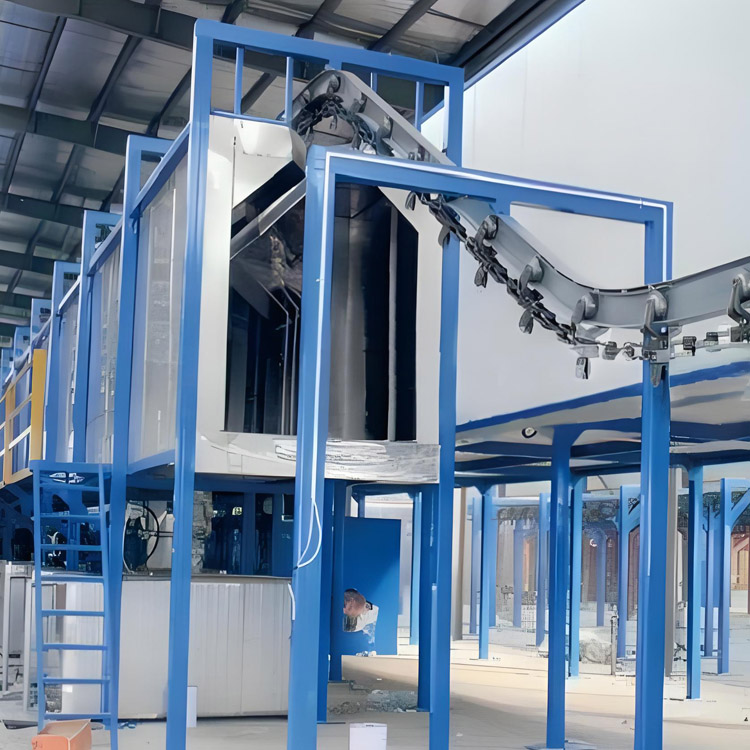
What Defines Advanced Coating Pre-treatment Equipment and How Does It Improve Surface Quality?
Coating pre-treatment equipment refers to a series of automated systems designed to clean, degrease, chemically activate, and rinse metal or non-metal substrates before painting or powder coating. Its goal is to eliminate surface contaminants and optimize coating adhesion, resulting in more uniform and durable finishes. Whether used in high-volume manufacturing or flexible small-batch coating lines, the equipment supports consistent surface preparation to meet strict industrial standards.
Core Functions of Coating Pre-treatment Equipment
-
Removal of rust, grease, dirt, and oxides
-
Activation of the substrate surface for improved coating adhesion
-
Application of phosphating, chromating, zirconium, or nano-ceramic conversion layers
-
Optimizing preparation for powder coating, electrophoretic coating, or liquid paint
-
Ensuring long-term corrosion resistance and mechanical durability
Key Technical Parameters
| Parameter Category | Typical Specifications |
|---|---|
| Material Compatibility | Steel, aluminum, galvanized steel, copper, magnesium, mixed-metal assemblies |
| Process Stages | 3–10 stage options (degreasing, rinsing, phosphating, activation, passivation) |
| Heating Methods | Electric heating, gas heating, steam heating |
| Operating Temperature | 25°C – 80°C depending on chemical type |
| Spray Pressure Range | 0.3 – 1.2 MPa for high-efficiency cleaning |
| Tank Material | SUS304 / SUS316 stainless steel, PP/PE for acidic alkali resistance |
| Control System | PLC + HMI touchscreen automation, temperature and flow monitoring |
| Throughput Capacity | Customizable from 300 to 3000+ units/hour |
| Energy-saving Features | Heat recovery, chemical recycling, smart flow control |
These parameters help ensure production stability, chemical efficiency, and long-term system durability. By optimizing pre-treatment, manufacturers can reduce re-coating, paint waste, and product defects, leading to more competitive production costs and better visual appearance.
Why Is a High-Efficiency Pre-treatment System Critical for Industrial Coating Performance?
The quality of any coating depends heavily on the condition of the surface. Without proper pre-treatment, even the best coating materials cannot perform reliably. Industrial studies consistently show that over 70% of coating failures originate from insufficient pre-treatment, not from the paint itself. This highlights the importance of choosing stable, carefully engineered equipment.
Reasons Pre-treatment Is Essential
Improved Adhesion
Chemical conversion layers create microscopic bonding structures that allow paint or powder to firmly attach to the substrate.
Corrosion Resistance
Phosphate, zirconium, and nano-ceramic layers act as protective barriers against moisture, oxygen, salts, and chemical exposure.
Surface Cleanliness
Strong degreasing and rinsing remove contaminants that would otherwise lead to blistering, peeling, or discoloration.
Enhanced Coating Uniformity
A properly treated surface reduces coating thickness variation and ensures better color uniformity.
Extended Product Lifespan
Industrial parts treated with high-precision systems show significantly lower rates of corrosion and mechanical damage.
Common Industries That Benefit Most
-
Automotive body and components
-
Construction hardware
-
Household appliances
-
Agricultural machinery
-
Industrial metal fabrication
-
Furniture & aluminum profiles
-
Engineering and offshore equipment
These industries require consistent coating reliability, so pre-treatment quality directly influences brand reputation, product certification, and customer loyalty.
How Does Coating Pre-treatment Equipment Operate and What Process Steps Ensure Maximum Efficiency?
A well-designed pre-treatment system incorporates a sequence of automated processes to ensure stable results. Depending on production scale and coating method, equipment may use spray tunnels, immersion tanks, or hybrid designs.
Typical Process Flow
-
Degreasing
Removes oil, fingerprints, machining fluids, and dust using alkaline or neutral cleaners. -
Rinsing (Stage 1)
Prepares the substrate for chemical activation; reduces chemical carryover. -
Surface Conditioning / Activation
Ensures fine, consistent crystal structure for optimal conversion coating. -
Phosphating / Zirconium / Nano-Ceramic Conversion
Forms a durable chemical layer that enhances corrosion resistance and adhesion. -
Rinsing (Stage 2)
Removes residual phosphate or chemical particles. -
Demineralized Water Rinse (Optional)
Eliminates salts that may cause surface defects after coating. -
Passivation
Provides additional corrosion resistance and improves coating stability. -
Drying System
Dehydrates the substrate to prepare for powder or liquid coating.
Each stage is controlled through temperature management, chemical concentration sensors, automatic dosing, pressure control, and fluid recycling. This ensures minimal chemical waste, low operating cost, and consistent surface quality.
Advanced Features in Modern Systems
-
PLC intelligent control for stable automation
-
Real-time temperature and pH monitoring
-
Multi-angle spray nozzles for full coverage
-
Automated dosing to reduce chemical usage
-
Heat recovery systems for energy-saving operations
-
Stainless steel tanks for extended service life
-
Modular design for easy maintenance
These innovations allow the equipment to operate continuously with minimal human intervention, supporting high-volume manufacturing lines.
What Future Trends Will Shape Coating Pre-treatment Equipment and Why Are They Important?
As global industries move toward advanced manufacturing and environmental compliance, several trends drive the evolution of pre-treatment technology.
Eco-Friendly Chemical Processes
-
Transition from heavy-metal phosphating to nano-ceramic and zirconium technology
-
Reduced sludge generation and easier wastewater management
Energy Efficiency and Cost Reduction
-
Heat recovery systems reduce fuel consumption
-
Smart pumps and variable-frequency drives optimize flow and pressure
Automation and Digital Monitoring
-
Real-time production data monitoring
-
Predictive maintenance to reduce downtime
-
Remote diagnosis and line performance analysis
Flexible, Modular Equipment Design
-
Quick expansion for new production lines
-
Adaptation to different substrates (steel, aluminum, mixed metals)
-
Compatibility with powder, liquid, and electrophoretic coatings
Higher Standards for Corrosion Performance
Industries such as automotive and aerospace push for higher corrosion test cycles, requiring improved conversion coatings and ultra-clean processes.
These trends highlight the importance of selecting equipment capable of long-term adaptability, low environmental impact, and stable performance across diverse manufacturing conditions.
Frequently Asked Questions (FAQ)
Q1: What is the difference between spray and immersion pre-treatment systems?
A: Spray systems are ideal for high-speed continuous production, offering strong cleaning and shorter cycle times. Immersion systems provide deeper penetration into complex-shaped parts, ensuring full coverage for cavities and angles. The choice depends on production volume, part geometry, and required surface quality.
Q2: How often should chemicals be replaced in a pre-treatment system?
A: Chemical replacement frequency depends on production volume, contamination level, and system configuration. Most systems use automatic dosing to maintain chemical balance, reducing manual replacement. However, regular testing of pH, concentration, and conductivity—typically weekly to monthly—ensures optimal performance and prevents surface defects.
Why Choose Advanced Solutions and How to Take the Next Step?
Coating pre-treatment equipment is the foundation of high-quality industrial finishing. Its role in surface cleaning, chemical activation, adhesion improvement, and corrosion protection makes it indispensable for modern manufacturing. As industries face higher environmental and performance standards, advanced pre-treatment systems provide cost-effective, energy-saving, and future-proof solutions.
For manufacturers seeking reliable performance, stable production, and long-term durability, solutions engineered by Qingguo Intelligent offer precision, efficiency, and customizable configurations suitable for various industrial environments. The company’s systems integrate automation, energy savings, eco-friendly chemistry, and robust engineering to support large-scale and flexible production requirements.
To explore customized coating pre-treatment solutions tailored to your industry, contact us today and discuss how optimized surface preparation can elevate your coating performance and industrial competitiveness.
