

Why Is Material Compatibility Important When Selecting Cyanoacrylate Adhesive for Leather Goods?
2026-11-18
Why Does Material Compatibility Matter in Leather Goods Manufacturing?
Material compatibility is a key consideration when selecting Cyanoacrylate Adhesive for leather goods because leather products rarely consist of a single material. A handbag, wallet, belt or pair of shoes may combine genuine leather, PU leather, PVC-coated fabric, rubber, metal fittings and textile linings. Each substrate has a different surface structure, flexibility and chemical composition. An adhesive that bonds one component successfully may cause staining, poor adhesion or surface damage on another. For manufacturers, choosing the right formulation is therefore about more than achieving a quick initial bond. The adhesive must suit the materials, joint design, production process and appearance requirements of the finished product.
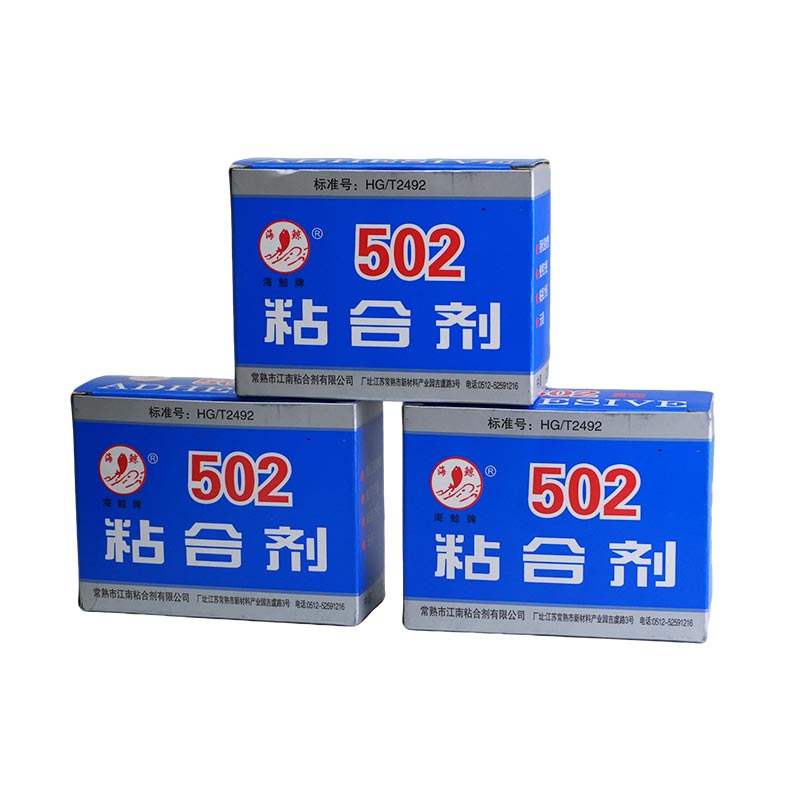
Changshu Jiangnan Adhesive Co., Ltd. develops and supplies adhesive products across several industrial categories, including cyanoacrylate adhesives and instant bonding products. Its product range includes 117 Cyanoacrylate Glue, 101 Instant Adhesive and 502 Super Glue. These product names provide a starting point for technical selection, but buyers should confirm the exact formulation and application suitability of each grade before production. Our material assessment should begin with the actual leather type and the second substrate, rather than relying on a general claim that an adhesive works with leather.
In leathercraft and commercial manufacturing, a bond can fail for several reasons. The adhesive may not wet the surface properly, the leather finish may interfere with contact, or the substrate may contain plasticisers, oils, waxes or release agents. Even when the initial joint appears secure, differences in flexibility can create stress as the finished product is bent, folded or handled. A suitable selection process considers these factors before an adhesive is introduced into a production line.
Material compatibility also affects the appearance of premium leather products. Excess adhesive can leave a visible mark, penetrate a porous surface or create a hard spot on a flexible component. On dark or coated leather, whitening or surface discolouration may be particularly noticeable. These defects can lead to rework, rejected products and unnecessary material waste. A controlled application method and a representative sample test help manufacturers identify such problems before committing to larger production quantities.
How Do Different Leather Types and Surface Treatments Affect Adhesion?
Natural leather is a variable substrate. Its surface and internal structure depend on the animal hide, tanning process, finishing system, dye and subsequent treatment. Full-grain, corrected-grain, suede and split leather do not present identical bonding conditions. A smooth coated surface may have lower absorbency than an unfinished leather surface, while suede and other porous materials can draw liquid adhesive into the fibres. Buyers should therefore identify the leather construction and finish before choosing a grade.
For genuine leather, the main concern is balancing adhesion with appearance. A low-viscosity instant adhesive may spread quickly, but excessive penetration can create a hard or discoloured area. Applying too much product can also result in adhesive squeeze-out around a seam or fitting. A controlled, minimal application may be appropriate for small rigid joints, but broad flexible seams often need a different adhesive technology. Our testing should check not only whether the joint holds, but also whether the leather retains its intended look and feel.
PU leather is commonly used in bags, footwear, accessories and upholstery because it can provide a consistent decorative surface. However, PU leather is a composite construction rather than one uniform material. It may consist of a textile backing, a polymer layer and a surface finish. Adhesion can vary according to the formulation, coating thickness and surface treatment. A bond that works on one PU material should not automatically be assumed to work on another supplier's material.
PVC-coated leather substitutes and synthetic leather fabrics require similar care. Plasticisers and surface additives can influence adhesive wetting and long-term bond stability. Some surfaces may be difficult to bond without suitable preparation or a compatible formulation. Before using an instant adhesive on PVC, buyers should confirm the specific PVC grade and test whether the adhesive causes softening, surface marking or other unwanted changes. Compatibility must be established on the actual material, not inferred from the generic label PVC.
Other components used in leather goods also deserve attention:
- Rubber: Rubber soles, grips and flexible trims can have different compositions. Natural rubber, nitrile rubber and other elastomers may respond differently to adhesive chemistry.
- Metal fittings: Buckles, rivets, decorative plates and small hardware parts may provide suitable rigid bonding surfaces, but oil, oxidation and plating can affect adhesion.
- Textile linings: Woven and non-woven fabrics vary in absorbency, fibre type and surface treatment. Excess adhesive may penetrate through the fabric and become visible.
- Plastic accessories: ABS, acrylic, polycarbonate, PVC, PP and PE have different surface characteristics. Low-surface-energy plastics such as PP and PE can be especially challenging.
- Foam and cushioning: Porous or soft materials may absorb adhesive and can be damaged by unsuitable formulations or excessive application.
These differences explain why a material compatibility chart should be treated as a screening tool rather than a final guarantee. The same product can behave differently on two surfaces that appear similar. Our evaluation should include the exact material grade, surface finish, cleaning method and joint geometry used in the intended product.
What Product Characteristics Should Buyers Evaluate Before Selecting an Adhesive?
Cyanoacrylate products are generally designed for rapid bonding of close-fitting surfaces. They are often considered for small components, precise assembly points and repairs where fast handling is valuable. However, the chemistry is not automatically suitable for every leather construction. A cured cyanoacrylate bond is comparatively rigid, which can be a limitation when two leather parts must bend repeatedly or when a large flexible seam needs to remain soft. Buyers should evaluate the intended joint and required movement before selecting a grade.
The available product information from Changshu Jiangnan Adhesive Co., Ltd. identifies several instant adhesive products and a broader cyanoacrylate category. The company also describes technical support and customised product development. However, publicly available information does not provide a complete, model-specific technical data sheet for every listed cyanoacrylate grade. The following table separates confirmed product-range information from the parameters that buyers should request before approving a leather application.
| Evaluation item | Available product information | What buyers should confirm | Why it matters for leather goods |
| Product category | Cyanoacrylate Adhesive and instant adhesive products | Exact product model and chemical formulation | Different formulations may behave differently on coated and porous surfaces |
| Listed product range | 117 Cyanoacrylate Glue, 101 Instant Adhesive and 502 Super Glue | Recommended substrate combinations for each model | Product names alone do not establish suitability for a specific leather finish |
| Viscosity | Customisation is described as available for selected adhesive products | Actual viscosity value in mPa·s or cP for the selected grade | Controls flow, penetration, positioning and application accuracy |
| Fixture time | Product-specific curing speed should be confirmed | Fixture time on the actual leather and second substrate | Determines handling time and production-line cycle planning |
| Full cure | Requires confirmation from the selected product's technical data sheet | Time to reach the specified final bond performance | Helps determine when the finished component can be handled or tested |
| Bond strength | No universal leather-specific value is published for all listed grades | Test method, substrate combination and measured result | Results depend on leather finish, joint design and test conditions |
| Appearance | Must be verified for the selected formulation | Colour, whitening, staining and visible adhesive residue | Appearance defects can affect finished leather goods |
| Packaging | Packaging customisation can be discussed | Container size, dispensing method and storage instructions | Supports accurate dosing and practical factory handling |
Viscosity is one of the first parameters to review. A lower-viscosity grade can flow into narrow gaps and reach small contact areas, but it may also spread beyond the intended bonding line or penetrate absorbent leather. A higher-viscosity formulation may provide better control on vertical or uneven surfaces, although it still needs to wet the substrates properly. The ideal viscosity depends on the component geometry, gap size, application equipment and operator technique.
Fixture time and full cure should not be treated as the same measurement. Fixture time describes the point at which a joint can generally resist a specified level of handling, while full cure refers to the later stage when the adhesive has developed its intended performance under the stated conditions. Temperature, humidity, surface condition and bond-line thickness can influence curing behaviour. Buyers should obtain the relevant technical data sheet and test the stated conditions on their actual materials before setting production targets.
Bond strength figures also need context. A shear-strength result obtained on a rigid metal or plywood test specimen cannot be directly transferred to flexible leather. The test substrate, surface preparation, adhesive quantity, bond area, conditioning period and test method all influence the result. For leather goods, the evaluation should reflect the actual joint, such as a leather-to-metal fitting, leather-to-plastic trim or a small decorative component. A numerical result without its test method is not enough to establish application suitability.
How Should Manufacturers Test Adhesive Compatibility on Actual Leather Components?
A controlled trial is the most reliable way to assess a proposed adhesive before mass production. The test should use production-representative materials rather than generic leather samples. This includes the same leather supplier, colour, finish, backing fabric, plastic component and metal treatment expected in the finished product. Our sample evaluation should also reproduce the intended cleaning method, application equipment, adhesive quantity, assembly pressure and curing environment.
A practical compatibility test can be organised into several stages:
- Identify each substrate. Record whether the leather is genuine, PU-coated, PVC-based or textile-backed, and identify the second component in the joint.
- Inspect the surface. Check for dust, oil, wax, moisture, release agents and loose coatings that may interfere with bonding.
- Prepare representative samples. Use production materials with the same surface finish and dimensions as the intended components.
- Apply a controlled amount. Follow the supplier's instructions for adhesive quantity, placement and assembly time.
- Observe initial behaviour. Look for spreading, penetration, whitening, discolouration, surface softening and squeeze-out.
- Allow the specified cure period. Do not judge final performance only from the initial fixture.
- Test the joint. Evaluate the appropriate peel, shear or tensile behaviour according to the joint design and relevant test procedure.
- Check after conditioning. Where relevant, assess the bond after exposure to expected temperature, humidity, flexing or handling conditions.
Visual inspection is especially important for leather products. A joint may have adequate mechanical strength but still be unacceptable if the adhesive leaves a shiny patch, a pale residue or a hard edge. Dark leather, light-coloured leather and suede can show different types of surface defects. Manufacturers should inspect both the bonding area and the visible face after the adhesive has cured. If the component will be folded or flexed in normal use, the test should include the relevant movement rather than relying on a static pull test alone.
Joint design also matters. Cyanoacrylate adhesives generally perform best when the parts fit closely and the bond line is controlled. Large gaps, uneven edges and flexible joints may reduce the suitability of a rigid instant adhesive. Where the leather must retain substantial flexibility, a flexible polyurethane, contact adhesive or another leather-specific bonding system may be more appropriate. The decision should be based on the required bond behaviour, not simply on which adhesive cures fastest.
Changshu Jiangnan Adhesive Co., Ltd. lists technical support, sample testing and customised adhesive solutions among its services. Buyers can use this support to discuss substrate combinations and request a suitable product recommendation. Our application review should include photographs or samples of the actual materials, the required production speed, the expected service conditions and the type of joint being assembled. This information makes technical discussions more useful than a request based only on the word leather.
When Is Cyanoacrylate Suitable, and When Should Buyers Consider Another Adhesive?
Cyanoacrylate can be useful for small, precise bonding tasks in leather goods production, particularly where a fast fixture and a relatively rigid joint are acceptable. Examples may include attaching small decorative elements, positioning rigid accessories, securing selected trim components or bonding leather to a compatible hard substrate. The final suitability depends on the exact formulation and the surface condition of both parts.
It is less suitable as a universal solution for large flexible seams, broad leather laminations or joints that undergo continuous bending. A rigid cured bond may concentrate stress at the edge of the adhesive line when the leather flexes. In such applications, a flexible adhesive system may distribute movement more effectively. Footwear construction, for example, can involve different bonding requirements for uppers, insoles, midsoles and outsoles. A single instant adhesive should not be assumed to cover all these operations.
Buyers can use the following application guide as an initial selection reference:
- Small rigid fittings: Consider a suitable instant adhesive after confirming the compatibility of the leather finish and fitting material.
- Leather-to-metal details: Check metal cleanliness, plating, surface oxidation and the required joint strength.
- Leather-to-plastic components: Identify the exact plastic type and verify whether surface preparation or a different adhesive chemistry is needed.
- Flexible leather seams: Consider a flexible contact or polyurethane adhesive where the joint must move repeatedly.
- Large-area leather bonding: Evaluate an adhesive designed for coating, lamination or contact bonding rather than assuming a fast-curing adhesive is appropriate.
- Decorative surface attachment: Test for staining, squeeze-out and visible residue before approving the process.
Manufacturers should also consider the working environment. Cyanoacrylate adhesives are moisture-reactive and can bond skin rapidly. Appropriate ventilation, protective equipment, careful dispensing and safe storage are important in production areas. Operators should follow the product safety data sheet and the supplier's handling instructions. Adhesive should be kept away from eyes and skin, and spills should be managed using the procedures specified for the particular formulation.
For procurement teams, the final selection should balance application performance, production speed, appearance, operator safety and total process cost. A product that reduces assembly time may still create additional costs if it causes staining or requires extensive rework. Conversely, a slower adhesive may be more economical when it produces a more reliable flexible joint. Our selection process should therefore compare the full manufacturing result rather than focusing on fixture time or unit price alone.
Conclusion: How Can Buyers Select the Right Adhesive for Leather Goods?
Material compatibility determines whether an adhesive can create a reliable joint without damaging the leather surface or compromising the finished product. Genuine leather, PU, PVC, rubber, textiles and metal fittings each present different bonding conditions. Buyers should identify the exact substrates, review viscosity and curing requirements, assess joint flexibility and test the finished bond under realistic production conditions. Cyanoacrylate Adhesive can be useful for selected small and rigid bonding applications, but it should not be treated as a universal solution for every leather assembly process.
Changshu Jiangnan Adhesive Co., Ltd. supplies a range of adhesive products, including cyanoacrylate and instant adhesive grades, with technical consultation and sample evaluation available for buyer enquiries. Contact the team with your leather type, surface finish, second substrate, joint design and production requirements to discuss a suitable formulation. Requesting a sample and confirming the relevant technical data before bulk purchasing can help your production team reduce compatibility risks and select an adhesive that meets the requirements of the finished leather goods.
Frequently Asked Questions
Can cyanoacrylate adhesive bond genuine leather and PU leather?
It can bond certain genuine leather and PU leather combinations, but suitability depends on the leather finish, coating, absorbency and the adhesive formulation. Natural leather may absorb liquid adhesive, while PU surfaces may contain coatings or additives that affect adhesion. Buyers should test the exact material and inspect for staining, whitening, surface damage and bond strength after curing. A successful test on one leather grade should not be assumed to apply to every leather supplier or finish.
Why can an instant adhesive leave white marks or hard spots on leather?
White residue can occur when cyanoacrylate vapour or excess adhesive reacts under certain environmental and application conditions. Hard spots may result when too much adhesive penetrates a porous leather surface and cures within the material. Applying a controlled quantity, improving dispensing accuracy and testing the formulation on a hidden area can help identify these risks. Buyers should also review humidity, ventilation and the supplier's recommended application procedure before introducing the adhesive into production.
What information should manufacturers provide when requesting a leather bonding adhesive sample?
Manufacturers should identify the leather type, surface finish, colour, backing material and second substrate, such as metal, rubber or plastic. They should also describe the joint dimensions, required flexibility, application method, production speed and expected service conditions. Photos or physical samples can help the supplier assess the bonding challenge. Buyers should request the relevant technical data sheet and safety data sheet, then evaluate the sample using representative production materials before approving a bulk order.
