

Why Is MC4 Connector Branch Becoming the Preferred Solution for High-Efficiency Solar Array Expansion?
2025-12-01
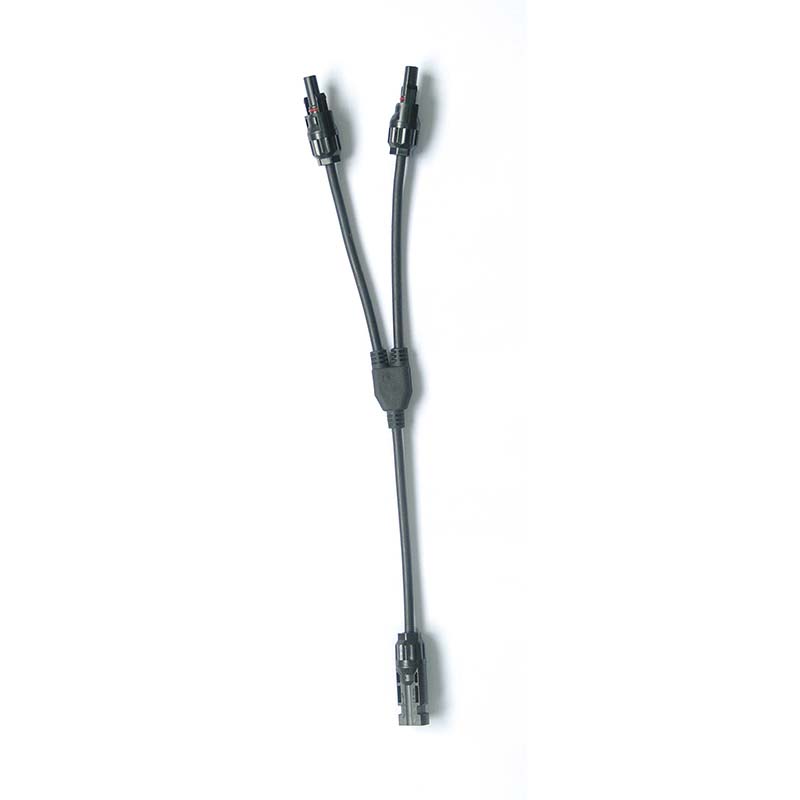
As global demand for solar energy continues to rise, the need for reliable, scalable, and safely engineered wiring solutions has become a central topic in photovoltaic system design. MC4 Connector Branch—also known as MC4 Y-branch or MC4 branch connector—plays a crucial role in connecting multiple solar panels in parallel, enabling higher current output without compromising system stability.
A complete specification list is included to support engineering-level evaluations, followed by a FAQ section crafted for real-world installation questions. The discussion concludes with a note about Ningbo Dsola New Energy Technical Co., Ltd., a trusted provider of high-performance solar connection solutions.
What Defines the Performance of an MC4 Connector Branch?
The MC4 Connector Branch is designed to optimize the interconnection of multiple photovoltaic modules. It allows two or more panel outputs to merge into a single circuit path, making the overall system more flexible and easier to scale. Reliable connectors directly impact system stability, voltage consistency, and long-term safety—all essential in solar engineering. Below is a detailed list of key parameters.
Technical Specifications of MC4 Connector Branch
| Parameter | Specification |
|---|---|
| Rated Current | 30A–50A (depending on model) |
| Rated Voltage | Up to DC 1000V / 1500V |
| Contact Material | Tinned copper |
| Insulation Material | PPO, UV-resistant, flame-retardant |
| Waterproof Rating | IP67 or higher |
| Temperature Range | –40°C to +85°C |
| Connection Type | Crimp connection |
| Compatibility | All MC4-type solar connectors |
| Locking Mechanism | Snap-in safety lock with anti-disconnection design |
| Resistance | ≦0.5mΩ (low power loss) |
| Cable Size Supported | 2.5mm² / 4mm² / 6mm² PV solar cable |
These specifications reflect engineering priorities—high current tolerance, stable conductivity, weather resistance, and secure locking mechanisms that prevent accidental disconnects. As a result, MC4 Connector Branch offers long-term reliability even under intense solar radiation, dust, moisture, and thermal cycling.
Why Does MC4 Connector Branch Enhance Solar System Efficiency and Safety?
The rising adoption of MC4 Connector Branches is tied directly to system optimization. They support professional installers, system designers, and end users seeking more output with less complexity.
Key Advantages
A. Enables Efficient Parallel Connections
By splitting or combining PV strings safely, MC4 branches expand current capacity without changing voltage levels. This allows designers to fine-tune system performance, especially when modules of the same rating need to be grouped into larger arrays.
B. Improves System Scalability
For installations requiring incremental expansion, MC4 Connector Branches allow new modules to be integrated seamlessly without rewiring the entire system.
C. Enhances Electrical Stability
The low contact resistance and high-quality copper contacts ensure minimal power loss, preserving maximum energy conversion efficiency.
D. Provides Outdoor-Grade Protection
The IP67 rating ensures that connectors withstand rain, dust, and humidity. The UV-resistant PPO casing prevents degradation under long-term sun exposure.
E. Ensures Safe and Firm Locking
Accidental disconnection is a serious risk in high-voltage PV systems. MC4 Connector Branches use a snap-in lock structure that requires a special tool for release, ensuring reliable operation throughout the system’s lifetime.
F. Simplifies Installation and Maintenance
Installers benefit from plug-and-play simplicity, standardized dimensions, and universal compatibility across major solar panel brands.
When considering long-term solar array performance, the MC4 Connector Branch stands out as a necessary component rather than an optional accessory.
How Does MC4 Connector Branch Operate in Real-World Installation Scenarios?
Understanding operational workflow helps installers reduce wiring mistakes and ensures full compliance with electrical safety standards.
A. Parallel Connection Workflow
The most common application involves merging two identical solar panels into a single string.
Steps typically include:
-
Connecting the positive outputs of two modules to the positive branch inputs
-
Connecting the negative outputs to the negative branch inputs
-
Ensuring tight locking engagement
-
Checking polarity orientation before energizing the system
This results in doubled current output with stable voltage.
B. Voltage and Current Considerations
Solar engineers must evaluate system parameters before installation:
-
Ensure total current does not exceed branch rating
-
Maintain identical panel voltage ratings
-
Avoid mixing different module wattages or cell types
-
Ensure cable gauge matches branch connector requirements
C. Weatherproofing and Mechanical Stability
Even though MC4 Connector Branch is inherently weatherproof, best practices include:
-
Avoiding direct ground contact
-
Keeping cables neatly routed to prevent strain
-
Using UV-resistant cable ties
-
Inspecting connections annually
D. Maintenance and Troubleshooting
Common issues that technicians check:
-
Loose connections caused by improper locking
-
Corrosion from use of incompatible cables
-
Overheating from exceeding current limits
-
Mismatched parallel strings causing imbalance
Following installation standards ensures safe and efficient operation for 25 years or more.
MC4 Connector Branch – Common Questions Answered
Q1: Can MC4 Connector Branch be used to connect solar panels with different wattages?
A: It is not recommended. The MC4 Connector Branch is designed for parallel connections of identical panels with matching voltage and similar current ratings. Mixing wattages can lead to uneven current flow, power loss, and potential overheating. System designers should maintain uniform configuration for optimal safety and output performance.
Q2: Is MC4 Connector Branch suitable for long outdoor exposure?
A: Yes. MC4 Connector Branches are built with PPO insulation, tinned copper contacts, and IP67 waterproof sealing. They withstand UV exposure, rain, dust, and large temperature fluctuations. When installed correctly, they deliver safe operation for decades without compromised insulation or conductivity.
Where Is MC4 Connector Technology Headed?
As solar adoption accelerates, connector innovations continue to evolve. Several trends shape the future of MC4 Connector Branch design.
A. Higher Voltage and Current Ratings
The industry is moving toward 1500V systems for utility-scale installations. Future connectors will handle higher electrical loads with enhanced thermal tolerance and optimized contact geometry.
B. Smarter Monitoring Capabilities
Integration of embedded sensors to measure temperature or current flow is becoming an area of active development. This enhances preventive maintenance and system diagnostics.
C. Improved Material Science
Next-generation compounds will offer better UV resistance, more stable performance in extreme climates, and reduced aging effects.
D. Faster and Fail-Safe Locking Mechanisms
Manufacturers are working on ergonomic designs that enhance installer efficiency while increasing mechanical strength and anti-tamper functionality.
E. Miniaturization with Higher Performance
As solar modules become more compact and efficient, connectors will follow with smaller footprints but higher electrical density.
The MC4 Connector Branch will remain a key component in future energy infrastructure, evolving alongside solar technology trends.
The Value of MC4 Connector Branch in Solar Energy Systems
The MC4 Connector Branch is more than a simple accessory; it is a core element that safeguards the electrical integrity of modern solar installations. Its role in enabling efficient parallel connections, ensuring system safety, and supporting scalable solar design makes it indispensable for residential, commercial, and utility applications. With strong electrical performance, robust materials, and universal compatibility, it provides long-term benefits in energy production stability and maintenance ease.
Ningbo Dsola New Energy Technical Co., Ltd. continues to advance high-quality MC4 Connector Branch products engineered for durability, safety, and global photovoltaic standards. For project consultation, pricing, or technical specifications, contact us to receive professional guidance tailored to your solar installation needs.
