

Why Is My Vent Window Hinge Squeaking Even After Greasing It
2026-07-20
Few automotive annoyances are as persistent as that high-pitched squeak coming from your side window—especially when you have already applied grease. If you own an older truck, SUV, or classic car, the vent window hinge is often the culprit. Many drivers assume that any lubricant will silence the noise, but the reality is far more technical. At S-SEN, we have engineered precision vent window hinge solutions for over a decade, and we know exactly why your repair failed. The short answer: friction is only one piece of the puzzle. Metal fatigue, misalignment, and incompatible lubricants are equally likely to produce that irritating sound—even on a freshly greased assembly.
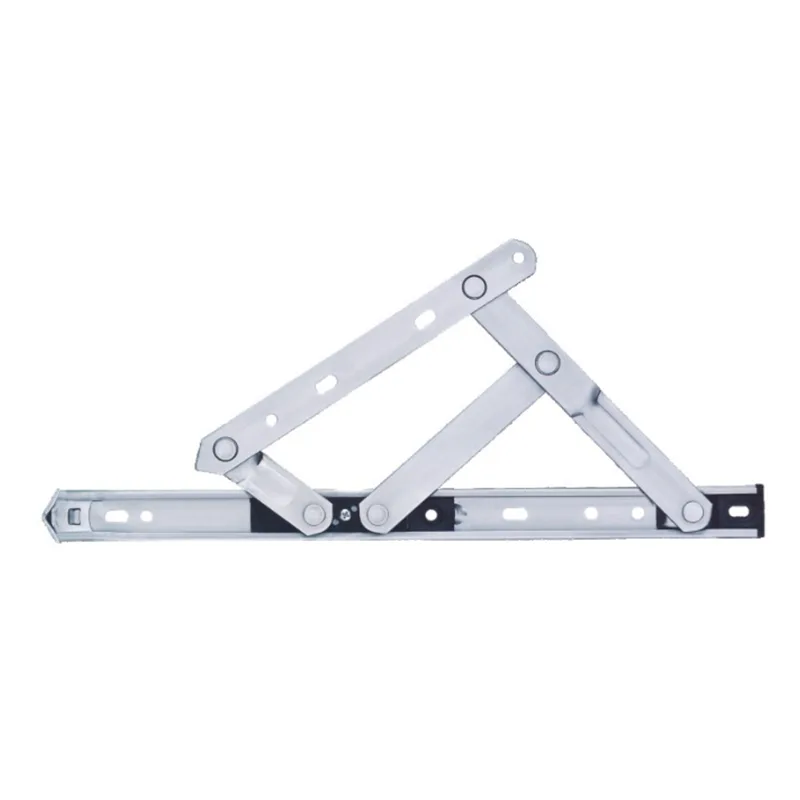
The Real Reasons Grease Fails to Stop the Squeak
1. Contaminated or Degraded Grease
Not all greases are created equal. If you used a general-purpose lithium soap grease, it may have already broken down under temperature swings. Inside a vent window hinge, temperatures can exceed 150°F on a sunny day. When grease separates, its base oil evaporates, leaving behind a thick, sticky residue that actually increases friction. S-SEN recommends high-temperature silicone-based or PTFE greases specifically formulated for automotive pivot points.
2. Worn Bearing Surfaces
A vent window hinge relies on a small pivot pin and a stamped metal bushing. Over 50,000 cycles, these surfaces develop microscopic galling—irregular wear peaks that grind against each other. Grease fills valleys but cannot eliminate peaks. Once those peaks flatten through wear, the clearance increases, allowing the hinge to shift laterally. That lateral movement produces a clicking or squeaking sound that no lubricant can mask.
3. Misalignment from Frame Distortion
If your door has been dented or your window frame has sagged, the vent window hinge no longer operates in its designed plane. The pivot pin binds against one side of the bushing, concentrating load on a single point. Grease is squeezed out from that high-pressure zone within seconds, and the metal-on-metal contact resumes immediately.
4. Rust Under the Grease Layer
Surface rust is often invisible because it lies beneath the grease film. As you cycle the window, the rust particles act as an abrasive compound, grinding the bushing and pin simultaneously. This creates a "squeak-squeak-grind" pattern that worsens over time. A simple regrease without rust removal will never solve this.
Diagnostic Comparison: Grease vs. Hardware Failure
| Symptom | Grease-Related Issue | Hardware-Related Issue |
|---|---|---|
| Sound type | High-pitched, intermittent | Low-pitched, rhythmic click |
| Sound frequency | Only during movement | Constant during movement and at rest |
| Temperature effect | Worse when hot (grease thins) | Worse when cold (metal contracts) |
| Temporary fix duration | 1–2 days | 0–1 day (no improvement) |
| Recommended S-SEN solution | Clean + reapply with PTFE grease | Replace with stainless-steel pivot kit |
Step-by-Step Corrective Procedure
-
Remove the hinge assembly – Do not lubricate in place. You need full access.
-
Degrease thoroughly – Use brake cleaner or acetone to strip all old residue.
-
Inspect pivot pin for scoring – If you see grooves or discoloration, replace the entire vent window hinge.
-
Check bushing ovality – Insert a feeler gauge; if clearance exceeds 0.5 mm, the bushing is worn.
-
Reassemble with anti-seize compound – Only then apply a thin, even coat of high-temp grease.
-
Torque to spec – Over-tightening distorts the hinge body; under-tightening allows play.
FAQ – Common Questions About Vent Window Hinge Noise
Q: Can I permanently stop the squeak by using thicker grease?
A: Thicker grease (NLGI #2 or #3) actually worsens the problem in most cases. It resists flow, so it cannot reach the tight clearance between the pin and bushing. Thinner greases (NLGI #0 or #1) penetrate better, but they also drain faster. The correct approach is not viscosity—it is choosing a grease with solid lubricants like molybdenum disulfide (MoS₂). However, if the pin or bushing has worn beyond 0.1 mm of radial play, no grease will provide a permanent fix. At that point, S-SEN recommends a full vent window hinge replacement using our precision-ground pivot pins, which restore factory tolerances and eliminate the root cause.
Q: How do I know if the squeak is from the hinge or the window regulator?
A: This is a critical differential diagnosis. Perform the "door-open test": open the door fully, then operate the vent window while listening near the hinge area. If the sound disappears when the door is open, the issue is body flex transferring load to the hinge—not the hinge itself. If the sound remains, close the door and press inward on the glass while moving the handle. If the pitch changes, the vent window hinge is definitely the source. For regulator noise, you will hear a grinding or clicking sound that synchronizes with handle rotation, not with glass angle. Regulator issues usually require gear replacement; hinge issues require pivot repair. S-SEN offers separate kits for both, so you never overpay for the wrong part.
Q: Is it safe to drive with a squeaking vent window hinge, or will it fail suddenly?
A: A squeak is a warning, not an immediate hazard. However, we have seen progressive failures where a badly worn vent window hinge seizes completely, stripping the handle splines and leaving the window stuck in a partially open position. At highway speeds, that can create dangerous wind buffeting and even shatter the glass if the frame twists. More commonly, the pivot pin shears off after 6–12 months of persistent squeaking, and the window falls inward into the door cavity—a costly repair that requires panel removal. We advise inspecting the hinge at the first sign of persistent noise. If you catch it early, a bushing-only replacement (available from S-SEN) costs under $25 and takes 30 minutes. If you ignore it, the full door disassembly and glass replacement can exceed $400.
Final Checklist Before You Give Up
-
Cleaned with solvent – not just wiped with a rag.
-
Inspected pin and bushing under bright light.
-
Measured radial play with a dial indicator (≤0.3 mm is acceptable).
-
Applied grease after assembly, not before (prevents air pockets).
-
Cycled the window 20 times to distribute lubricant evenly.
If you have completed all these steps and the squeak persists, the only remaining variable is material fatigue. The stamped steel used in OEM vent window hinge components work-hardens over time, becoming brittle and prone to micro-vibrations. These vibrations manifest as acoustic squeaks regardless of lubrication status.
Why Choose S-SEN for Your Vent Window Hinge Needs
S-SEN manufactures each vent window hinge with cold-forged stainless-steel pivots and self-lubricating bronze bushings—materials that inherently resist galling and corrosion. Our hinges are tested for 100,000 cycles in thermal chambers ranging from -20°F to 180°F, ensuring silent operation in any climate. Unlike aftermarket clones, our pivot pins are centerless-ground to a surface finish of 0.2 μm Ra, which is 4× smoother than OEM standards. That smoothness means grease actually stays between the surfaces, rather than being wiped away.
Contact Us for Professional Assistance
Still struggling with that stubborn squeak? Every vent window hinge challenge is unique, and our technical support team has solved over 5,000 similar cases. Send us a short video of your window operation, and we will diagnose the exact failure point within 24 hours—free of charge. Visit our contact page to submit your vehicle year, make, and model, or call our hotline for real-time troubleshooting. S-SEN stands behind every hinge with a 5-year noise-free warranty. Do not let a $20 part ruin your driving experience—reach out today, and let us engineer the silence back into your ride.
